Housing authorities need reliable applicant information, consistent procedures, and careful handling of sensitive records. Discover what to evaluate when choosing a tenant screening partner and how the right screening process can support more efficient, responsible housing decisions.
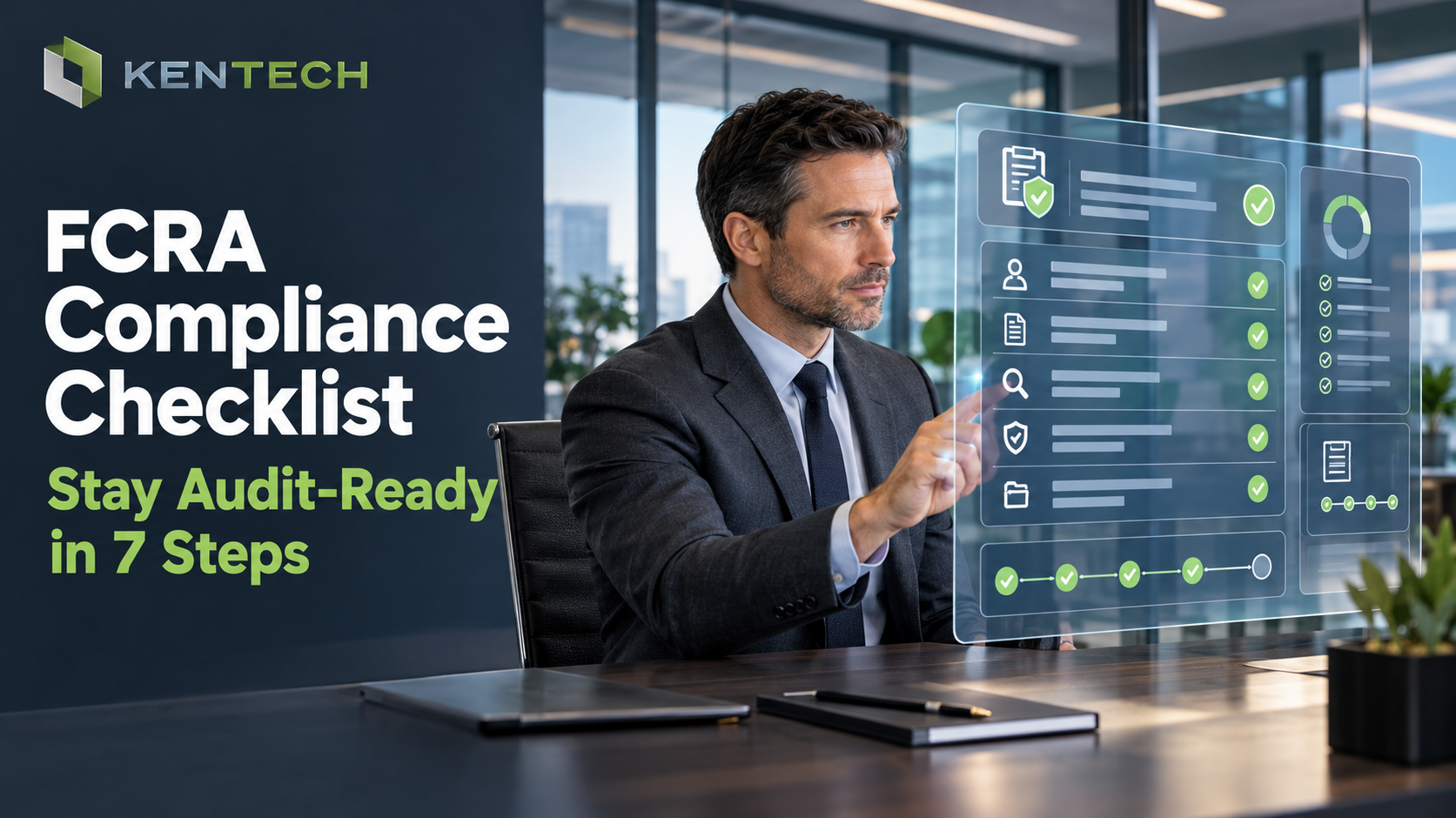
Employment background checks require more than ordering a report. Employers must follow applicable disclosure, authorization, review, and notification procedures. Use this seven-step FCRA compliance checklist to strengthen your screening process, maintain better records, and prepare for internal reviews.
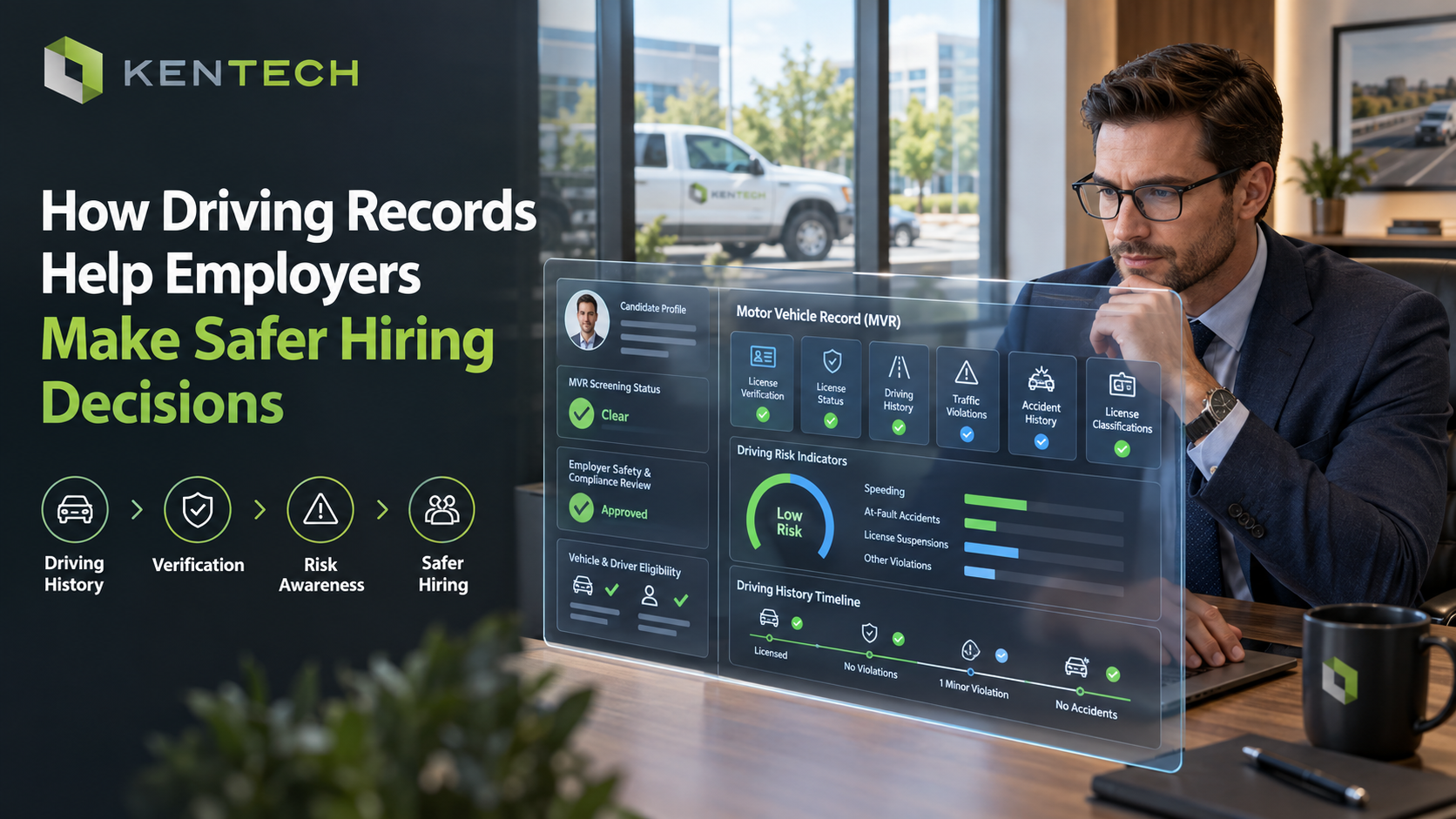
Driving records can reveal important information about an applicant's licensing history, violations, and driving-related risks. Learn how employers use MVR checks to support safer, more informed hiring decisions.
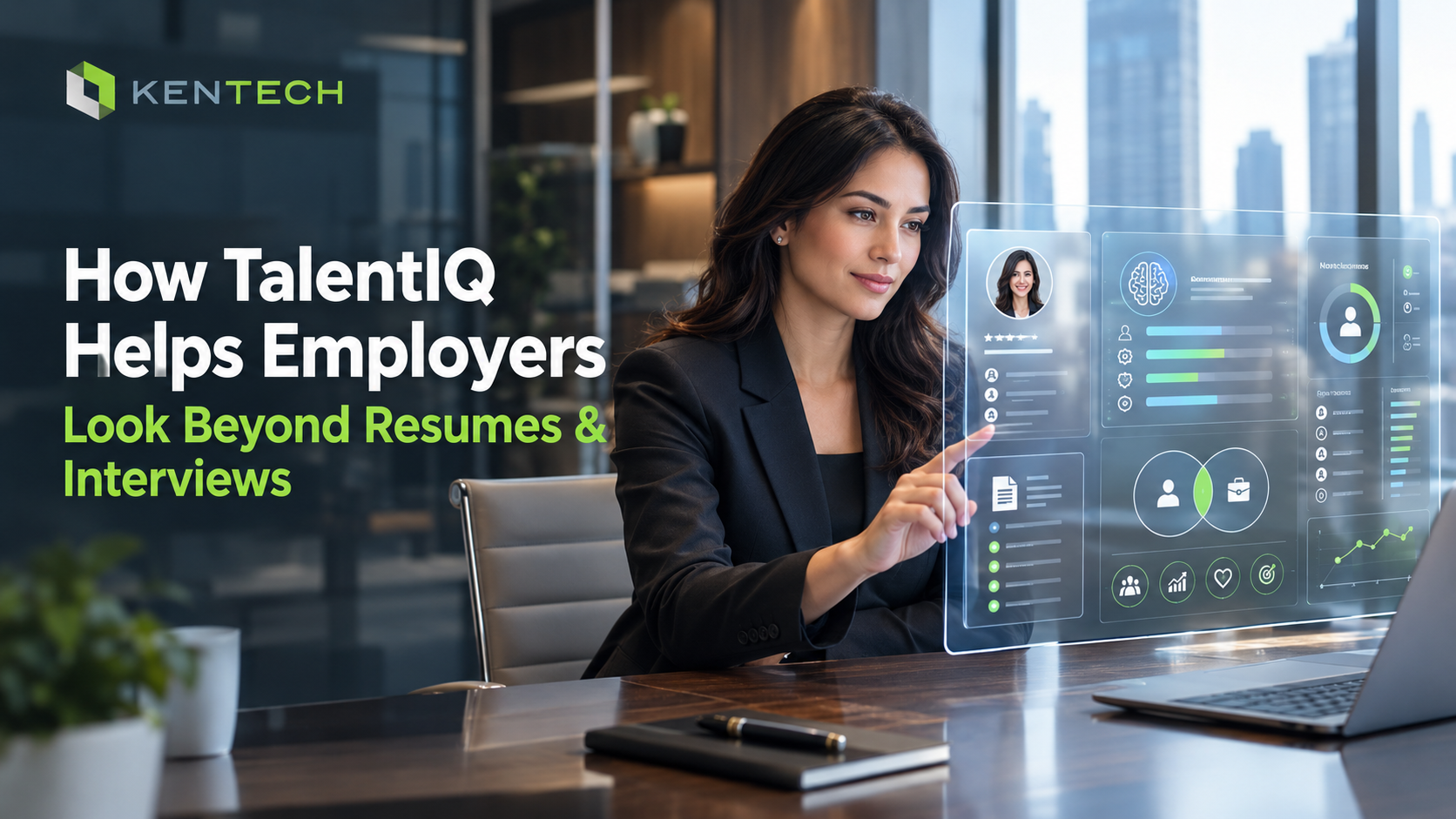
Resumes show experience and interviews reveal how candidates communicate, but neither provides the complete picture. Discover how KENTECH TalentIQ uses AI-powered talent intelligence and adaptive assessments to uncover deeper behavioral patterns, strengths, motivations, and potential before employers make hiring decisions.
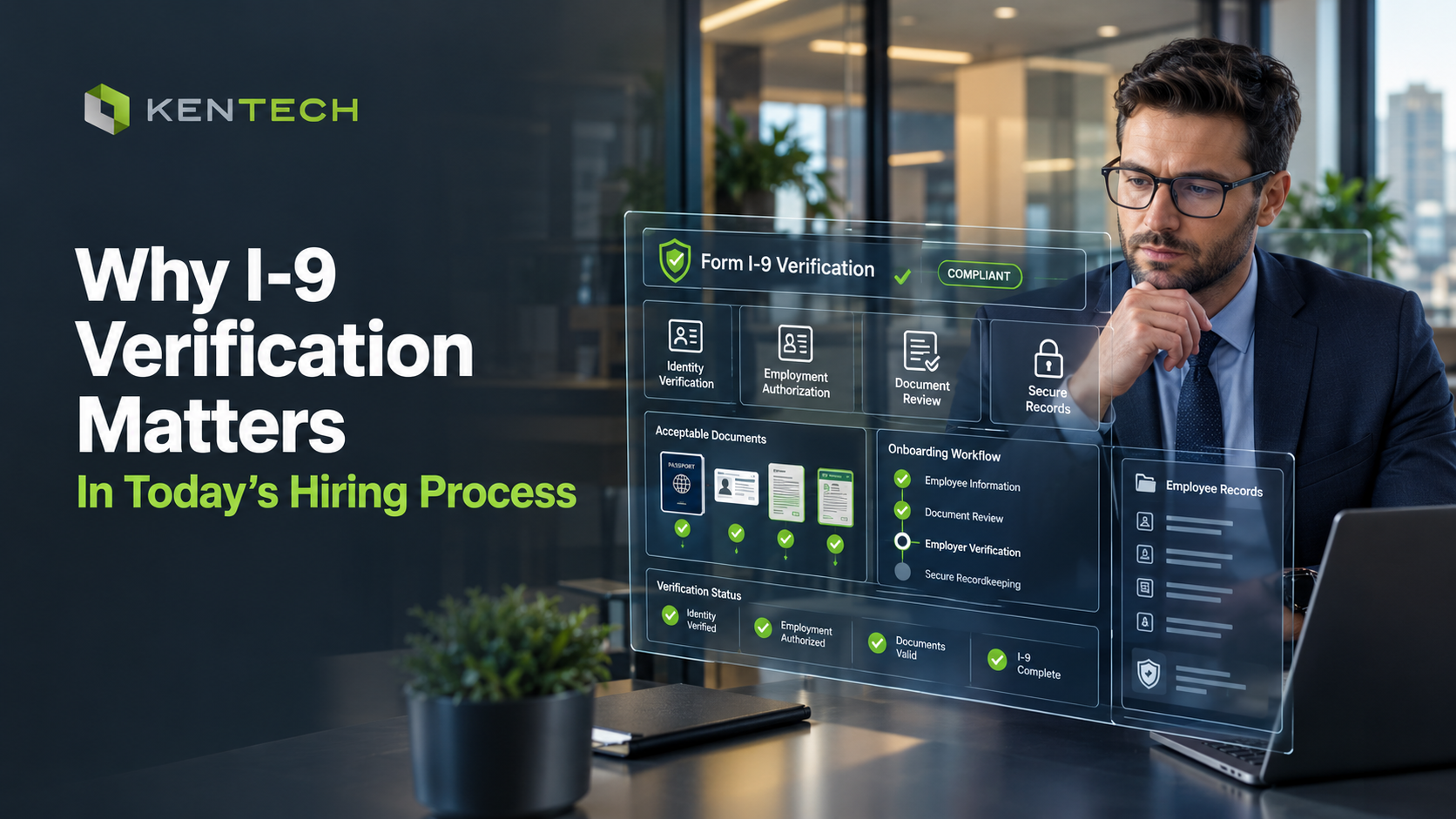
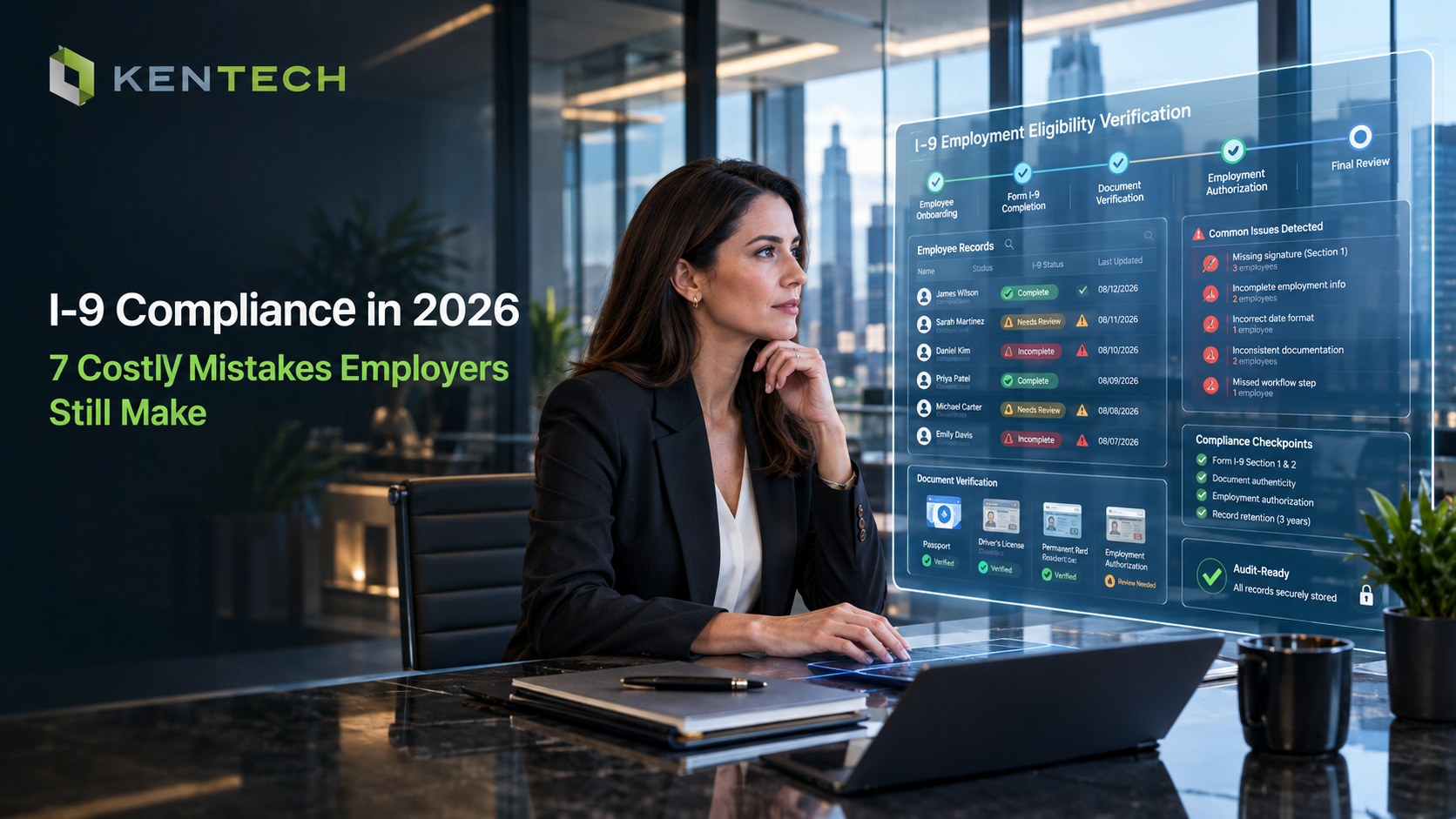
I-9 verification is a critical part of the hiring process, helping employers verify employee identity and employment authorization. Learn why accurate Form I-9 processes, consistent procedures, and proper recordkeeping matter for modern employers.
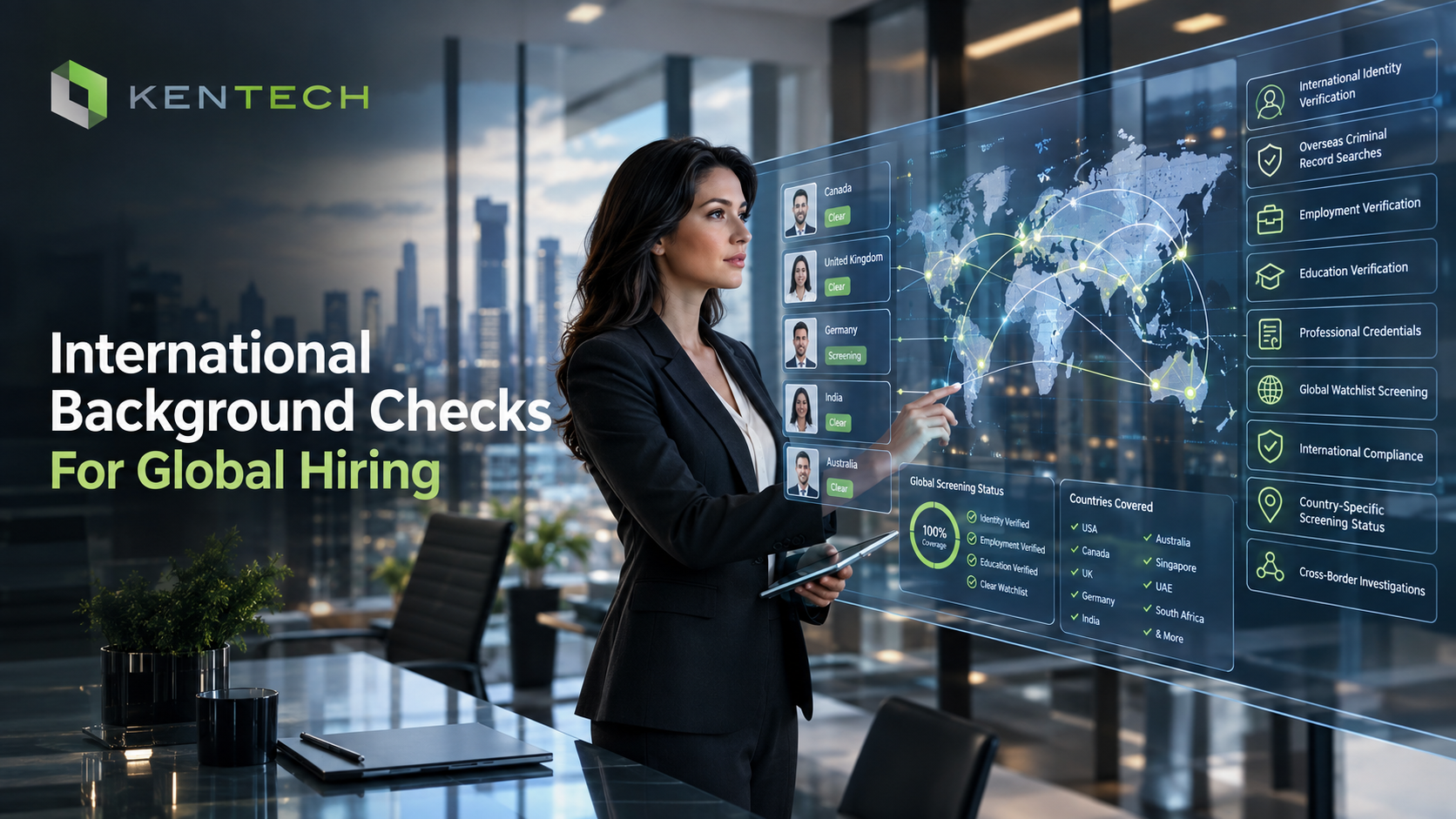
International hiring can expand an organization's talent pool, but verifying a candidate's background across countries can introduce additional challenges. International background checks help employers evaluate overseas employment, education, criminal records, credentials, and identity information while accounting for differences in local records and processes. Discover how KENTECH can support global screening.
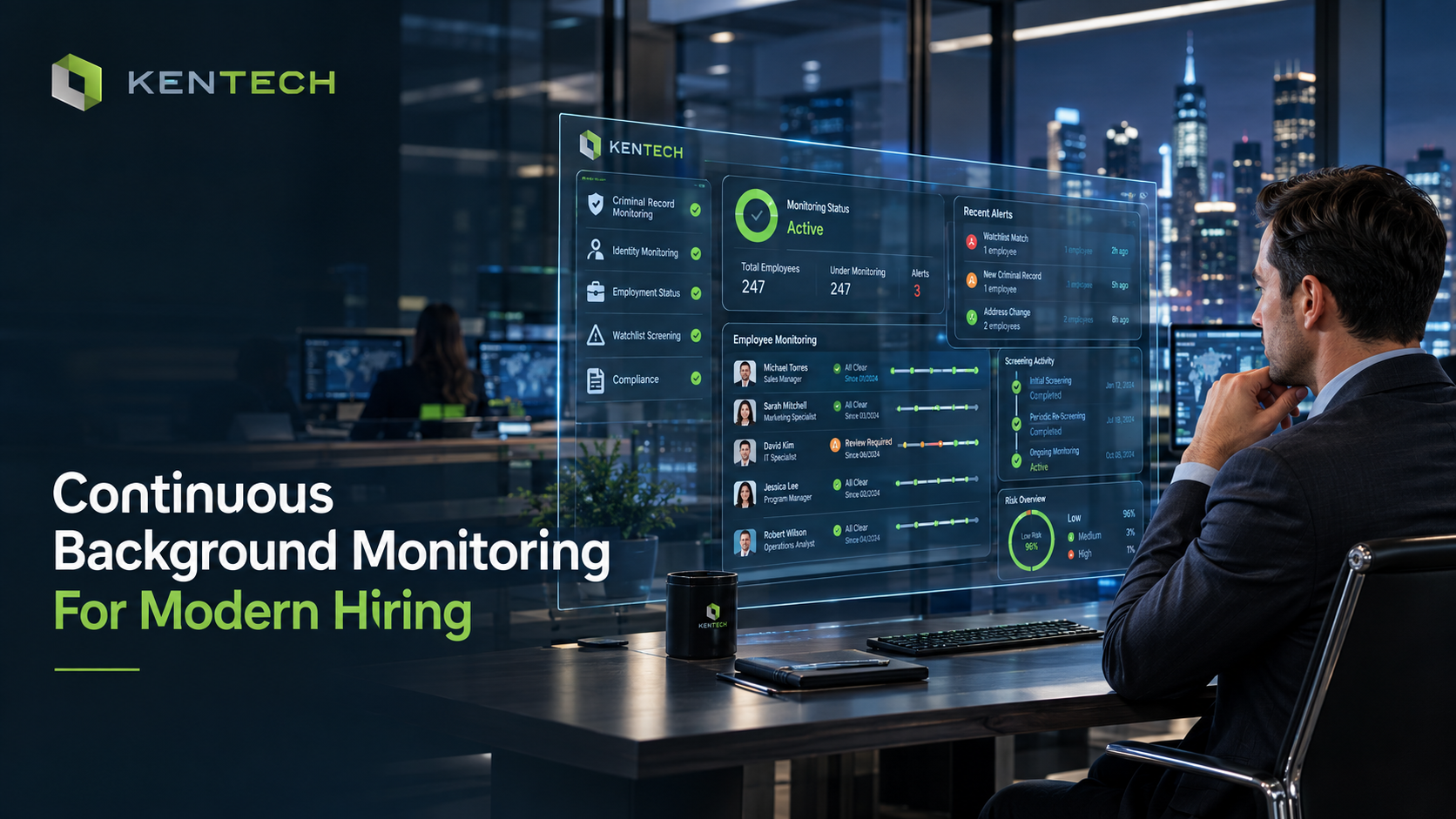
A background check performed before hiring provides valuable information, but an employee's circumstances can change after their start date. Continuous background monitoring helps organizations identify certain new developments that may be relevant to workforce risk management. Learn how ongoing screening can complement pre-employment checks with KENTECH.
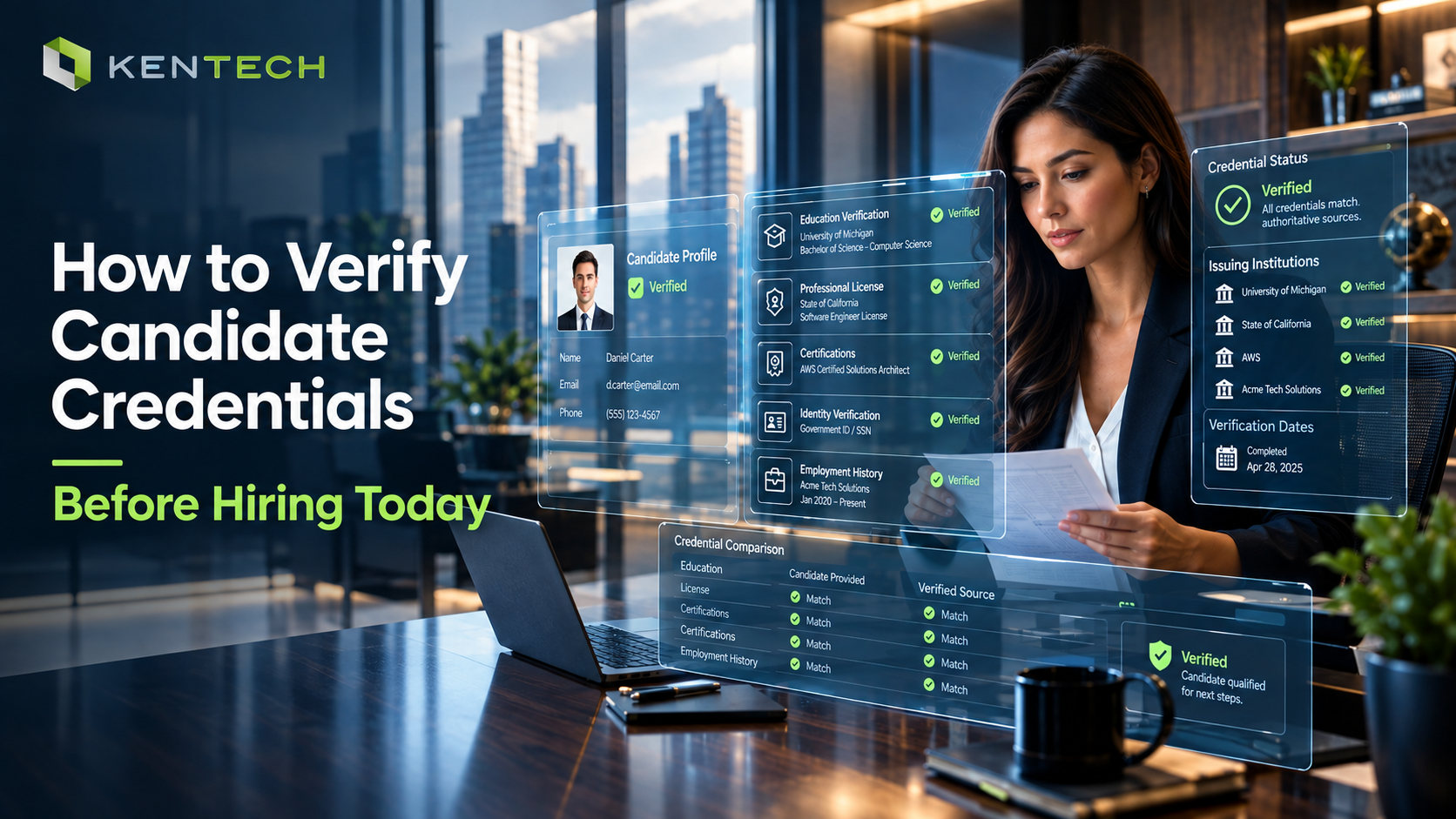
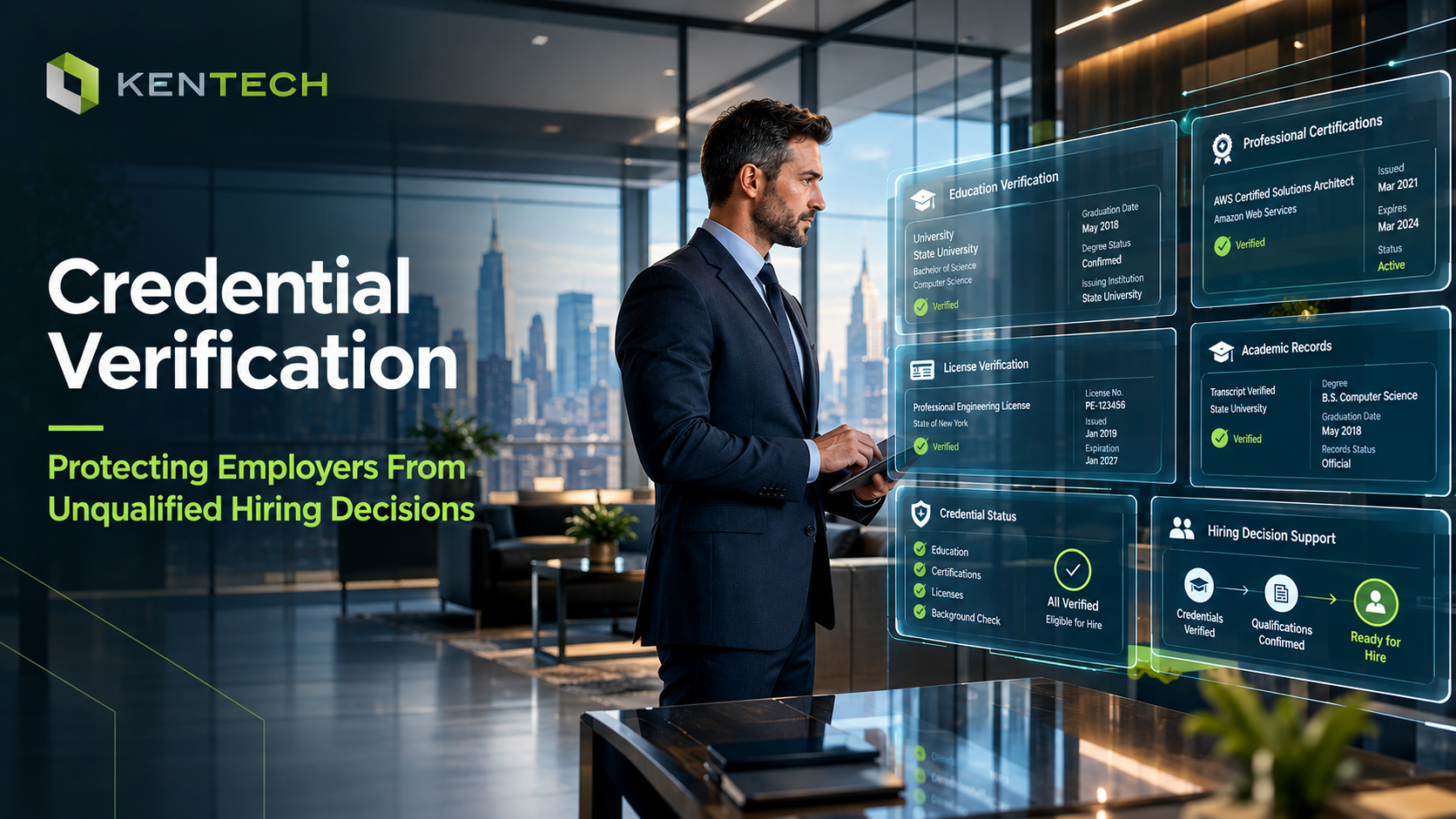
Candidate credential verification helps employers confirm degrees, licenses, employment history, and professional qualifications before making a hiring decision. Learn how a structured verification process can uncover inconsistencies, reduce hiring risk, and help organizations build a more reliable workforce with KENTECH.
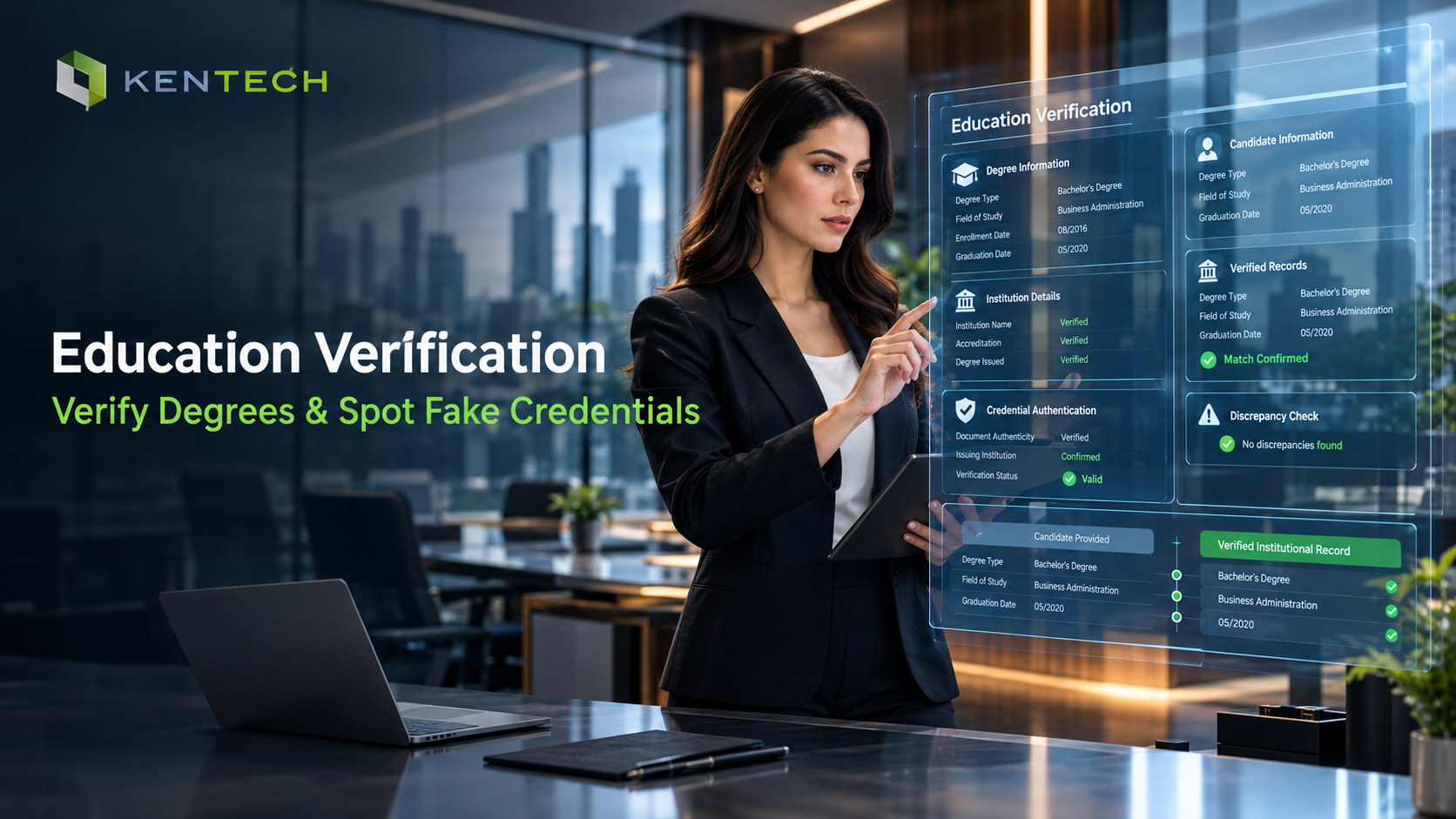
A degree on a resume is a claim, not a fact. Learn how education verification works, how to spot diploma mills and fake credentials, and how KENTECH's Degree.IQ helps.
Since March 2026, common Form I-9 errors can trigger immediate fines. Discover the seven mistakes employers still make and how KENTECH's I-9.IQ helps you stay audit-ready.
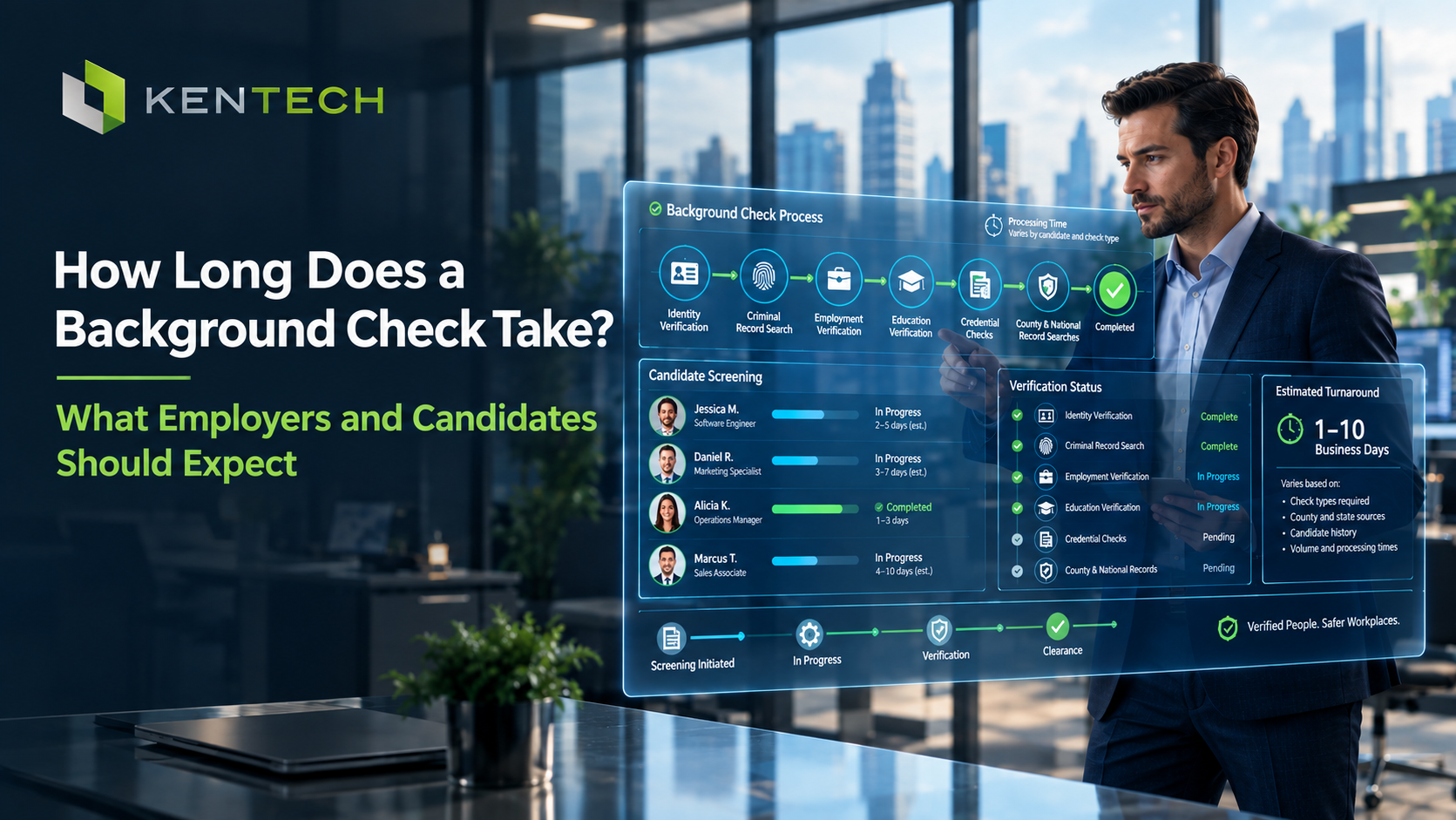
Wondering how long a background check takes? Learn typical timelines by check type, why checks stall, and how KENTECH's HIGH TECH HIGH TOUCH™ approach averages 48 hours or less.
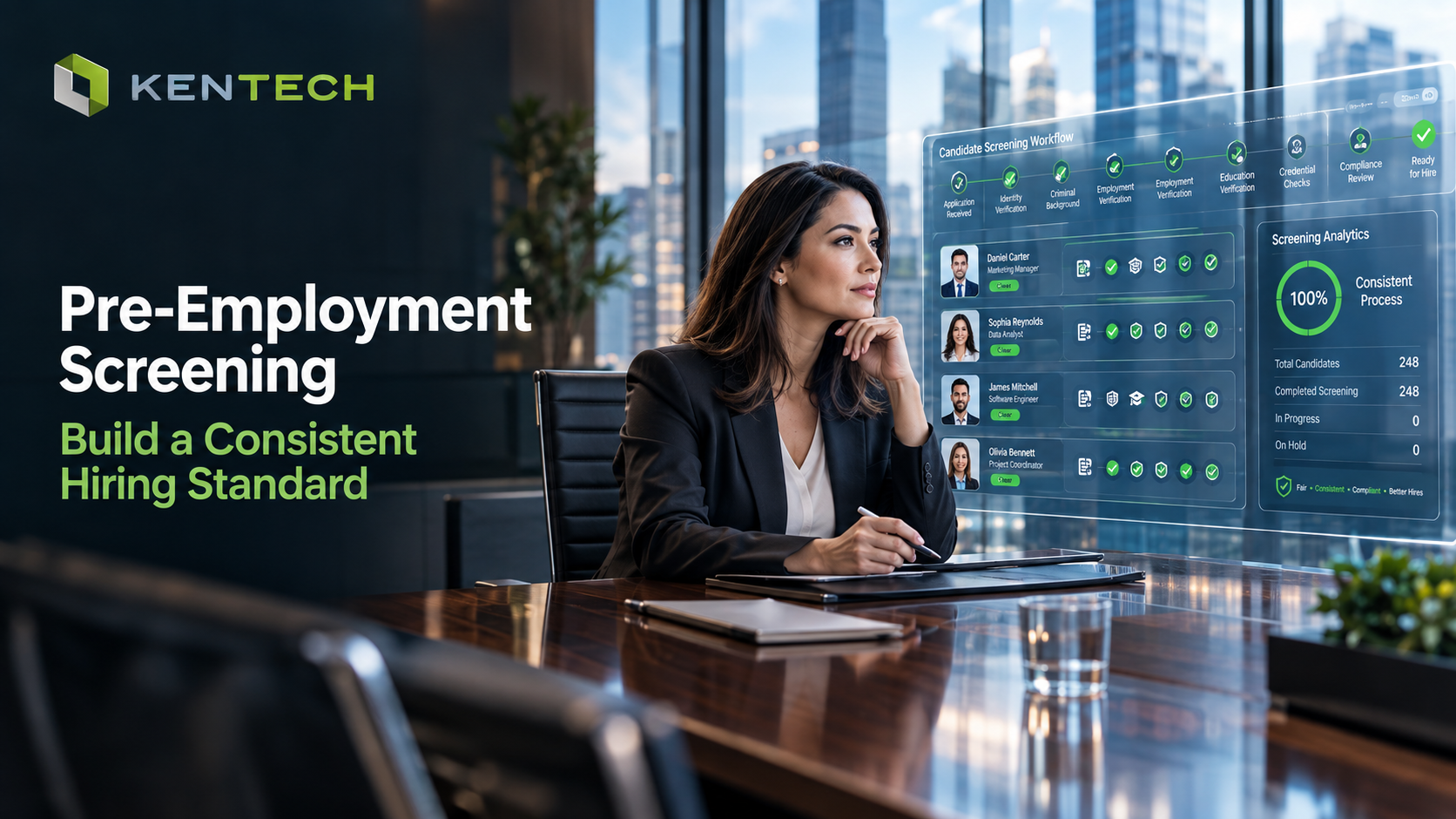
A consistent pre-employment screening program helps employers apply appropriate background checks based on job responsibilities, organizational risk, and hiring requirements.
Credential verification helps employers confirm degrees, certifications, licenses, and professional qualifications before hiring candidates for positions requiring specialized expertise.
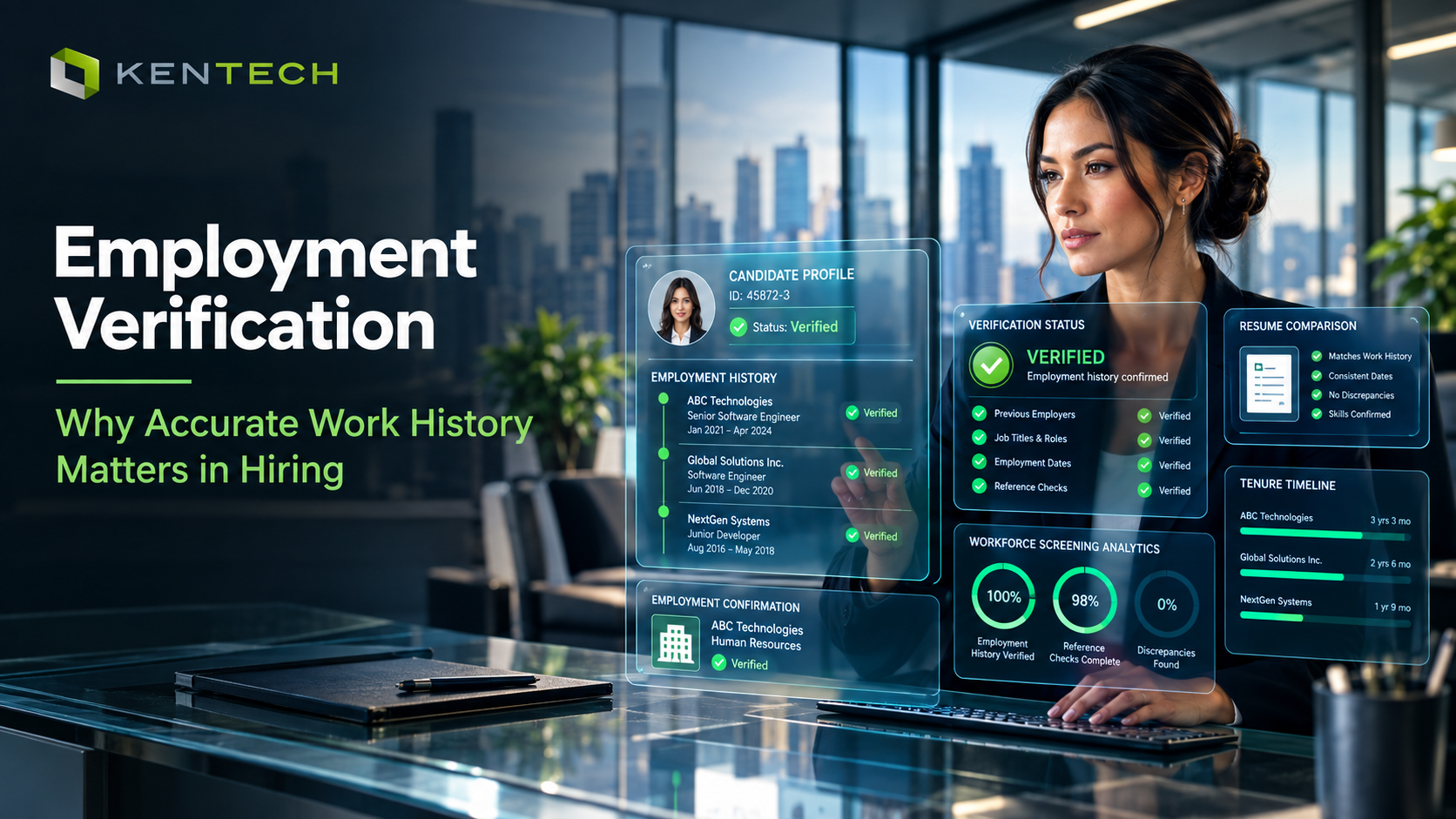
Employment verification helps employers confirm a candidate’s work history, identify inconsistencies, and make more informed hiring decisions with reliable information.
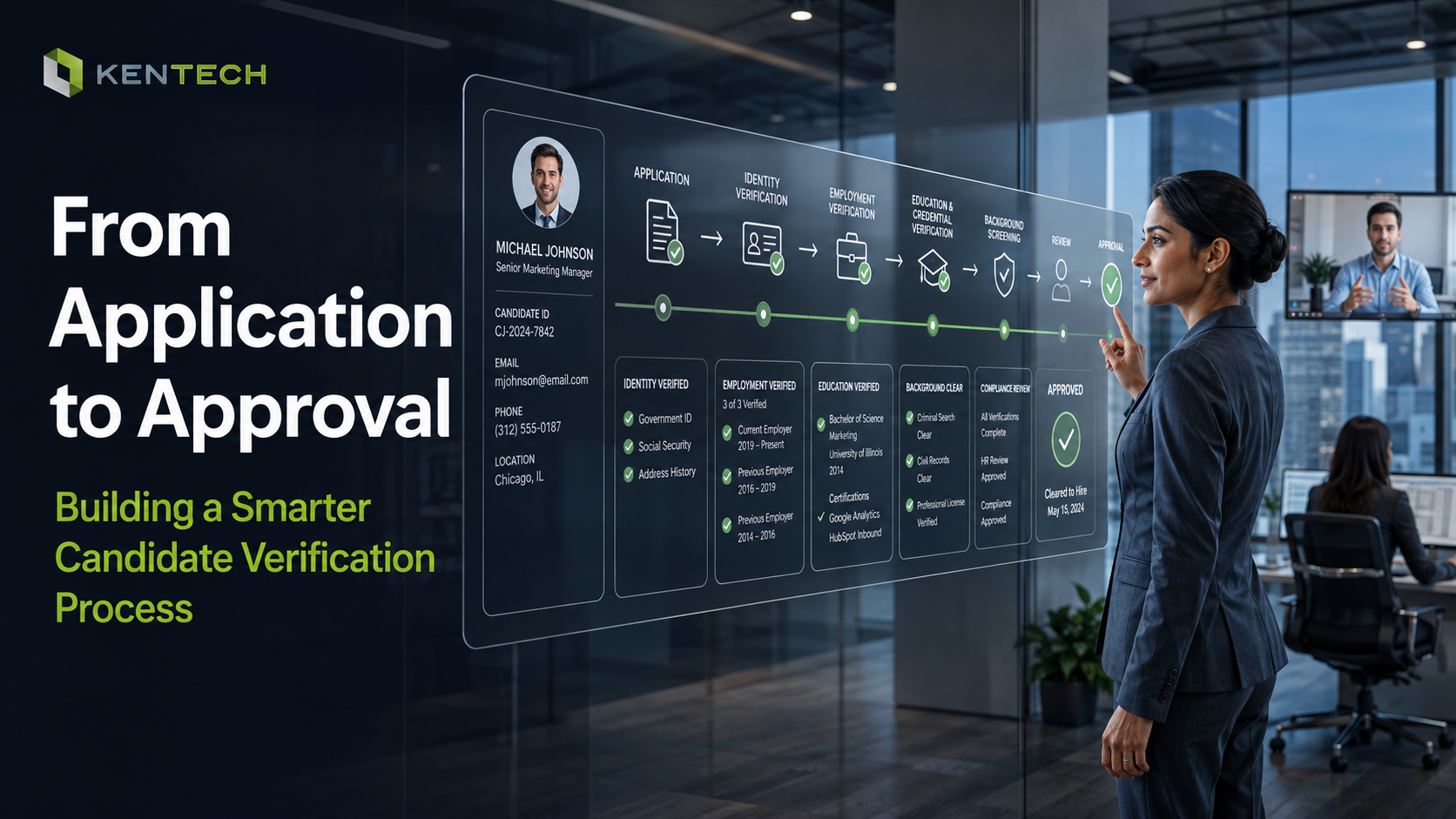
A smarter candidate verification process connects application review, identity verification, employment and credential checks, background screening, and final hiring decisions.
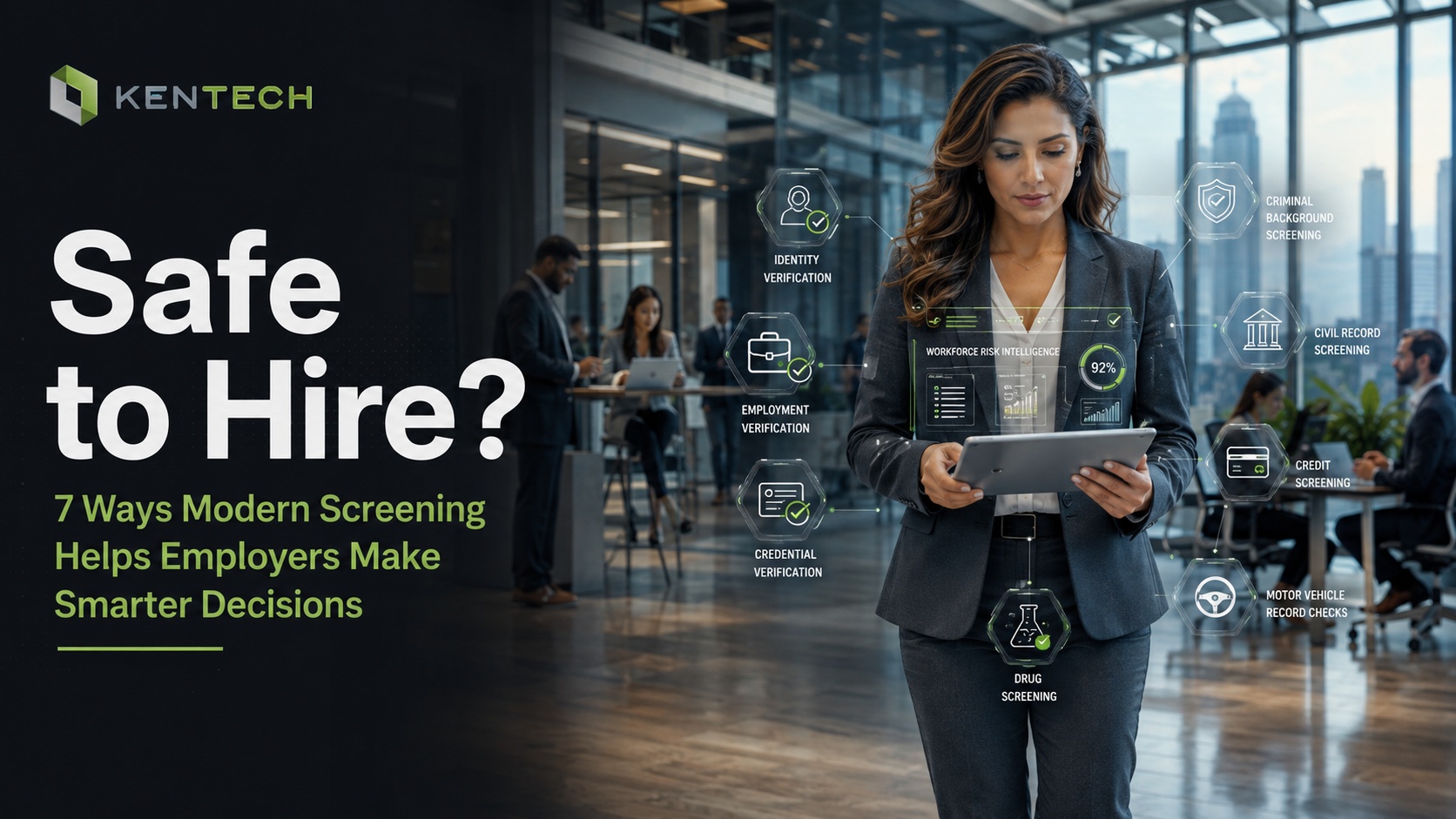
Modern background screening gives employers more than a basic background check. Discover seven ways verification can improve hiring confidence, safety, and risk management.
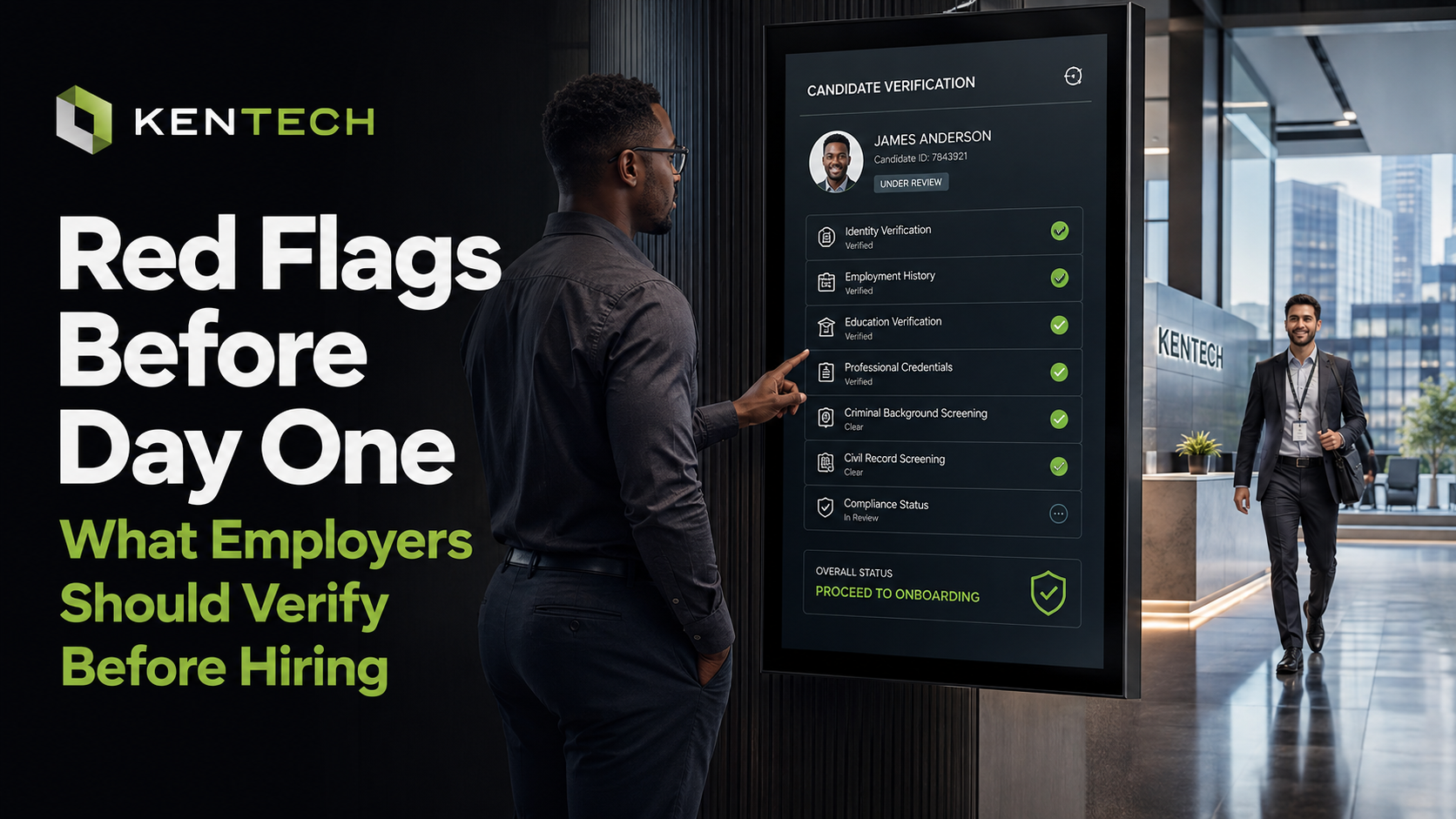
Before a new employee starts, employers can verify identity, employment, education, credentials, records, and other relevant information to identify inconsistencies early.
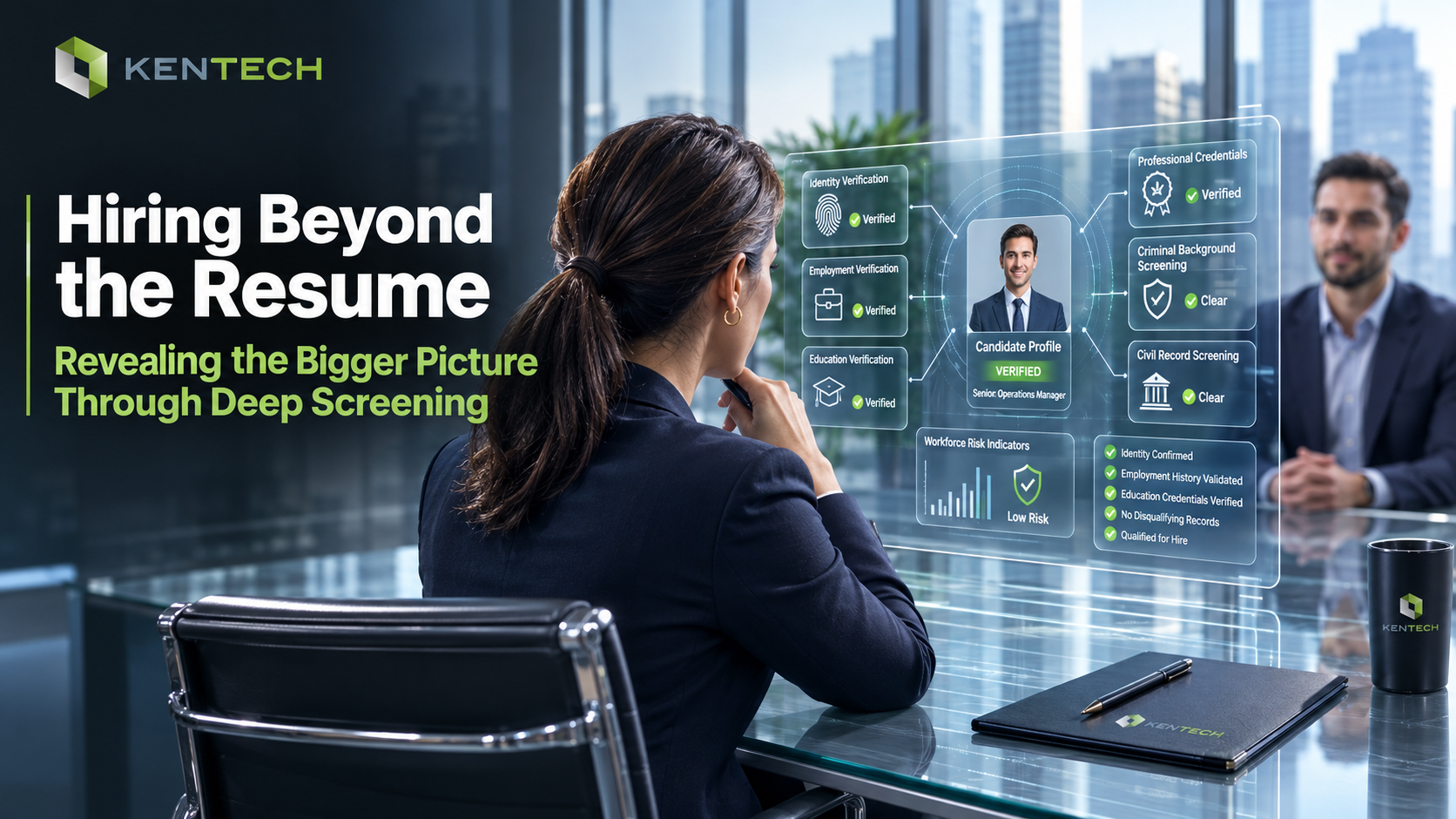
A resume tells employers where a candidate has been. Deep background screening helps verify the bigger picture, from identity and employment history to credentials and records.
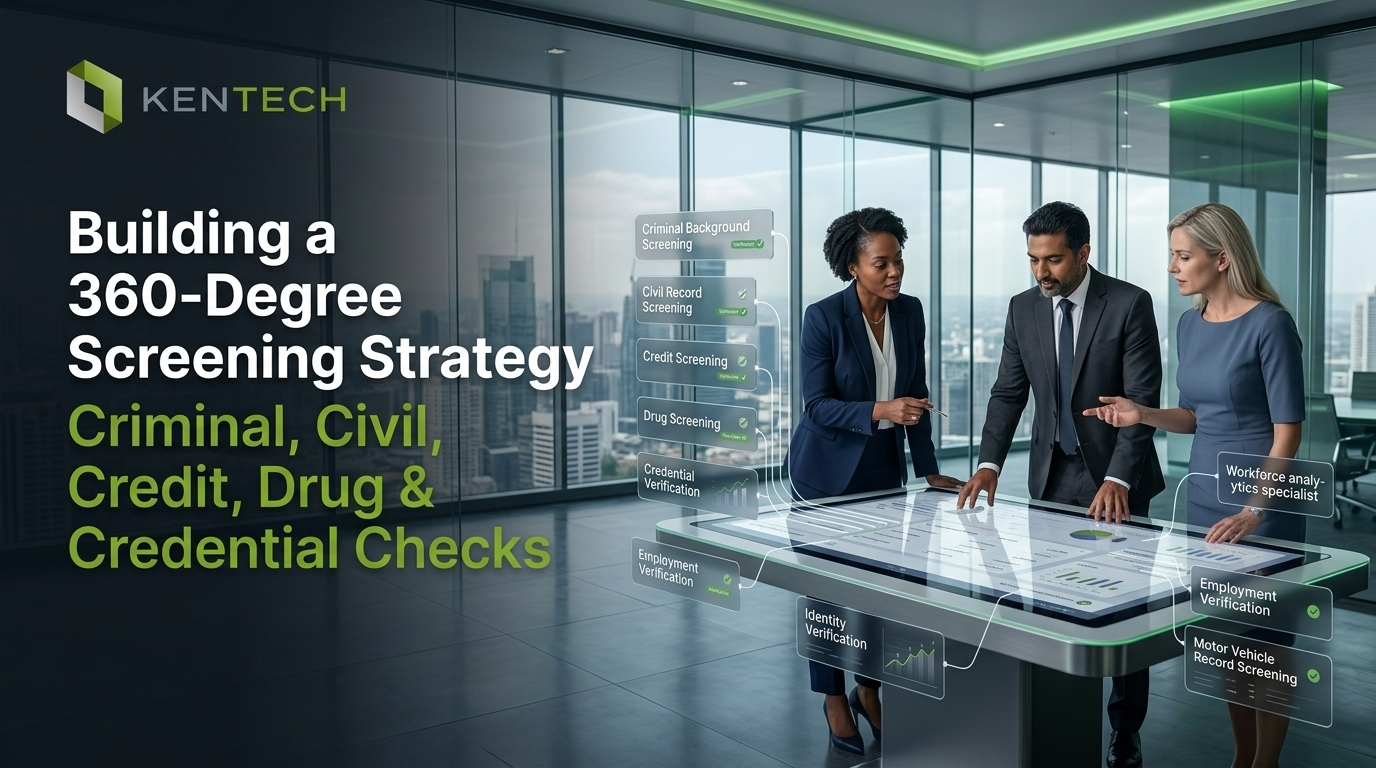
A 360-degree background screening strategy combines multiple verification services to give employers a broader view of workforce risk. Discover how layered screening can strengthen hiring decisions with KENTECH.
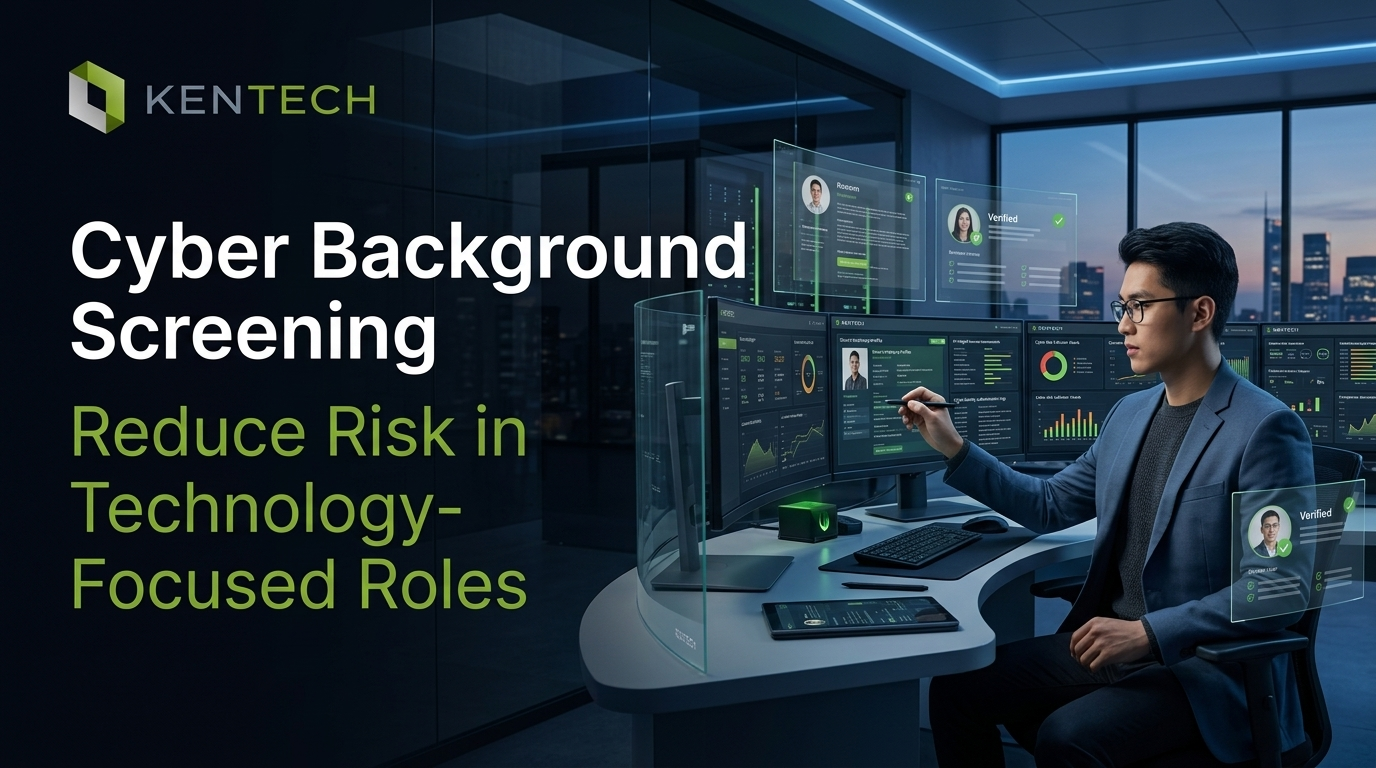
Technology employees often have access to sensitive systems and data. Learn how cyber background screening can help organizations assess workforce risk and strengthen hiring decisions for technology-focused roles with KENTECH.