
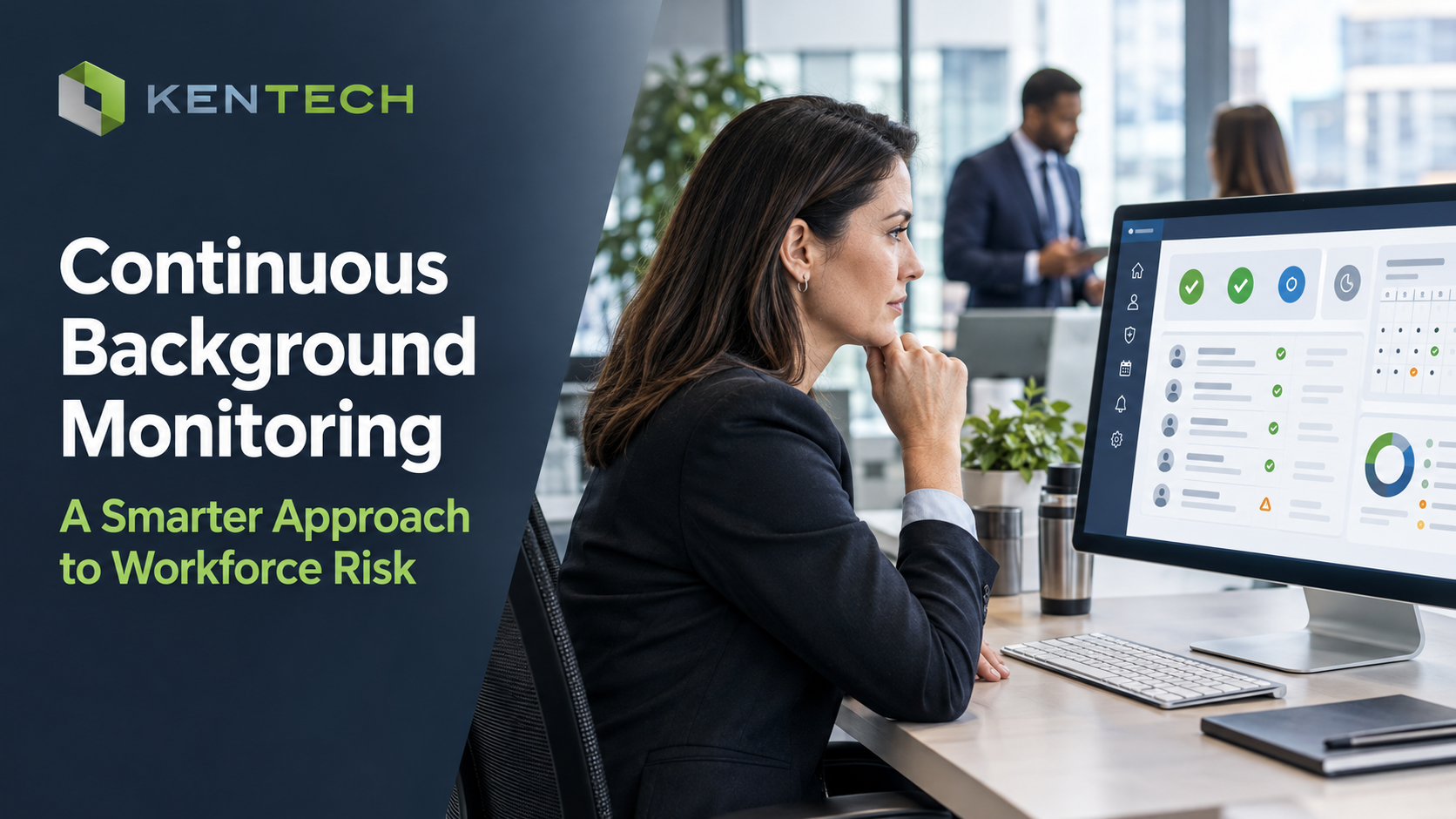
Pre-employment screening helps organizations make more informed hiring decisions, but workforce risk does not remain static. Employees change positions, gain new system privileges, assume leadership responsibilities, and move into roles with different regulatory or contractual requirements.
For some organizations, continuous background monitoring may be one component of a broader workforce risk-management program. When designed carefully, it can help employers identify information that may require review after hiring rather than relying entirely on a check completed at the beginning of employment.
However, ongoing screening is not appropriate in every situation. Employers need a clear purpose, lawful procedures, transparent policies, and safeguards that protect employee privacy and ensure findings are evaluated fairly.
What Is Continuous Background Monitoring?
Continuous background monitoring refers to an ongoing or recurring process designed to identify specified changes or new information relevant to an employee’s role. Depending on the provider, service, jurisdiction, and employer’s program, it may involve alerts or periodic checks for defined categories of information.
It is different from a one-time pre-employment background check, which generally examines available information at a particular point in time.
The term can cover different services, so employers should confirm exactly what a provider monitors, which sources are used, how often information is checked, and how potential matches are validated.
Continuous monitoring should not be confused with unrestricted surveillance of an employee’s private life. A responsible program has a defined scope and is limited to lawful, job-related purposes.
Why Employers Consider Ongoing Screening
1. Responsibilities can change
An employee who initially has limited access may later manage sensitive financial records, administer critical systems, or supervise a regulated function. A change in responsibility can create a legitimate reason to reassess certain screening requirements.
Employers should connect any additional screening to documented role requirements rather than applying more intrusive checks simply because an employee has been with the organization for a long time.
2. Some roles have ongoing compliance obligations
Certain positions may be subject to industry rules, contract terms, licensing requirements, or customer standards. Organizations should determine whether those obligations require ongoing checks, periodic verification, or a different compliance process.
Requirements vary widely. Employers should not assume that every industry or position requires continuous criminal record monitoring.
3. It can support a broader risk-management strategy
An ongoing screening program may help an organization route certain information to an authorized reviewer for assessment. That can complement internal controls, employee reporting channels, access reviews, and established incident-management procedures.
The purpose should be to identify information that may warrant a closer look—not to automatically label an employee as a risk.
Which Roles May Need Special Consideration?
The appropriate approach depends on the actual responsibilities and legal environment. Organizations may evaluate ongoing screening requirements for roles involving:
Privileged access to sensitive systems or infrastructure
Responsibility for financial assets or regulated processes
Certain licensed or safety-sensitive functions
Contractual or regulatory screening obligations
Access to confidential information that warrants specific safeguards
These are examples for policy review, not a universal checklist. Employers should document the reason for each requirement and consider less intrusive alternatives when appropriate.
How to Design a Responsible Monitoring Program
Step 1: Establish a clear business purpose
Identify the specific risk or obligation the program is intended to address. A vague goal such as “monitor all employees” is not a sufficient foundation for a well-governed process.
Document the positions covered, the information considered relevant, and the decisions the organization may make after reviewing a result.
Step 2: Review legal and contractual requirements
Determine which laws, regulations, employment agreements, industry rules, and customer contracts apply. In the United States, employment-purpose reports obtained through a consumer reporting agency may trigger Fair Credit Reporting Act requirements, including applicable disclosure, authorization, and adverse-action procedures.
State and local restrictions may also affect what can be checked and how information may be used. Obtain legal advice before launching or expanding a program.
Step 3: Communicate transparently
Employees should receive clear information about the policy, its purpose, the scope of screening, and the procedures for addressing findings. Provide any disclosures and obtain authorizations required by law.
Policies should explain who can access results and how information is protected.
Step 4: Define review and escalation procedures
An alert should not automatically trigger discipline, termination, or access removal. Establish a process for validating the information, confirming identity, assessing relevance, and giving the employee a suitable opportunity to respond where appropriate.
Designate trained reviewers and document who has authority to make employment decisions.
Step 5: Protect sensitive information
Limit access to monitoring results to authorized personnel with a legitimate need. Establish secure storage, retention limits, appropriate disposal, and procedures for correcting inaccurate information.
Avoid distributing alerts broadly or treating unverified information as an established fact.
Step 6: Measure whether the program is effective
Review the quality of alerts, false matches, time needed for verification, and the relevance of findings to actual job requirements. If a monitoring method produces frequent irrelevant alerts, reconsider its scope or value.
The objective is a proportionate process that supports legitimate risk management without creating unnecessary intrusion or administrative burden.
Common Pitfalls in Continuous Monitoring
Assuming more monitoring is always better: Broad monitoring can generate noise and increase privacy risks. Define a limited purpose and evaluate whether the program delivers meaningful value.
Acting on unverified alerts: Automated alerts and database matches may be incomplete or incorrect. Verification and human review should come before consequential decisions.
Ignoring employee rights: Ongoing checks can raise legal and fairness concerns. Follow applicable rules and provide appropriate procedures for notice, response, and correction.
Failing to review access: Screening does not replace access controls. Organizations should regularly evaluate whether employees still need their current permissions.
Leaving policies outdated: New roles, new laws, and changes to technology may require policy updates. Review the program periodically.
Continuous Monitoring Is Only One Layer of Protection
A strong workforce risk program combines appropriate screening with clear policies, effective training, restricted access, secure systems, and consistent incident response. No single check can predict all future conduct or eliminate organizational risk.
The value of ongoing screening lies in using relevant, verified information within a fair and well-controlled process.
How KENTECH Can Help
KENTECH helps organizations evaluate screening needs and build workflows that support informed workforce decisions. If your organization is considering ongoing screening, begin by defining the business purpose, confirming legal requirements, and identifying which roles genuinely need additional review.
Explore a more structured approach to workforce screening. Contact KENTECH to discuss solutions suited to your organization’s requirements.