
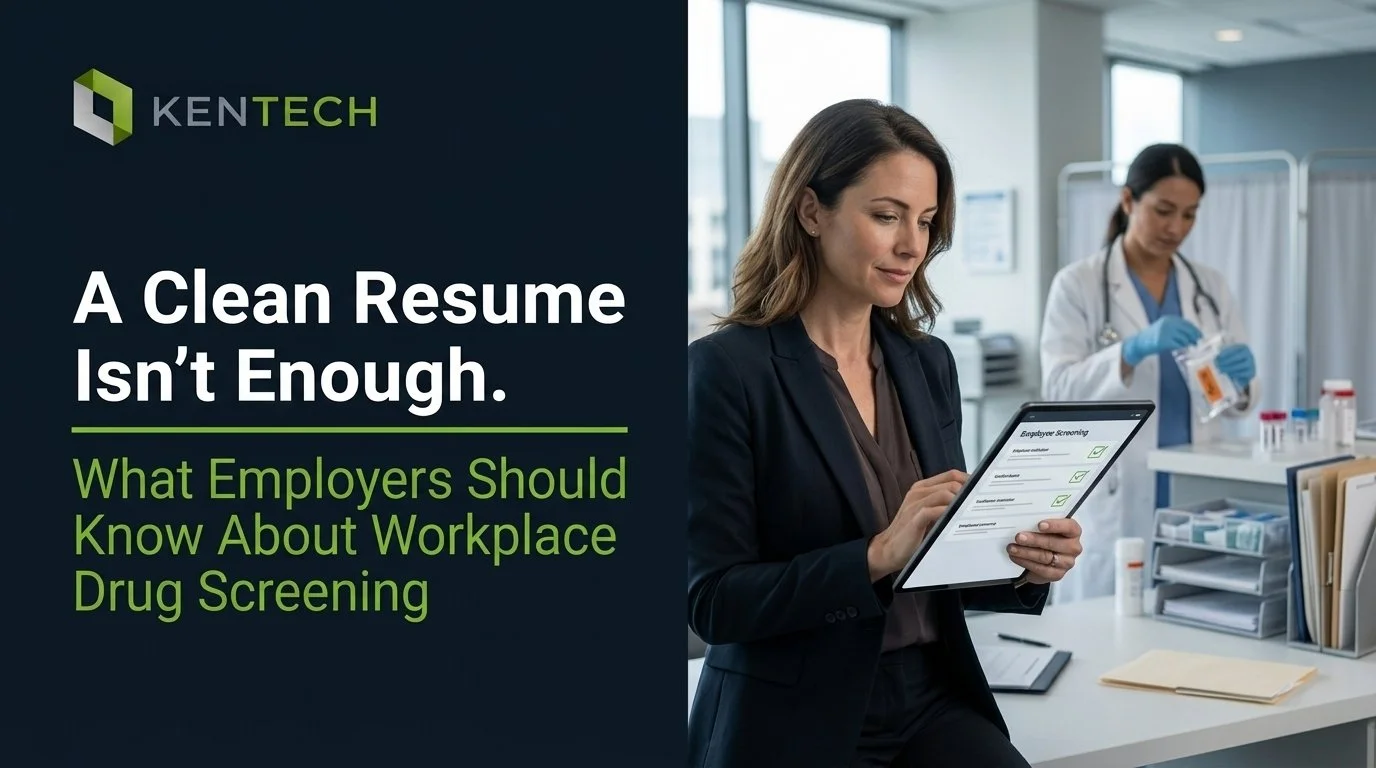
A strong resume can make a candidate look like the perfect fit. They may have the right education, impressive work experience, and excellent references. But hiring decisions should go beyond what appears on paper.
Employers also need to consider workplace safety, reliability, and compliance. One important part of a responsible hiring process is workplace drug screening.
Drug screening helps employers identify potential substance-related risks before bringing someone into the organization or placing them in a safety-sensitive position. It can also support an established drug-free workplace policy and help businesses maintain a safer working environment.
However, drug testing is not simply about catching employees doing something wrong. It is about creating consistent hiring standards, protecting employees, and making informed workforce decisions.
Understanding how workplace drug screening works can help employers build a more complete and responsible hiring process.
1. Why Workplace Drug Screening Matters
Every employee contributes to the workplace environment. Depending on the industry, one person's actions can affect coworkers, customers, company operations, and public safety.
For example, an employee operating heavy machinery, driving commercial vehicles, or handling hazardous materials must be able to perform their responsibilities safely.
Workplace drug screening can help employers identify certain substances that may affect an individual's ability to perform their duties. It provides an additional layer of information that resumes, interviews, and employment references cannot provide.
Some of the key benefits include:
Improved workplace safety: Helps employers address potential substance-related risks, particularly in safety-sensitive roles.
More informed hiring decisions: Adds another component to the overall candidate evaluation process.
Consistent hiring standards: Supports fair and consistently applied workplace policies.
Reduced operational risks: Helps organizations take a proactive approach to workforce safety.
Policy compliance: Supports applicable industry, federal, and state testing requirements.
Drug screening should be part of a broader employment screening strategy rather than the only factor used to evaluate a candidate.
2. When Should Employers Conduct Drug Testing?
Not every organization follows the same drug-testing schedule. The appropriate approach depends on the company's industry, job responsibilities, applicable laws, and internal policies.
Employers commonly consider several types of workplace drug screening.
Pre-Employment Drug Screening
Pre-employment drug testing takes place during the hiring process, usually after a conditional job offer. It allows employers to apply their drug-testing policy before a candidate officially begins working.
This approach is particularly relevant for transportation, construction, manufacturing, healthcare, and other safety-sensitive industries.
Random Drug Testing
Random testing involves selecting employees for testing without advance notice, according to a properly established and legally compliant program.
It may be used to support an existing drug-free workplace policy. Employers should understand the legal requirements that apply to their industry and location before implementing random testing.
Post-Accident Drug Testing
Following certain workplace accidents, employers may conduct drug testing when permitted or required by applicable regulations and company policy.
The purpose is to gather relevant information during an incident investigation. Testing procedures should be consistent with applicable rules and should not automatically assume that an employee caused an accident because a test was requested.
Reasonable Suspicion Drug Testing
Reasonable suspicion testing may be appropriate when specific, documented observations suggest possible impairment at work.
Supervisors should receive appropriate training to recognize and document observable behaviors rather than relying on assumptions, stereotypes, or personal opinions.
3. What Does a Workplace Drug Screening Test Look For?
Drug screening methods vary depending on the employer's policy, industry requirements, and testing provider.
Common testing methods include urine, saliva, hair, and blood testing. Each method has different detection windows, procedures, and limitations.
A workplace drug test may screen for substances such as:
Marijuana and related cannabinoids
Cocaine
Amphetamines
Opiates and certain opioids
Phencyclidine (PCP)
The specific substances included in a testing panel depend on the testing program.
It is also important to understand that a drug test does not automatically establish whether someone is currently impaired. Different substances can remain detectable for different periods, and a positive screening result may require additional laboratory confirmation and review.
Employers should work with qualified testing providers to understand the appropriate testing method, result interpretation, and follow-up procedures.
4. Drug Screening and Background Checks: Why Employers Need Both
One common hiring mistake is treating background checks and drug screening as interchangeable services.
They serve different purposes.
An employment background check helps verify information about a candidate's history and qualifications. Depending on the services requested, it may include criminal record searches, employment verification, education verification, and other relevant screening components.
Drug screening, on the other hand, focuses on testing for specified substances under an established testing program.
Combining these services can give employers a more complete picture of a candidate while helping them evaluate different areas of hiring risk.
For example, an employer hiring a commercial driver may need to verify employment history, review relevant driving records, conduct applicable background searches, and follow required drug and alcohol testing procedures.
These checks work together, but each must be conducted according to its own legal and procedural requirements.
KENTECH helps organizations strengthen their screening processes through professional employment background screening services designed to support informed hiring decisions.
5. Understanding Drug Testing Laws and Employer Responsibilities
Workplace drug screening must be handled carefully. Employers cannot simply introduce any testing procedure without considering applicable laws and employee rights.
Requirements can differ based on the industry, location, type of employer, and position being filled.
For example, certain transportation positions are subject to federal drug and alcohol testing requirements. Other industries may have different federal, state, or local rules.
Employers should consider the following before implementing a testing program:
Create a written policy: Clearly explain when testing may occur, which employees are covered, and what procedures will be followed.
Apply policies consistently: Avoid selective testing or practices that could create discrimination concerns.
Provide proper notice: Communicate testing requirements to applicants and employees when required.
Protect confidential information: Keep testing records and results secure and accessible only to authorized individuals.
Use qualified testing providers: Follow appropriate collection, laboratory, and result-review procedures.
Understand employee protections: Consider applicable disability, privacy, accommodation, and prescription medication laws.
Employers should also understand that federal and state marijuana laws may differ, and a positive result does not necessarily establish workplace impairment.
Working with knowledgeable screening professionals and legal counsel can help organizations develop appropriate procedures.
6. How Technology Makes Drug Screening Easier
Managing drug testing manually can create unnecessary delays, especially for organizations hiring across multiple locations.
Modern screening technology helps HR teams coordinate testing, monitor progress, and organize results more efficiently.
KENTECH offers Drug.IQ drug screening technology, designed to simplify workplace testing through digital workflows and real-time tracking.
Its features include:
Paperless chain-of-custody documentation.
Flexible testing panels based on organizational needs.
Real-time visibility into testing progress.
Convenient candidate scheduling.
Faster result reporting through streamlined workflows.
KENTECH reports that Drug.IQ can deliver results within 24–48 hours, depending on the testing process and circumstances.
KENTECH
These capabilities can help organizations reduce administrative work while keeping hiring and onboarding processes organized.
7. What Employers Should Look for in a Drug Screening Provider
Choosing the right screening provider is important. Employers need a partner that understands testing requirements and can support their organization's hiring needs.
Before selecting a provider, consider the following:
Testing Options: Look for a provider offering different testing methods, including urine, oral fluid, hair follicle, and applicable DOT testing.
Reliable Laboratory Processes: Testing should follow appropriate collection, handling, and reporting procedures.
Nationwide Coverage: Organizations with multiple offices may benefit from access to testing locations across different regions.
Efficient Turnaround: Timely results can help prevent unnecessary delays during onboarding.
Technology and Support: Digital tracking, clear communication, and accessible customer support can make the process easier for HR teams.
KENTECH provides a range of workplace drug testing services, including pre-employment, random, ongoing employment, volunteer, and reasonable suspicion testing. Its available options include 5-panel and 10-panel oral or urine tests, DOT testing, and hair follicle testing.
ekentech.com
Employers can also explore KENTECH's employment verification services and broader screening solutions to build a more complete hiring process.
8. Build a Complete Hiring Process Beyond the Resume
A clean resume is a good starting point, but it should not be the only information employers consider.
A responsible hiring process combines interviews, reference checks, credential verification, employment history reviews, and appropriate workplace drug screening.
For example, a company hiring a delivery driver may need to verify previous employment, review relevant driving records, and complete applicable drug and alcohol testing.
A healthcare organization may need to verify professional qualifications and follow role-specific screening requirements.
The goal is to select screening services based on the responsibilities and risks associated with each position.
KENTECH's screening technology and verification solutions can help organizations manage their screening processes more efficiently.
Make Hiring Decisions With More Confidence
A clean resume does not automatically mean a candidate is ready for every workplace responsibility. Employers need reliable information to evaluate qualifications, workplace safety, and potential hiring risks.
Workplace drug screening provides an additional layer of information, particularly for safety-sensitive positions and regulated industries. When supported by clear policies, consistent procedures, and appropriate legal safeguards, it can contribute to a safer and more responsible workplace.
The best hiring strategies go beyond checking boxes. They combine reliable screening information with thoughtful decision-making and fair treatment of every candidate.
KENTECH helps employers build stronger hiring processes through professional background screening, drug testing, and workforce verification solutions.
Ready to strengthen your employee screening program? Visit KENTECH at https://www.ekentech.com/ or contact our team at (888) 749-2432 to learn how we can support your hiring and workplace safety goals.