
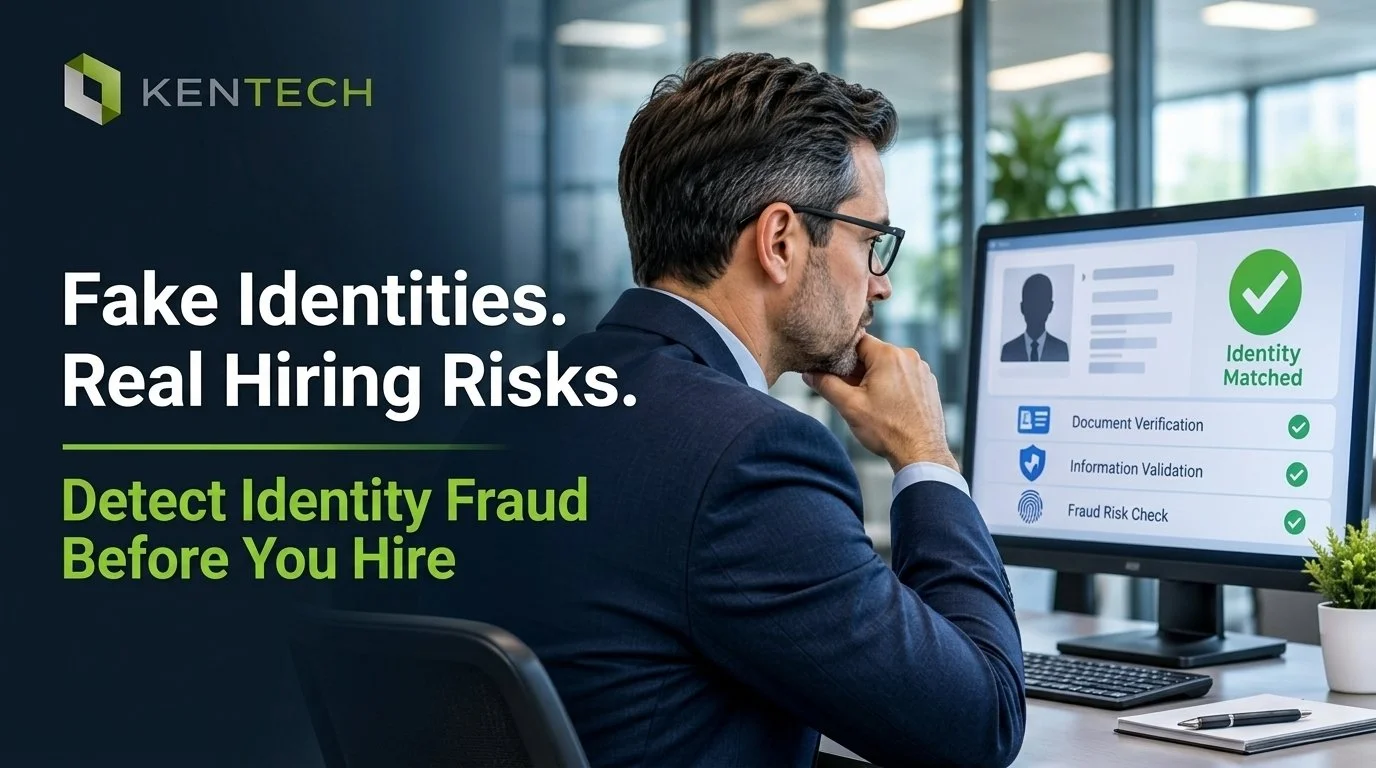
Hiring the right employee involves more than reviewing resumes and conducting interviews. Employers also need to know whether the person applying for the position is who they claim to be.
As hiring becomes increasingly digital, identity fraud is becoming a growing concern for organizations. Fake identities, stolen personal information, fraudulent Social Security numbers, and undisclosed aliases can make it harder for employers to verify applicants accurately.
A candidate may have an impressive resume and perform well during an interview, but if their identity cannot be properly verified, the organization could face unnecessary hiring risks.
That is why identity fraud detection should be an important part of every employer's pre-employment screening process.
By identifying suspicious information early, employers can improve background screening accuracy, protect their organizations, and make more confident hiring decisions.
What Is Identity Fraud in Hiring?
Identity fraud in hiring happens when an individual uses false, stolen, manipulated, or misleading personal information to obtain employment.
This can involve someone pretending to be another person, using a fabricated identity, or providing identifying information that does not accurately represent their background.
Some common examples include:
Stolen identities: An applicant uses another person's personal information to apply for a job.
Fake Social Security information: A candidate provides fabricated or manipulated identifying details.
Undisclosed aliases: An applicant uses different names to conceal relevant information.
False address history: An individual provides inaccurate residential information that may affect background searches.
Identity manipulation: Someone changes or alters personal details to avoid being associated with previous records.
Not every inconsistency means fraud has occurred. Name changes, spelling differences, and outdated records can create legitimate discrepancies. However, employers should have a reliable process for identifying and reviewing these issues.
Why Identity Fraud Is a Serious Hiring Risk
Identity fraud can affect organizations in several ways, particularly when employers rely on incomplete or inaccurate applicant information.
1. Inaccurate Background Check Results
A background check is only as reliable as the information used to conduct it.
If an applicant provides incorrect identifying details, screening results may be incomplete or associated with the wrong individual.
For example, an applicant who uses an undisclosed alias may have records connected to another name that are not included in the initial search.
Without proper identity verification, employers may overlook relevant information or mistakenly associate records with the wrong person.
2. Increased Financial and Operational Risks
Hiring someone using a fraudulent identity can expose an organization to financial and operational problems.
Depending on the position, an employee may have access to confidential information, financial accounts, company systems, customer records, or sensitive business operations.
When identity fraud goes undetected, organizations may face additional costs related to internal investigations, security concerns, employee replacement, and operational disruptions.
3. Security and Data Protection Concerns
Employees often receive access to systems and information that are important to daily business operations.
This is especially important in industries such as healthcare, financial services, government contracting, and technology.
Confirming an applicant's identity before granting access helps organizations strengthen their hiring controls and reduce unnecessary exposure.
4. Missed Screening Information
Identity discrepancies can also affect the accuracy of criminal record searches and other background screening services.
Different names and address histories may point to different records or jurisdictions.
If employers do not account for relevant identity variations, certain searches may not cover all appropriate locations.
6 Ways Employers Can Detect Identity Fraud Before Hiring
A structured verification process can help employers identify suspicious information before making a final hiring decision.
1. Verify Applicant Identity Early
Start identity verification at the beginning of the screening process rather than waiting until the final onboarding stage.
Employers should confirm that the identifying information supplied by the applicant is consistent with available verification records.
This may include reviewing relevant identifying details, Social Security information, and address history through appropriate verification procedures.
KENTECH's Identity.IQ identity verification solution helps employers identify potential identity fraud, suspicious aliases, and address discrepancies before background searches begin.
2. Look for Inconsistent Personal Information
Pay attention to discrepancies between application forms, identification information, and screening records.
Examples may include:
Different legal names across submitted information.
Inconsistent dates or identifying details.
Unexplained address history gaps.
Information that cannot be validated through available sources.
Multiple identity variations that require clarification.
These differences should be investigated carefully rather than automatically treated as evidence of fraud.
3. Review Alias Names and Address History
Some individuals have legitimate reasons for using different names throughout their lives.
Marriage, legal name changes, and international naming conventions can all create variations in personal information.
However, undiscovered aliases and incomplete address histories can also create screening gaps.
Employers should work with screening professionals who can help identify relevant name variations and map address history to appropriate jurisdictions.
This helps ensure that background searches are conducted using accurate and relevant information.
4. Combine Identity Checks With Background Screening
Identity verification should not operate independently from the rest of the hiring process.
It should support a broader screening strategy that confirms relevant information about the applicant.
Depending on the position, employers may consider:
Criminal background searches.
Employment history verification.
Education verification.
Professional license verification.
Driving record checks.
Appropriate reference checks.
KENTECH provides a range of background check and verification services that organizations can use to build screening programs based on their hiring needs.
5. Verify Employment and Educational Credentials
Identity fraud may occur alongside other forms of hiring misrepresentation.
For example, an applicant may use false personal information while also exaggerating previous employment or educational qualifications.
Employers should verify important details rather than relying entirely on resumes and interviews.
KENTECH's Employment Verification services help confirm previous work experience, employment dates, job titles, and other relevant employment details.
Organizations can also use Education Verification to confirm academic qualifications when they are relevant to a position.
6. Maintain Proper I-9 Verification Procedures
For employers hiring in the United States, identity verification must also be distinguished from employment eligibility verification.
Federal law requires employers to complete Form I-9 for newly hired employees and follow the applicable document examination procedures.
Employers must allow employees to choose which acceptable documents to present from the Form I-9 Lists of Acceptable Documents. They should not request specific documents based on an individual's citizenship or national origin.
E-Verify may also be used by participating employers to confirm employment eligibility when applicable.
Identity screening and Form I-9 procedures serve different purposes, but both can contribute to a more organized hiring process.
The Importance of FCRA-Compliant Background Screening
Employers must also consider legal requirements when using background screening information to make hiring decisions.
The Fair Credit Reporting Act (FCRA) establishes important responsibilities for employers who obtain consumer reports from consumer reporting agencies for employment purposes.
These responsibilities may include:
Providing a clear and standalone disclosure before obtaining a report.
Obtaining the applicant's written authorization.
Following required pre-adverse and adverse action procedures when applicable.
Protecting confidential applicant information.
Applying screening policies consistently and fairly.
Employers should also understand applicable federal, state, and local employment laws.
A reliable screening partner can help organizations establish structured procedures while supporting their compliance responsibilities.
Why Early Identity Verification Makes a Difference
One of the biggest advantages of early identity verification is that it helps establish a reliable foundation for the rest of the screening process.
Instead of discovering discrepancies after a background check has already been completed, employers can identify potential issues before moving forward.
This can help reduce unnecessary delays, improve the accuracy of screening results, and make the overall hiring process more efficient.
For organizations hiring across multiple locations or managing large applicant volumes, a consistent verification process is particularly valuable.
Strengthen Your Hiring Process With KENTECH
Fake identities and misleading applicant information can create serious challenges for employers. However, organizations do not have to rely solely on manual reviews or basic document checks to identify potential problems.
KENTECH helps employers strengthen their hiring processes through advanced background screening and verification solutions.
With Identity.IQ, organizations can access identity validation, fraud detection, alias analysis, and address-history review designed to improve screening accuracy before background searches begin.
Combined with employment verification, education verification, and other screening services, employers can build a more reliable approach to evaluating applicants.
Don't let a fake identity become a real hiring problem.
Contact KENTECH today to learn how our identity verification and background screening solutions can help protect your organization and support smarter hiring decisions.