Hiring the right employee is only the beginning of building a trustworthy workforce. While pre-employment background checks remain an essential part of the hiring process, they provide only a snapshot of a candidate's history at a single point in time. People change, circumstances evolve, and new risks can emerge long after an employee joins your organization.
For companies operating in highly regulated industries or handling sensitive information, relying solely on an initial background check can leave significant gaps in workplace security and compliance.
This is where continuous employee screening is changing the future of workforce risk management.
Instead of waiting until an issue surfaces—or conducting background checks only when an employee is promoted or changes roles—organizations are adopting ongoing monitoring programs that identify new risks as they arise. Continuous employee screening provides HR leaders with timely insights that help protect employees, customers, company assets, and organizational reputation.
What Is Continuous Employee Screening?
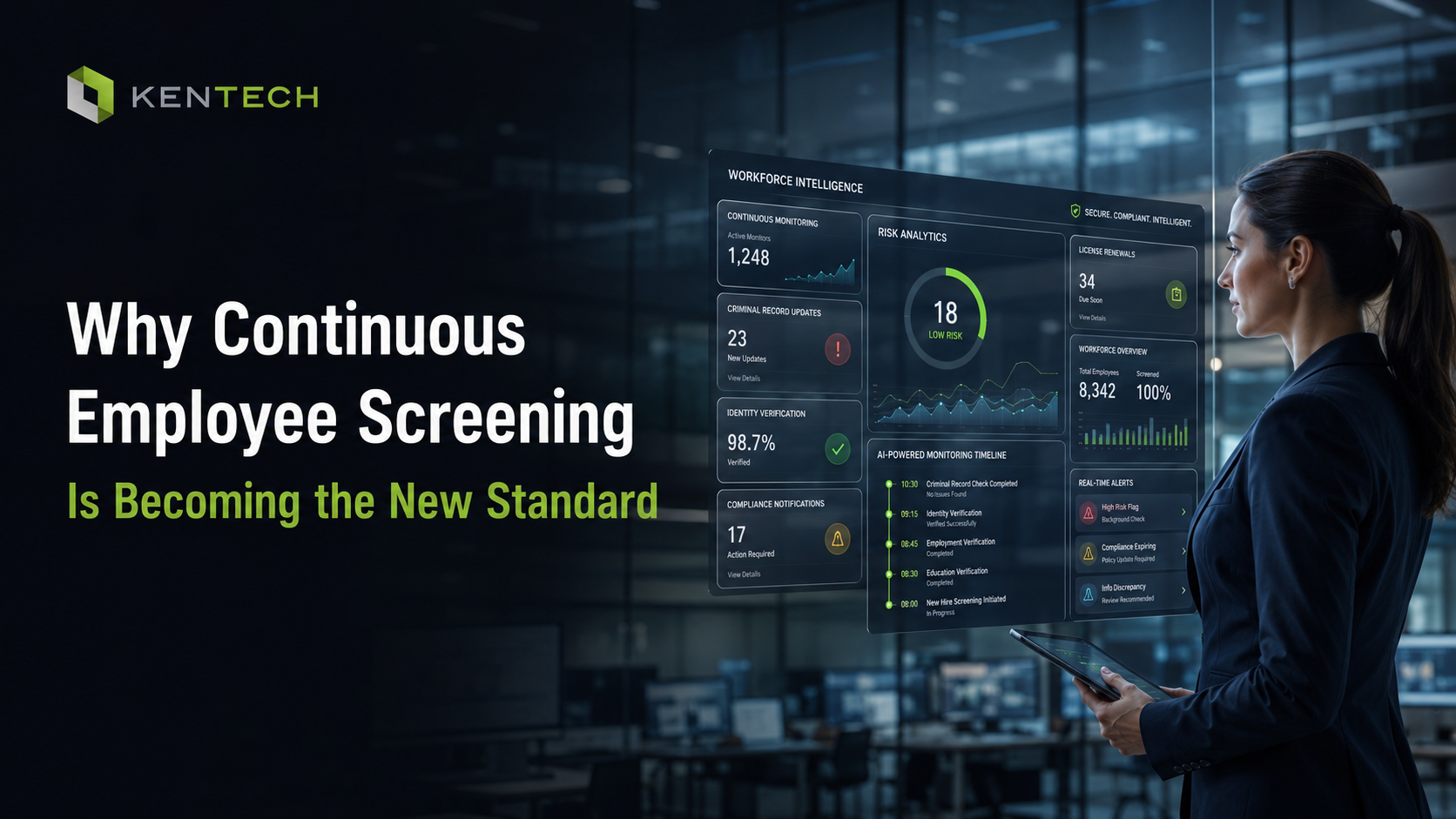
Continuous employee screening, sometimes called continuous workforce monitoring or post-hire screening, is the process of regularly monitoring employees for reportable events that may affect their employment eligibility, compliance status, or ability to perform their role safely.
Unlike a traditional background check, which captures information at one moment in time, continuous screening provides ongoing visibility into relevant changes that occur throughout an employee's tenure.
Depending on the position and applicable regulations, organizations may monitor for updates such as:
Criminal record changes
Professional license status
Employment eligibility
Driving record updates for commercial drivers
Regulatory sanctions
Industry-specific compliance requirements
Identity verification concerns
This proactive approach allows employers to respond appropriately while maintaining a safer and more compliant workplace.
Why One-Time Background Checks Are No Longer Enough
The workplace has evolved dramatically over the past decade. Employees often work remotely, access confidential data from multiple locations, and interact with customers through digital platforms. At the same time, businesses face increasing regulatory requirements and heightened expectations for workplace safety.
A background check completed during onboarding cannot predict future events.
An employee who met every hiring requirement may later experience circumstances that create compliance or security concerns. Without ongoing monitoring, organizations may remain unaware of these changes until an incident occurs.
Continuous employee screening helps close this visibility gap by providing organizations with timely information that supports informed decision-making.
The Business Benefits of Continuous Screening
Strengthens Workplace Safety
Every employer has a responsibility to provide a safe working environment. Ongoing employee screening helps organizations identify new risks that could affect workplace safety before they escalate into serious incidents.
By receiving timely notifications of relevant reportable events, HR and compliance teams can review situations promptly and determine appropriate next steps based on company policy and applicable regulations.
Improves Regulatory Compliance
Many industries—including healthcare, financial services, education, transportation, and government contracting—operate under strict compliance requirements.
Continuous monitoring helps organizations stay aligned with these obligations by tracking information that may impact licensing, certifications, or regulatory eligibility.
Rather than relying on periodic manual reviews, HR teams gain a more efficient process for maintaining compliance throughout the employee lifecycle.
Protects Company Reputation
Reputation is one of an organization's most valuable assets.
A single preventable incident involving an employee can damage customer trust, attract negative media attention, and expose the company to legal or financial consequences.
Continuous workforce monitoring enables organizations to identify emerging concerns early, giving leadership an opportunity to assess risks before they become larger business issues.
Supports Better Risk Management
Every hiring decision involves some degree of uncertainty. Continuous employee screening extends risk management beyond the onboarding process by providing ongoing visibility throughout employment.
Instead of reacting after problems occur, organizations can make proactive, evidence-based decisions supported by reliable screening data.
Industries That Benefit Most
While every organization can benefit from continuous employee screening, it is especially valuable for industries where trust, safety, compliance, and regulatory oversight are critical.
Examples include:
Healthcare organizations
Financial institutions
Government agencies
Law enforcement
Transportation and logistics
Education providers
Property management companies
Security firms
Technology companies handling sensitive data
Staffing and recruiting agencies
For these organizations, maintaining workforce integrity is not just a best practice—it is often a business necessity.
Choosing the Right Continuous Screening Partner
Not all employee screening providers offer the same level of intelligence, accuracy, or compliance support.
When evaluating a screening partner, organizations should look for solutions that combine advanced technology with experienced human expertise. AI-powered automation can accelerate data collection and flag potential issues, while trained investigators provide the context and judgment needed to interpret findings responsibly.
Equally important is ensuring that any continuous screening program aligns with applicable employment laws, privacy requirements, and industry regulations. A trusted partner should prioritize transparency, data security, and compliance throughout the screening process.
At KENTECH, continuous employee screening is designed to help organizations stay informed without adding unnecessary complexity to HR workflows. By combining intelligent technology with investigative expertise, businesses gain actionable insights that support safer hiring, stronger compliance, and more confident workforce decisions.
Best Practices for Implementing Continuous Employee Screening
Introducing a continuous employee screening program requires more than selecting a technology platform. It also involves creating clear policies, communicating expectations with employees, and ensuring every screening activity complies with federal, state, and local employment laws.
To build a successful program, HR leaders should consider the following best practices:
Define Your Screening Policy
Determine which positions require ongoing monitoring and identify the types of records or compliance updates that are relevant to each role. For example, commercial drivers may require continuous motor vehicle record monitoring, while healthcare professionals may require ongoing license verification.
A well-defined policy promotes consistency, fairness, and transparency across the organization.
Stay Compliant with Employment Regulations
Continuous screening programs should always align with the Fair Credit Reporting Act (FCRA), Equal Employment Opportunity Commission (EEOC) guidance, and any applicable state or local regulations.
Working with an experienced screening provider helps organizations implement compliant processes while respecting employee privacy and legal rights.
Focus on Relevant Risk Indicators
Not every update requires action. Effective continuous monitoring focuses on information that directly relates to an employee's job responsibilities and your organization's risk management policies.
HR teams should evaluate each alert objectively, considering the context, severity, and relevance before making employment decisions.
Combine Technology with Human Expertise
Automation improves speed, but experienced investigators provide the context needed to interpret complex findings accurately.
Artificial intelligence can identify potential concerns within seconds, while human analysts verify information, eliminate false positives, and provide actionable insights that support fair decision-making.
This balanced approach helps organizations make informed decisions with greater confidence.
The Future of Workforce Risk Management
The modern workforce is becoming increasingly dynamic. Hybrid work environments, remote employees, contract workers, and evolving regulatory requirements have made workforce oversight more complex than ever before.
As organizations continue embracing digital transformation, continuous employee screening is expected to become a standard component of enterprise risk management rather than an optional enhancement.
Forward-thinking HR leaders are recognizing that workforce intelligence extends beyond recruitment. Ongoing monitoring supports better compliance, strengthens workplace safety, protects brand reputation, and provides leadership with greater visibility into organizational risk.
Companies that adopt proactive screening strategies today will be better equipped to respond to tomorrow's workforce challenges.
Final Thoughts
Hiring the right people is one of the most important investments any organization can make. However, maintaining a safe, compliant, and trustworthy workforce requires visibility beyond the hiring process.
Continuous employee screening empowers organizations to identify relevant changes throughout the employee lifecycle, allowing HR teams to respond proactively instead of reactively. By combining intelligent technology with investigative expertise, businesses gain the confidence to make informed decisions while protecting employees, customers, and company assets.
As workplace expectations continue to evolve, organizations that invest in ongoing workforce monitoring will be better positioned to reduce risk, strengthen compliance, and foster a culture of trust.
At KENTECH, we help organizations move beyond one-time background checks with advanced workforce intelligence solutions that combine AI-powered technology, experienced investigators, and compliance-focused screening practices. Whether you're hiring new talent or managing an existing workforce, our solutions provide the insights needed to make smarter, safer decisions.