
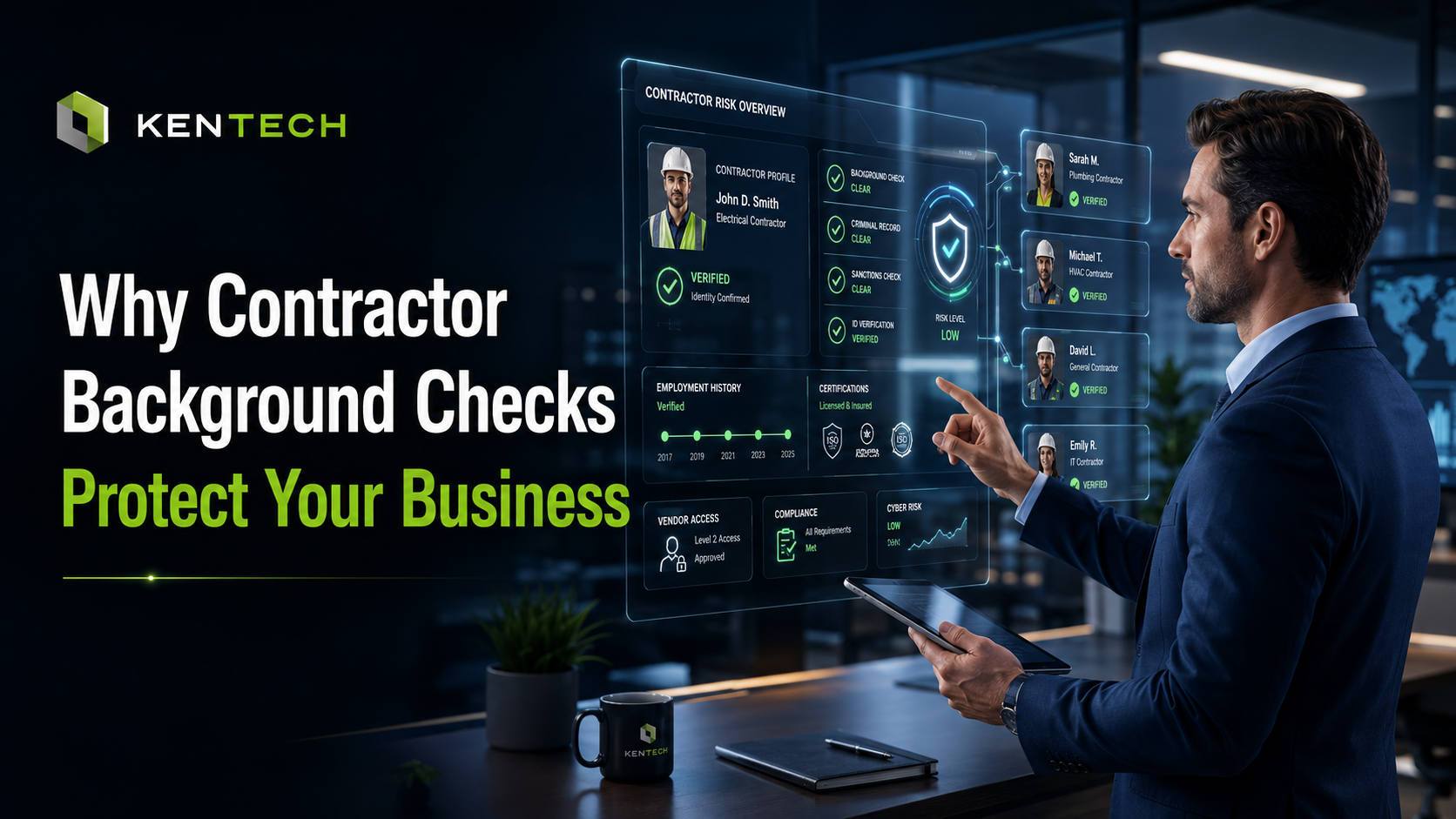
For many organizations, background screening is a standard part of hiring full-time employees. HR teams carefully verify employment history, conduct criminal background checks, confirm professional credentials, and ensure candidates meet company standards before extending an offer.
But what about contractors?
Independent contractors, consultants, freelancers, temporary workers, and third-party vendors often receive access to company facilities, confidential information, financial systems, customer data, and internal networks. Yet many organizations apply far less scrutiny to these workers than they do to permanent employees.
As businesses increasingly rely on flexible workforces to remain agile and competitive, contractor background checks have become an essential component of modern workforce risk management. Screening contractors helps organizations protect their people, data, and reputation while maintaining compliance with industry regulations and internal security policies.
Why Contractor Screening Matters
The modern workforce looks very different than it did just a decade ago. Organizations now depend on a mix of full-time employees, remote workers, consultants, staffing agency personnel, outsourced specialists, and project-based contractors.
In many cases, contractors perform responsibilities that are nearly identical to those of permanent employees. They may have access to proprietary software, sensitive customer records, financial information, intellectual property, or secure facilities.
From a risk perspective, the distinction between employee and contractor becomes much less important than the level of access each individual has.
If a contractor has the ability to influence business operations, interact with customers, or access confidential information, that individual should be evaluated with the same level of care as a permanent hire.
The Risks of Not Screening Contractors
Organizations sometimes assume that staffing agencies or contracting firms have already completed appropriate background checks. While some agencies maintain rigorous screening standards, others perform only minimal checks or apply inconsistent verification practices.
Without a clearly defined contractor screening policy, organizations may unknowingly expose themselves to avoidable risks.
Some of the most significant risks include:
Unauthorized access to confidential information
Data breaches and cybersecurity incidents
Workplace safety concerns
Financial fraud
Intellectual property theft
Regulatory compliance violations
Reputational damage
Increased legal liability
A single security incident involving an unscreened contractor can have consequences that extend far beyond the immediate event. Businesses may face operational disruptions, financial losses, customer distrust, and long-term damage to their reputation.
Contractor Background Checks Support Better Business Decisions
Contractor screening is not about creating barriers to hiring. Instead, it provides decision-makers with reliable information that supports informed risk management.
Background screening allows organizations to verify critical information before granting contractors access to company resources.
Depending on the role and industry, contractor background checks may include:
Criminal background screening
Identity verification
Employment verification
Education verification
Professional license verification
Sanctions and watchlist screening
Motor vehicle record checks
Drug testing when appropriate
The specific components should reflect the responsibilities of the position rather than applying a one-size-fits-all approach.
For example, a software developer working remotely with access to proprietary code may require identity verification and criminal background screening, while a healthcare contractor may also require professional license verification and compliance checks.
Industries That Benefit Most from Contractor Screening
Virtually every industry can benefit from contractor background checks, but some sectors face higher levels of operational and regulatory risk.
Healthcare
Healthcare organizations frequently engage temporary nurses, physicians, therapists, and administrative professionals. Proper screening helps protect patients, maintain regulatory compliance, and verify that contractors possess active professional credentials.
Financial Services
Banks, insurance providers, and financial institutions handle highly sensitive customer information every day. Contractor background checks help reduce fraud risks and strengthen customer trust.
Technology
Technology companies often rely on consultants, software developers, cybersecurity specialists, and IT contractors who receive access to proprietary systems and confidential business data.
Comprehensive contractor screening helps protect intellectual property while reducing cybersecurity vulnerabilities.
Government and Public Sector
Government agencies frequently work with outside vendors, consultants, and project-based professionals.
Background screening supports security requirements and helps agencies maintain public confidence while protecting sensitive information.
Manufacturing and Logistics
Manufacturers and logistics providers often engage temporary workers during seasonal demand or major projects.
Contractor background checks help organizations improve workplace safety while reducing operational risks associated with equipment access and facility security.
Building a Consistent Contractor Screening Policy
One of the biggest challenges organizations face is inconsistency.
Some departments require extensive contractor screening, while others rely solely on vendor assurances or informal hiring practices. This inconsistency creates unnecessary risk and makes compliance more difficult.
An effective contractor screening policy begins by identifying the level of access associated with each role. Contractors handling confidential information, financial systems, customer records, or secure facilities should undergo appropriate background screening before beginning work.
Organizations should also establish clear screening requirements for staffing agencies, outsourcing partners, and third-party vendors. Rather than assuming external providers maintain adequate standards, businesses should document screening expectations through contracts and service agreements.
Consistency not only reduces risk but also demonstrates an organization's commitment to fairness, security, and responsible workforce management.
The Role of Technology in Modern Contractor Background Checks
As organizations expand their contingent workforce, managing contractor screening manually becomes increasingly difficult. Human Resources teams may need to verify hundreds—or even thousands—of contractors working across multiple locations, departments, or client projects.
Modern background screening technology helps simplify this process by automating administrative tasks while improving consistency and efficiency.
Digital screening platforms can securely collect applicant information, manage consent forms, track screening progress, and organize verification results in a centralized system. Automated workflows reduce delays caused by manual paperwork, helping organizations onboard qualified contractors more quickly without compromising due diligence.
Technology also enables businesses to maintain standardized screening procedures regardless of where contractors are located. This is particularly valuable for organizations managing remote teams, nationwide projects, or global operations where screening requirements may vary by jurisdiction.
However, automation should complement—not replace—professional expertise. Complex cases often require experienced investigators to review records, verify discrepancies, and interpret findings accurately. The combination of advanced technology and human intelligence provides organizations with reliable information while supporting responsible hiring decisions.
Compliance Considerations for Contractor Screening
Contractor background checks must be conducted with the same level of legal and ethical responsibility as employee background screening.
Organizations should ensure that every screening program complies with applicable federal, state, and local laws governing employment screening, privacy, and consumer reporting. This includes obtaining proper authorization before conducting background checks and following established procedures when using third-party screening providers.
Companies should also understand that contractor screening requirements may differ depending on the nature of the work, industry regulations, and contractual obligations. Healthcare organizations, financial institutions, government agencies, and businesses working with sensitive customer information often have additional compliance requirements that influence screening practices.
Developing written policies and working with experienced screening professionals helps organizations maintain consistency while adapting to changing legal and regulatory expectations.
Common Mistakes Organizations Make
Although many businesses recognize the importance of contractor background checks, implementation is not always consistent.
One of the most common mistakes is screening only permanent employees while overlooking contractors who have similar levels of access to company resources.
Another frequent issue is relying entirely on staffing agencies or vendors without verifying their screening standards. While many partners perform background checks, the scope and quality of those screenings can vary significantly. Organizations remain responsible for ensuring that their workforce security standards are being met.
Businesses also make the mistake of applying the same screening package to every contractor regardless of job responsibilities. An office consultant, software developer, delivery driver, and healthcare professional each present different types of risk. Screening should be proportionate to the position and the level of access involved.
Finally, some organizations view contractor screening as a one-time administrative task rather than an ongoing risk management strategy. As contractor relationships become longer and more integrated into business operations, organizations should periodically review their screening policies to ensure they continue meeting operational and compliance needs.
The Future of Contractor Screening
The contingent workforce continues to grow across nearly every industry. Companies are increasingly relying on contractors to provide specialized expertise, accelerate projects, and support business growth while maintaining operational flexibility.
As this trend continues, contractor background checks will become a standard component of enterprise risk management rather than an optional practice.
Emerging technologies such as artificial intelligence, digital identity verification, secure document authentication, and workforce intelligence platforms will help organizations verify contractor information more efficiently while improving accuracy.
At the same time, businesses will continue to recognize the importance of human oversight. Technology can rapidly process large volumes of information, but experienced professionals provide the judgment, context, and investigative expertise necessary to evaluate complex screening results fairly and responsibly.
Organizations that combine intelligent technology with well-defined screening policies will be better positioned to manage workforce risks while supporting efficient onboarding and long-term business success.
Conclusion
Contractors play an increasingly important role in today's workforce, contributing specialized skills, operational flexibility, and valuable expertise across a wide range of industries. Yet their temporary status should not lead organizations to overlook the importance of thorough background screening.
Every individual who has access to company systems, confidential information, customers, or physical facilities represents a potential opportunity—and a potential risk. Implementing a structured contractor background check program helps organizations verify qualifications, strengthen workplace security, support regulatory compliance, and make informed decisions before granting that access.
Rather than treating contractor screening as a separate process, organizations should incorporate it into their broader workforce risk management strategy. Consistent policies, role-based screening requirements, and a balanced approach that combines advanced technology with experienced investigative professionals create a stronger foundation for protecting people, information, and business operations.
As the contingent workforce continues to expand, organizations that prioritize contractor background checks will be better equipped to reduce risk, maintain trust, and build a secure workforce capable of supporting long-term growth.