
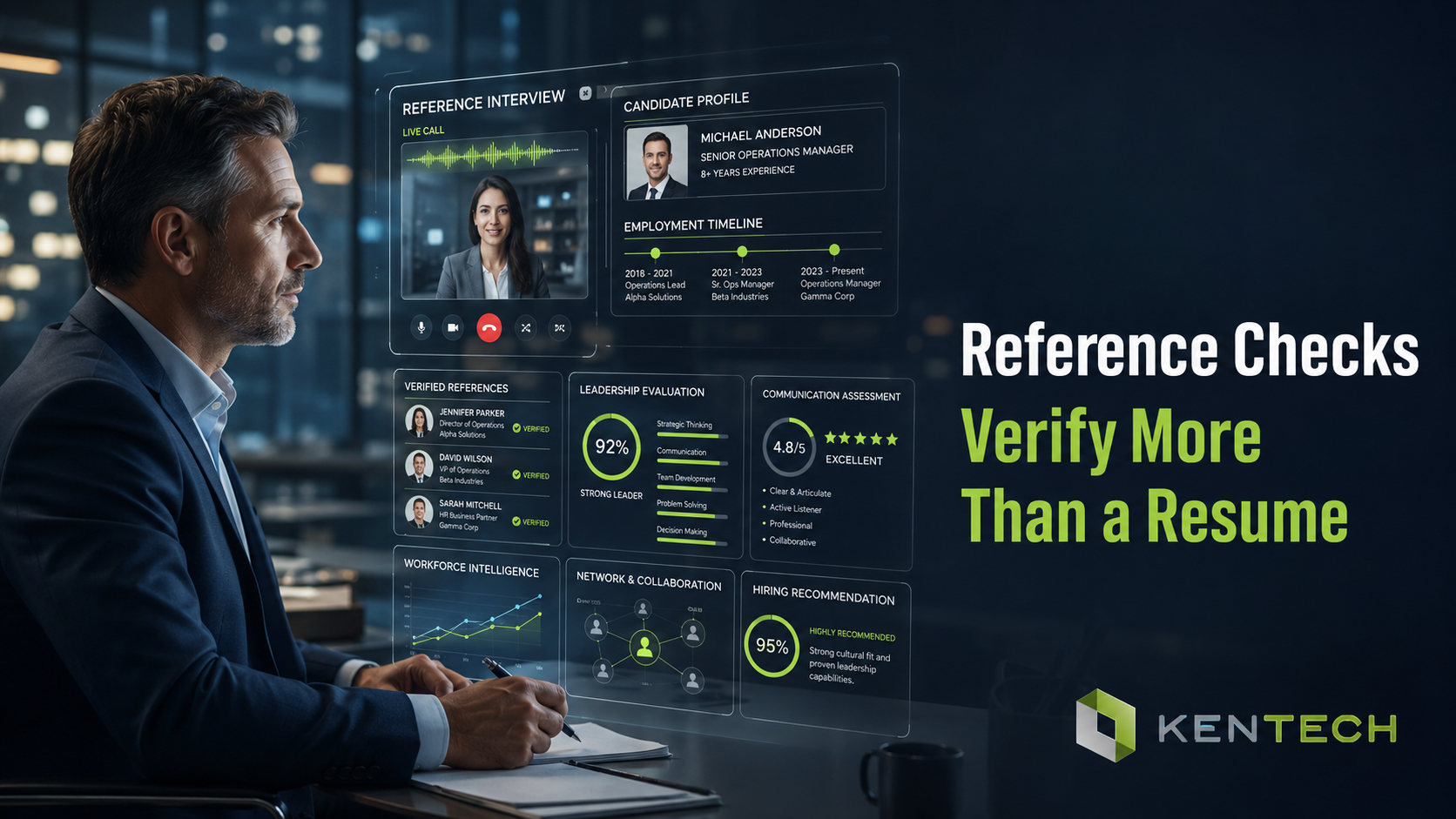
In today's competitive hiring landscape, employers have access to more recruitment technology than ever before. Artificial intelligence can screen resumes in seconds, applicant tracking systems can automate hiring workflows, and digital assessments can evaluate technical skills before an interview even takes place.
Despite these advancements, one hiring practice continues to provide valuable insight that technology alone cannot replace: the reference check.
Reference checks remain one of the most effective ways to better understand a candidate's professional experience, work habits, communication style, and overall fit for a role. While resumes highlight accomplishments and interviews showcase presentation skills, conversations with former supervisors and professional colleagues often provide additional context that helps employers make more confident hiring decisions.
When combined with employment verification, identity verification, criminal background checks, and other employment screening services, reference checks become an important part of a comprehensive hiring strategy that supports workforce quality, compliance, and organizational success.
What Are Reference Checks?
A reference check is the process of contacting individuals who have worked with a candidate to verify employment-related information and gain insight into the individual's professional performance.
References are typically former supervisors, managers, team leaders, clients, or colleagues who can speak about the candidate's work experience and professional conduct.
Unlike employment verification, which confirms factual information such as job titles and dates of employment, reference checks provide qualitative information about how an individual performed in previous roles.
Employers may ask questions regarding:
Job responsibilities
Quality of work
Communication skills
Teamwork and collaboration
Leadership abilities
Problem-solving skills
Reliability and attendance
Professionalism
Strengths and areas for development
Overall job performance
While reference feedback should not be the sole factor in a hiring decision, it can provide valuable context that supports a more complete evaluation of each candidate.
Why Reference Checks Still Matter
Some organizations have reduced or eliminated reference checks in an effort to speed up hiring.
However, relying only on resumes and interviews may leave important questions unanswered.
Candidates naturally present themselves in the best possible light during interviews. Reference conversations help employers better understand how an applicant performed in real workplace situations.
Professional references may offer insight into:
How candidates respond under pressure
Their ability to work with diverse teams
Leadership potential
Communication style
Adaptability during organizational change
Time management
Dependability
Professional integrity
These qualities are often difficult to evaluate through interviews alone.
Reference checks also demonstrate an employer's commitment to thoughtful hiring by verifying information through multiple sources rather than relying solely on self-reported information.
Common Misconceptions About Reference Checks
Despite their value, reference checks are sometimes misunderstood.
One common misconception is that references only provide positive feedback because candidates select people they know will speak favorably about them.
While candidates generally choose supportive references, experienced hiring professionals ask structured, job-related questions that often reveal meaningful insights beyond general praise.
Another misconception is that reference checks simply duplicate employment verification.
In reality, these services serve different purposes.
Employment verification confirms factual information such as dates of employment, job titles, and previous employers.
Reference checks focus on performance, interpersonal skills, leadership qualities, and workplace behavior—areas that cannot be verified through employment records alone.
Some organizations also believe that reference checks delay hiring.
With standardized processes and experienced screening professionals, reference checks can often be completed efficiently while adding significant value to the hiring process.
When Should Employers Conduct Reference Checks?
Reference checks are valuable for many positions, but they become especially important when hiring for roles involving leadership, financial responsibility, customer relationships, regulatory oversight, or access to sensitive information.
Organizations frequently conduct reference checks for:
Executive Leadership
Senior leaders influence company strategy, culture, and long-term performance.
Professional references can provide valuable insight into leadership style, decision-making, and organizational impact.
Management Positions
Managers are responsible for supervising employees, resolving conflicts, and achieving operational goals.
Reference checks help employers understand how candidates have performed in previous leadership roles.
Customer-Facing Roles
Sales professionals, consultants, and client relationship managers represent an organization's brand.
References may provide insight into communication skills, professionalism, and customer service performance.
Technical Specialists
Software developers, engineers, cybersecurity professionals, and other specialists often work on complex projects requiring collaboration and accountability.
Reference conversations help employers better understand technical performance and teamwork.
Regulated Industries
Healthcare, financial services, education, and government organizations often combine reference checks with broader employment screening programs to support compliance and workforce quality.
Best Practices for Conducting Reference Checks
An effective reference check process begins with preparation.
Employers should develop standardized questions that relate directly to the responsibilities of the position being filled. Consistent questions help create a fair evaluation process while allowing hiring managers to compare candidates more objectively.
Questions should encourage detailed responses rather than simple yes-or-no answers.
For example, instead of asking whether a candidate was a good employee, employers might ask how the individual handled challenging situations, collaborated with colleagues, managed deadlines, or demonstrated leadership during important projects.
Listening carefully to examples and workplace experiences often provides greater insight than general opinions alone.
Combining Reference Checks with Employment Screening
Reference checks provide valuable insight into a candidate's professional performance, but they are most effective when used alongside other employment screening services.
A well-rounded hiring process combines multiple verification methods to create a more complete understanding of each applicant. While references help employers evaluate workplace behavior and interpersonal skills, other screening services verify factual information that supports informed decision-making.
A comprehensive employment screening program may include:
Identity verification
Employment verification
Education verification
Professional license verification
Criminal background checks
Reference checks
Compliance screening
Drug testing, when appropriate
Each service contributes a different perspective. Together, they help organizations reduce hiring risks while ensuring decisions are based on verified information rather than assumptions.
This integrated approach also promotes consistency by applying standardized screening procedures across similar roles, strengthening both workforce quality and regulatory compliance.
How Technology Is Modernizing Reference Checks
Like many aspects of hiring, reference checks have evolved with advances in technology.
Modern screening platforms allow employers to securely collect reference information, send automated questionnaires, schedule interviews, and organize responses in centralized digital systems. These tools improve efficiency while reducing the administrative burden placed on HR teams and hiring managers.
Digital workflows also help standardize the process by ensuring every candidate is evaluated using consistent questions and documentation.
Artificial intelligence can further assist by organizing responses, identifying recurring themes, and highlighting areas that may require additional review. However, technology should complement—not replace—human judgment.
Meaningful conversations with professional references often reveal context that cannot be captured through automated surveys alone. Tone, examples, and detailed explanations provide valuable insight into a candidate's communication style, leadership ability, and workplace relationships.
Combining modern technology with experienced professionals allows organizations to conduct reference checks efficiently while preserving the quality of the evaluation.
Common Mistakes Employers Make
Although reference checks are a well-established hiring practice, they are not always conducted effectively.
One common mistake is treating reference checks as a final administrative step rather than an opportunity to gather meaningful information. Asking only basic questions such as confirming employment or job title limits the value of the conversation.
Another frequent oversight is accepting only personal references instead of professional ones. Whenever possible, employers should prioritize supervisors, managers, or colleagues who have directly observed the candidate's work performance.
Organizations also make the mistake of asking inconsistent questions. Different interviewers may focus on different topics, making it difficult to compare candidates objectively. Using a standardized list of role-specific questions helps improve fairness and consistency.
Some employers skip reference checks altogether when hiring quickly. While speed is often important, overlooking this step may result in missed opportunities to identify strengths, clarify concerns, or confirm that a candidate is the right fit for the position.
Legal and Ethical Considerations
Reference checks should always be conducted professionally and in accordance with applicable employment laws and privacy requirements.
Questions should relate directly to the responsibilities of the position and avoid topics that are unrelated to job performance. Employers should also obtain appropriate authorization before contacting references and respect confidentiality throughout the hiring process.
It is equally important to evaluate reference information fairly. Individual opinions should not outweigh verified facts or become the sole basis for a hiring decision. Instead, reference feedback should be considered alongside interviews, employment verification, background screening, and other relevant information.
Establishing clear internal policies helps ensure that every candidate is evaluated consistently while supporting ethical and compliant hiring practices.
The Future of Reference Checks
As recruitment technology continues to evolve, reference checks will remain an important component of comprehensive employment screening.
Artificial intelligence, digital verification platforms, and workforce intelligence tools are helping employers streamline the process, organize information more effectively, and identify patterns across multiple hiring stages.
At the same time, organizations are recognizing that successful hiring requires more than technical qualifications alone. Communication, leadership, collaboration, adaptability, and professional integrity continue to play a significant role in long-term employee success.
Reference checks provide valuable insight into these qualities by offering perspectives from individuals who have worked directly with the candidate.
Rather than becoming obsolete, reference checks are evolving into a more structured and data-informed process that complements modern hiring technology while preserving the value of professional human interaction.
Conclusion
Reference checks continue to be one of the most effective ways for employers to gain deeper insight into a candidate's professional experience, workplace performance, and overall suitability for a role. While resumes and interviews provide valuable information, conversations with former supervisors and colleagues add context that helps organizations make more informed hiring decisions.
When combined with identity verification, employment verification, criminal background checks, professional license verification, and other employment screening services, reference checks become an essential part of a comprehensive workforce risk management strategy.
As hiring grows increasingly competitive and organizations seek to build resilient, high-performing teams, thoughtful reference checks remain a valuable investment. By combining modern technology with structured evaluation processes and professional expertise, employers can strengthen hiring decisions, reduce organizational risk, and build workforces that support long-term business success.