Hiring decisions have always relied on gathering accurate information about a candidate's qualifications, experience, and professional conduct. Traditionally, employers evaluated resumes, interviewed applicants, contacted references, and verified employment history before extending an offer.
Today, another source of information has become increasingly relevant: social media.
Professional networking platforms, public online profiles, and digital interactions often provide additional context about an individual's professional presence, communication style, and public reputation. When reviewed responsibly and ethically, social media screening can complement traditional employment screening by helping organizations identify potential risks while supporting informed hiring decisions.
As organizations continue adapting to an increasingly digital world, social media screening has become an important component of workforce intelligence and modern risk management.
What Is Social Media Screening?
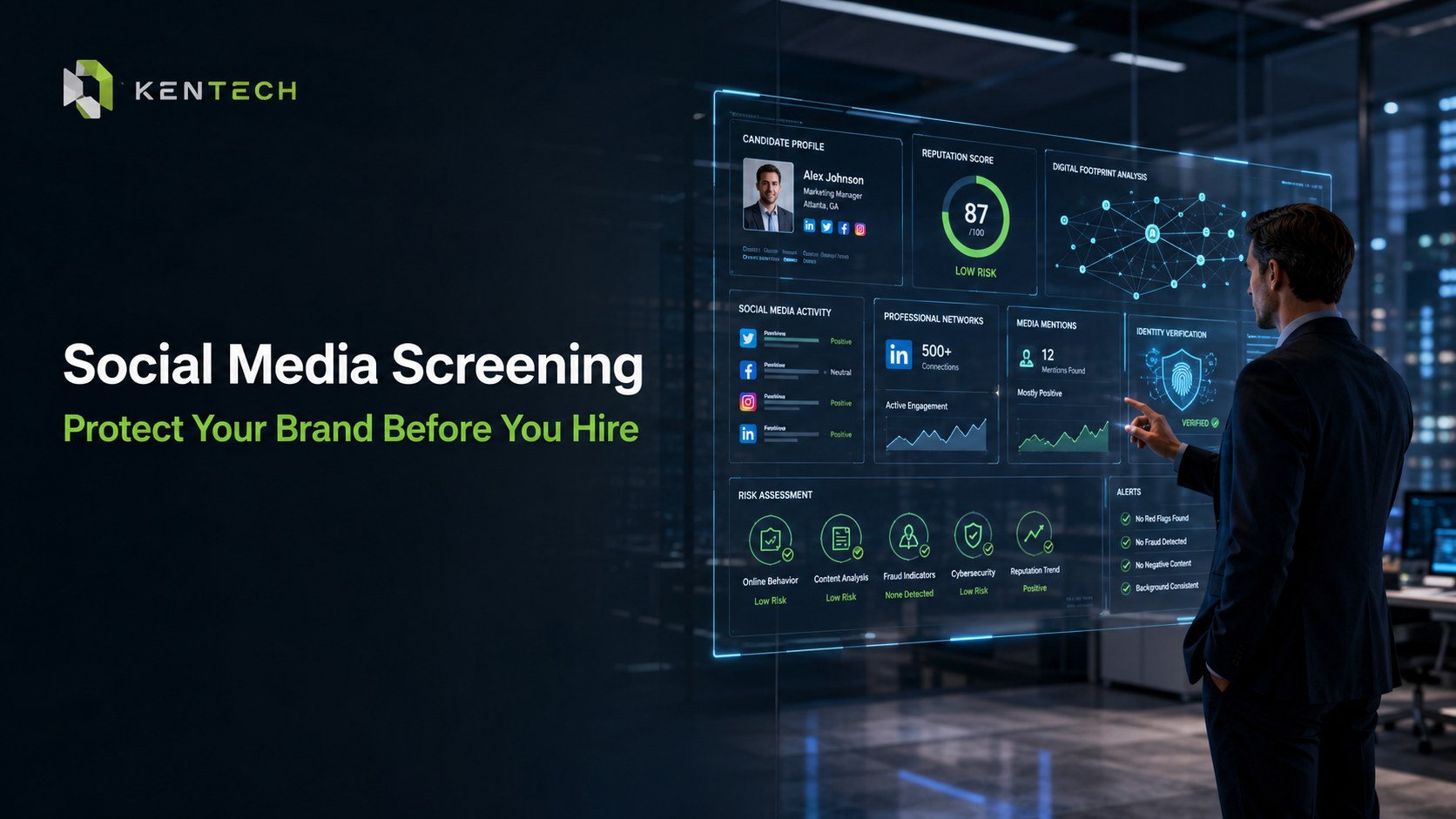
Social media screening is the process of reviewing publicly available online information to better understand a job candidate's professional presence and identify information that may be relevant to employment decisions.
Unlike criminal background checks or employment verification, social media screening does not focus on official records. Instead, it examines publicly accessible online activity that may provide additional context regarding professionalism, public conduct, and potential reputational concerns.
Depending on organizational policies and applicable laws, a social media review may include publicly available information from:
Professional networking platforms
Public social media profiles
Blogs and published content
Industry forums
Public comments
Professional portfolios
Online publications
Public news mentions
The goal is not to evaluate personal opinions or private activities. Instead, employers seek to identify publicly available information that may directly relate to workplace responsibilities, organizational values, or business risk.
Why Social Media Screening Has Become More Important
Digital communication has transformed the way professionals interact with colleagues, clients, and the public.
Many candidates maintain an active online presence that extends well beyond their resume. Professional accomplishments, industry involvement, published articles, conference presentations, and leadership activities are often visible online.
At the same time, publicly available information may also reveal behaviors that could present organizational risks, particularly for positions involving leadership, customer relationships, public trust, or brand representation.
As businesses place greater emphasis on protecting their reputation, employers are increasingly incorporating social media screening into broader employment screening programs.
Used appropriately, social media reviews provide another source of verified information that helps organizations make balanced hiring decisions.
What Employers Can Learn Through Social Media Screening
A professionally conducted social media screening focuses on information that is relevant to employment and organizational risk.
Potential insights may include:
Professional achievements
Industry participation
Public leadership activities
Professional certifications or speaking engagements
Evidence of fraudulent representation
Public threats or unlawful conduct
Reputational concerns affecting business interests
Publicly available conflicts of interest
In many cases, social media screening confirms positive aspects of a candidate's professional profile rather than identifying concerns.
For example, candidates may demonstrate industry expertise through published articles, conference participation, volunteer leadership, or thought leadership within their profession.
This broader perspective helps employers evaluate candidates beyond resumes and interviews.
Social Media Screening Is Not About Invading Privacy
One of the biggest misconceptions surrounding social media screening is that employers are searching through private accounts or attempting to monitor every aspect of an individual's personal life.
Responsible social media screening follows strict ethical and legal standards.
Professional screening providers review only publicly available information that can be accessed without circumventing privacy settings or requesting access to private accounts.
Organizations should also establish clear internal policies regarding what types of information may be considered during hiring decisions. Screening should focus on job-related information and avoid consideration of protected personal characteristics or other information unrelated to employment.
When conducted responsibly, social media screening enhances hiring decisions while respecting candidate privacy.
Industries That Benefit Most from Social Media Screening
Although many organizations can benefit from responsible social media screening, certain industries face greater reputational and operational risks.
Financial Services
Financial institutions rely heavily on public trust. Screening publicly available online information helps organizations identify potential reputational concerns before hiring individuals who will manage sensitive financial relationships.
Healthcare
Healthcare organizations frequently hire professionals who interact directly with patients and represent highly trusted institutions.
Social media screening can complement traditional employment screening by providing additional insight into professional conduct and public representation.
Education
Schools and universities place significant emphasis on professionalism and community trust.
Publicly available online activity may provide additional context for positions involving direct interaction with students, parents, and educational communities.
Executive Leadership
Senior executives often become public representatives of an organization.
Reviewing publicly available professional information helps organizations evaluate leadership visibility, industry reputation, and potential reputational considerations before making executive hiring decisions.
Legal and Ethical Considerations for Social Media Screening
Social media screening should always be conducted responsibly, ethically, and in accordance with applicable employment laws and privacy regulations.
Organizations should establish clear policies that define when social media screening is appropriate, who is responsible for conducting reviews, and what types of publicly available information may be considered during the hiring process.
The purpose of social media screening is not to evaluate an applicant's personal beliefs or private lifestyle. Instead, employers should focus only on publicly available information that is directly relevant to the responsibilities of the position or the organization's legitimate business interests.
Employers should also ensure that hiring decisions are based on verified, job-related information rather than assumptions or isolated online activity. Applying consistent screening standards across all candidates helps support fairness, transparency, and compliance throughout the hiring process.
By approaching social media screening with clearly defined guidelines, organizations can strengthen hiring decisions while respecting candidate privacy and maintaining ethical employment practices.
Best Practices for Responsible Social Media Screening
An effective social media screening program should complement—not replace—traditional employment screening methods.
Organizations should begin by developing written policies that clearly explain how online information will be reviewed and incorporated into hiring decisions. Consistency is essential. Applying the same screening standards across similar positions helps reduce bias and supports defensible hiring practices.
Employers should also rely on trusted screening professionals rather than conducting informal online searches. Experienced investigators understand how to evaluate publicly available information objectively, document findings accurately, and separate relevant business intelligence from unrelated personal content.
Another best practice is limiting reviews to information that is publicly accessible. Organizations should never request passwords, attempt to bypass privacy settings, or seek access to restricted accounts.
Finally, social media screening should be viewed as one component of a broader employment screening strategy. Combining online reputation reviews with identity verification, employment verification, criminal background checks, and professional license verification provides a more complete picture of each candidate.
How Technology Is Transforming Social Media Screening
As the volume of online information continues to grow, technology has become an important tool for managing social media screening efficiently.
Modern workforce intelligence platforms can organize publicly available information, identify relevant online content, and help investigators review large amounts of data more effectively. Artificial intelligence can assist by detecting patterns, identifying potential reputational concerns, and flagging information that may require additional review.
These technologies improve efficiency by reducing the time required to locate relevant public information while supporting more consistent evaluation processes.
However, technology alone cannot determine the context or significance of online activity.
Experienced professionals remain essential for interpreting findings, verifying authenticity, and distinguishing between meaningful business risks and information that has little relevance to employment decisions.
The combination of intelligent technology and human expertise helps organizations conduct social media screening responsibly while improving accuracy and reducing unnecessary bias.
Common Mistakes Employers Should Avoid
Although social media screening offers valuable insights, organizations should avoid several common mistakes.
One of the most frequent errors is conducting informal internet searches without established procedures. Inconsistent searches may expose employers to unnecessary legal risks while producing incomplete or unreliable information.
Another mistake is giving excessive weight to isolated online content. A single post or comment rarely provides enough context to evaluate an individual's professional qualifications or workplace performance.
Employers should also avoid relying solely on social media screening when making hiring decisions. Online information should always be considered alongside interviews, employment verification, reference checks, identity verification, and other screening services.
Failing to document the screening process is another common oversight. Maintaining accurate records helps demonstrate consistency, supports internal governance, and provides transparency if hiring decisions are later reviewed.
Finally, organizations should regularly update their screening policies to reflect evolving employment laws, privacy regulations, and technological developments.
The Future of Social Media Screening
As digital communication continues to shape professional life, social media screening will become an increasingly valuable component of workforce intelligence.
Professionals are building stronger online identities through networking platforms, industry publications, conferences, podcasts, and thought leadership activities. These digital footprints provide employers with opportunities to better understand a candidate's professional engagement beyond traditional resumes.
Artificial intelligence and advanced analytics will continue improving the efficiency of social media screening by organizing publicly available information and helping identify relevant patterns more quickly.
At the same time, organizations will place greater emphasis on ethical governance, privacy protection, and responsible use of digital information. Successful screening programs will balance technological innovation with human judgment, ensuring that hiring decisions remain fair, objective, and focused on legitimate business considerations.
Organizations that adopt thoughtful, transparent screening practices will be better positioned to protect their reputation while attracting qualified professionals in an increasingly connected world.
Conclusion
Social media screening has become an important addition to modern employment screening by providing employers with valuable context beyond resumes, interviews, and traditional verification services.
When conducted responsibly, it helps organizations identify potential reputational risks, verify professional presence, and strengthen hiring decisions without compromising candidate privacy or fairness. Rather than replacing established screening methods, social media reviews complement identity verification, employment verification, criminal background checks, and reference checks to create a more complete understanding of each applicant.
As businesses continue operating in an increasingly digital environment, organizations that implement structured, ethical, and legally compliant social media screening programs will be better equipped to manage workforce risks, protect their brand, and build stronger teams. By combining modern technology with experienced investigative expertise, employers can make more informed hiring decisions while fostering trust, transparency, and long-term organizational success.