
Hiring a qualified employee is only the beginning of workforce risk management.
Traditional employment background checks are typically completed before an individual starts working. They can help employers verify identity, employment history, education, criminal records, and other relevant information during the hiring process.
But what happens after the employee is hired?
A person's circumstances can change significantly over time. New criminal records may appear, professional licenses can expire, sanctions status can change, and other events may create risks that did not exist when the original background check was conducted.
This is why many organizations are turning to continuous background monitoring.
Instead of treating background screening as a one-time event, continuous monitoring provides organizations with a more proactive approach to identifying relevant changes throughout an employee's tenure.
For businesses operating in regulated industries, managing sensitive information, or employing individuals in positions of trust, ongoing screening can become an important component of workforce risk management.
What Is Continuous Background Monitoring?
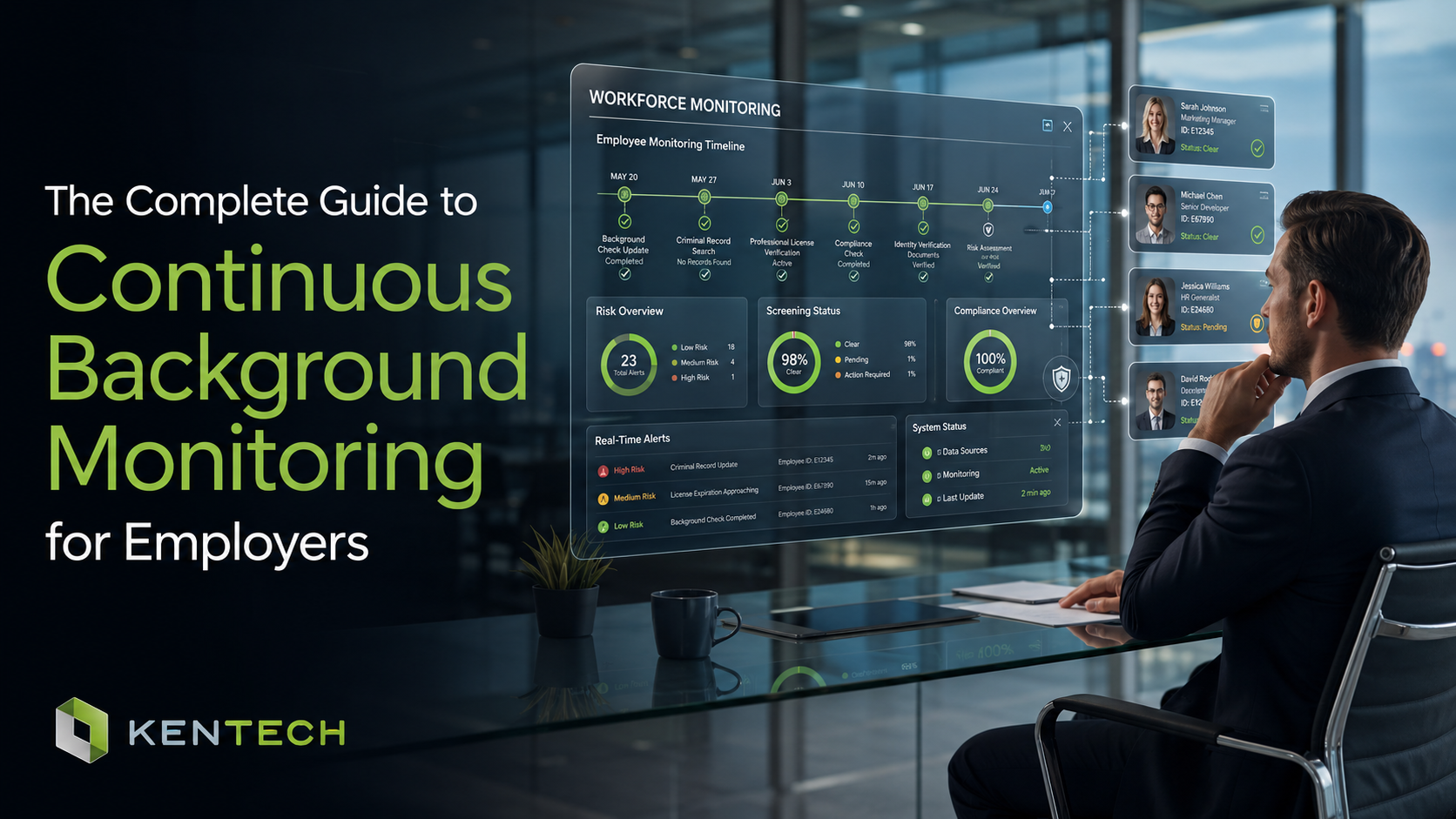
Continuous background monitoring is an ongoing screening process designed to identify specific changes in an employee's background after the initial hiring screening has been completed.
A traditional background check provides information at a particular point in time. Continuous monitoring extends that process by allowing organizations to receive alerts or updated information when potentially relevant events occur, subject to applicable laws and the scope of the monitoring program.
Depending on the organization and position, monitoring programs may cover areas such as:
Criminal record changes
Professional license status
Sanctions and watchlist information
Regulatory actions
Driving record changes
Other legally permissible screening information
The goal is not to monitor employees unnecessarily. Instead, continuous background monitoring gives employers a structured way to identify significant changes that could affect workplace safety, compliance, or organizational risk.
Why a Pre-Employment Background Check May Not Be Enough
Consider an employee who passes a background check when hired.
At that point, the employer has verified the candidate's background based on the information available during the screening process. However, the employee may remain with the organization for five, ten, or even twenty years.
During that period, circumstances can change.
A new criminal matter, professional licensing issue, regulatory action, or other reportable event could potentially affect the employee's suitability for a particular position.
Without an ongoing screening program, an employer may not become aware of certain developments until they are discovered through another source—or until they create a business problem.
Continuous background monitoring addresses this gap by providing an additional layer of visibility after hiring.
It changes the traditional screening model from:
Screen → Hire → Stop
to a more proactive approach:
Screen → Hire → Monitor → Respond
Key Benefits of Continuous Background Monitoring
1. Identify Emerging Risks
One of the biggest benefits of ongoing screening is the ability to identify potentially relevant changes sooner.
Organizations do not have to rely entirely on employees voluntarily reporting changes to their circumstances.
Depending on the monitoring program, alerts may help employers identify new information that warrants review.
Early awareness allows organizations to evaluate the situation and determine whether further action is appropriate.
2. Strengthen Workplace Safety
Certain positions involve significant responsibility, access to vulnerable populations, company assets, confidential information, or sensitive facilities.
For these roles, maintaining awareness of relevant background changes can be an important part of an organization's overall safety strategy.
Continuous monitoring provides an additional layer of workforce intelligence that can complement existing security and screening procedures.
3. Support Compliance Programs
Many organizations operate within industries where employee qualifications, licenses, or regulatory status are particularly important.
For example, healthcare organizations may need to ensure that certain professionals maintain appropriate credentials and eligibility.
Ongoing screening can help organizations identify changes that may require review rather than relying solely on information collected during the initial hiring process.
Employers should always determine their monitoring requirements based on applicable federal, state, and local laws as well as industry-specific regulations.
4. Protect Organizational Reputation
Employees in senior, public-facing, or highly trusted positions can have a significant impact on an organization's reputation.
A serious issue involving an employee may eventually become a public relations concern, particularly when the employee represents the organization or has significant authority.
Continuous background monitoring can help organizations take a more proactive approach to identifying potentially relevant developments.
Which Employees Should Be Included?
Not every organization needs the same monitoring program.
The appropriate scope depends on factors such as the employee's responsibilities, industry, regulatory environment, access to sensitive information, and applicable legal requirements.
Continuous screening may be particularly valuable for positions involving:
Healthcare and patient care
Financial services
Transportation and commercial driving
Government contracts
Security-sensitive environments
Childcare or education
Senior leadership
Access to confidential data
Significant financial authority
Organizations should establish clear criteria for determining which roles require ongoing screening and apply those criteria consistently.
Continuous Monitoring vs. Annual Background Checks
Employers sometimes assume that conducting background checks once a year provides the same protection as continuous monitoring.
The two approaches are different.
An annual background check provides a periodic snapshot. If an important event occurs shortly after the annual screening, the employer may not discover it until the next scheduled review.
Continuous background monitoring is designed to provide more frequent visibility into defined screening categories.
For organizations where timely awareness is particularly important, ongoing monitoring may provide a more responsive approach than relying exclusively on periodic checks.
That does not necessarily mean every employee requires constant monitoring. A risk-based screening strategy can help organizations determine the appropriate approach for different positions.
How Continuous Background Monitoring Fits Into a Screening Program
Continuous monitoring should not replace comprehensive pre-employment screening.
Instead, it should complement it.
A strong employment screening program may combine:
Identity verification
Criminal background checks
Employment verification
Education verification
Professional license verification
Drug testing, where appropriate
Motor vehicle record checks
Sanctions screening
Reference checks
Continuous background monitoring
Each service addresses a different aspect of workforce risk.
The initial background check establishes a verified baseline, while continuous monitoring helps organizations remain aware of certain relevant developments afterward.
This layered approach provides a stronger foundation for workforce risk management than relying on a single screening method.
What Employers Should Consider Before Implementing Continuous Monitoring
Before launching an ongoing screening program, organizations should establish clear policies and procedures.
First, employers should determine which positions and screening categories are relevant to their business.
Second, they should understand applicable privacy, employment, and background screening laws. Requirements can vary depending on the jurisdiction, industry, and type of information being monitored.
Employee communication is also important. Organizations should provide appropriate disclosures and obtain required authorization before conducting screening activities.
Finally, employers need a clear process for reviewing alerts.
An alert does not automatically mean an employee has violated company policy or is unsuitable for employment. Information should be verified, evaluated in context, and handled consistently with applicable laws and organizational procedures.
The Role of Technology in Continuous Background Monitoring
Technology has made ongoing background screening significantly more efficient.
Modern screening platforms can help organizations manage monitoring programs, organize employee records, generate alerts, and route potentially relevant information to authorized personnel.
Workforce intelligence technology can also help organizations manage large screening programs across multiple locations and employee groups.
However, technology should not replace human judgment.
An automated alert is simply information that may require further review. Experienced screening professionals and organizational decision-makers remain responsible for evaluating the information, verifying its accuracy, and determining the appropriate response.
The combination of technology and professional expertise allows organizations to build monitoring programs that are efficient without sacrificing accuracy or compliance.
Best Practices for Employers
Organizations implementing continuous background monitoring should follow a structured approach.
Establish a Written Policy
Define what will be monitored, which positions are included, how information will be reviewed, and how potential issues will be handled.
Apply Screening Consistently
Use objective criteria when determining which employees or positions are subject to monitoring.
Protect Sensitive Information
Access to screening information should be limited to authorized personnel and handled using appropriate security procedures.
Verify Alerts
Do not treat an initial alert as a final conclusion. Information should be reviewed and verified before employment decisions are made.
Review the Program Regularly
Laws, technologies, organizational risks, and workforce requirements change over time. Employers should periodically review their screening policies to ensure they remain appropriate.
The Future of Continuous Background Monitoring
As organizations become more focused on proactive risk management, continuous background monitoring is likely to become an increasingly important component of modern employment screening.
Artificial intelligence, workforce intelligence platforms, digital identity technology, and automated alert systems are making it possible to manage increasingly sophisticated screening programs.
At the same time, employers are placing greater emphasis on responsible data management, privacy, transparency, and compliance.
The future of background screening will therefore not simply be about monitoring more information. It will be about monitoring the right information, for the right positions, using responsible processes that provide meaningful intelligence without creating unnecessary intrusion.
Organizations that take this balanced approach can build stronger workforce risk management programs while maintaining employee trust.
Conclusion
A pre-employment background check provides valuable information, but it represents only a snapshot of an employee's background at a particular point in time.
Continuous background monitoring provides organizations with an additional layer of protection by helping identify relevant developments after hiring. When implemented responsibly, ongoing screening can support workplace safety, regulatory compliance, organizational reputation, and workforce risk management.
The most effective approach is not to view continuous monitoring as a replacement for traditional background screening. Instead, it should be part of a comprehensive screening strategy that begins with thorough pre-employment verification and continues throughout the employee lifecycle where appropriate.
By combining background screening, identity verification, professional credential checks, compliance screening, workforce intelligence, and continuous monitoring, organizations can make more informed decisions and respond proactively to emerging workforce risks.
For employers operating in today's complex business environment, continuous background monitoring provides an important opportunity to move from reactive screening to proactive workforce risk management.