
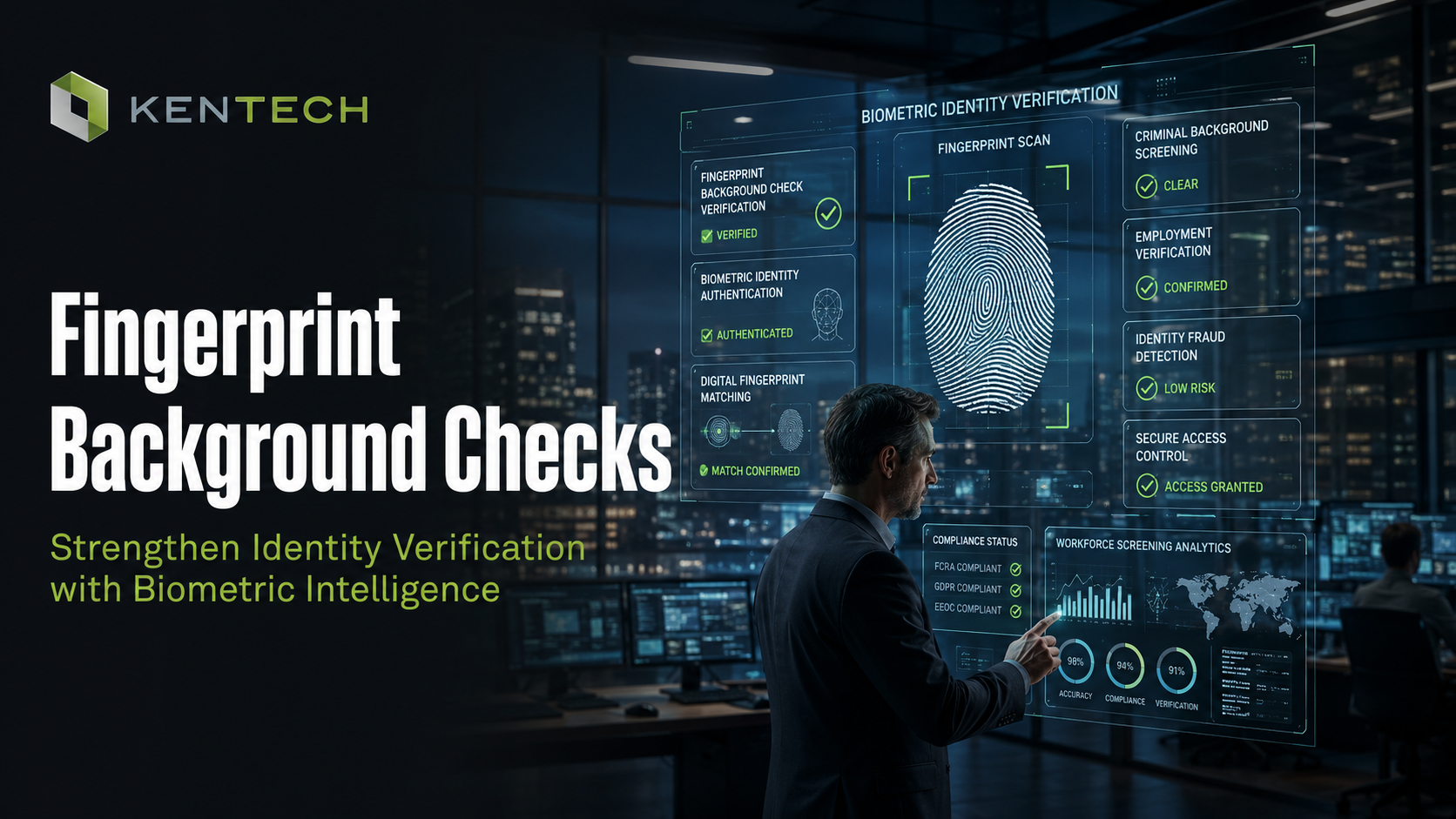
Hiring the right employees begins with one critical step: confirming that applicants are who they claim to be.
In today's hiring environment, organizations face increasing challenges related to identity fraud, falsified credentials, and regulatory compliance. Traditional background screening methods remain essential, but many industries require a higher level of identity verification to protect sensitive information, vulnerable populations, and business operations.
This is where fingerprint background checks provide significant value.
Unlike name-based searches, fingerprint screening uses unique biometric identifiers to verify an individual's identity with a much higher degree of accuracy. By matching fingerprints against authorized databases, employers can reduce identity-related risks while strengthening confidence in their hiring decisions.
Whether hiring healthcare professionals, educators, government employees, financial personnel, or individuals working in high-security environments, fingerprint background checks have become an important part of comprehensive employment screening programs.
When integrated with identity verification, criminal background checks, employment verification, and other screening services, fingerprinting helps organizations build safer workplaces while supporting compliance and workforce integrity.
What Are Fingerprint Background Checks?
A fingerprint background check is a biometric screening process that verifies an individual's identity by comparing their fingerprints against official government or authorized criminal record databases.
Unlike traditional background checks that rely primarily on personal information such as a name, date of birth, or Social Security number, fingerprint screening uses unique biometric characteristics that cannot easily be altered or duplicated.
Depending on organizational requirements and applicable regulations, fingerprint background checks may include searches through:
Federal criminal record databases
State criminal history repositories
Authorized law enforcement databases
Government identity verification systems
Industry-specific screening programs
Because fingerprints are unique to every individual, biometric verification helps minimize the possibility of mistaken identity while improving the accuracy of employment screening.
Why Fingerprint Background Checks Matter
Identity verification is one of the most important components of the hiring process.
If an applicant provides inaccurate or fraudulent identity information, every other verification performed during employment screening may become less reliable.
Fingerprint background checks help organizations:
Verify candidate identity
Reduce identity fraud
Improve hiring accuracy
Support regulatory compliance
Strengthen workplace security
Protect sensitive information
Reduce organizational risk
Support fair and consistent hiring practices
For organizations operating in highly regulated industries, fingerprint screening often serves as an additional safeguard that enhances traditional employment background checks.
Rather than replacing other verification services, fingerprint background checks strengthen the overall screening process by confirming that all subsequent searches are connected to the correct individual.
Fingerprint Screening vs. Name-Based Background Checks
Many employers rely on name-based background searches during routine hiring.
These searches remain an effective component of employment screening, but they may occasionally encounter challenges involving common names, aliases, typographical errors, or identity discrepancies.
Fingerprint background checks address many of these concerns by relying on biometric data instead of personal identifiers alone.
Name-Based Searches
Traditional background checks typically compare personal information such as:
Full legal name
Date of birth
Previous addresses
Social Security number, where permitted
Other identifying information
These searches provide valuable information but may require additional verification when multiple individuals share similar personal details.
Fingerprint-Based Searches
Fingerprint screening confirms identity using unique biometric data that remains consistent throughout an individual's lifetime.
This higher level of verification helps reduce identity confusion while improving confidence in criminal history searches and other background investigations.
For employers filling positions involving public trust, financial responsibility, or access to sensitive information, fingerprint verification provides an additional layer of security.
Industries That Commonly Require Fingerprint Background Checks
Although fingerprint screening can benefit organizations across many sectors, several industries routinely require biometric verification because of legal requirements, regulatory standards, or elevated security responsibilities.
Healthcare
Hospitals, medical practices, long-term care facilities, and home healthcare providers often require fingerprint background checks for professionals who work directly with patients or have access to confidential medical information.
Biometric identity verification helps healthcare organizations strengthen patient safety while supporting industry compliance requirements.
Education
Schools, universities, childcare providers, and educational institutions frequently require fingerprint screening for teachers, administrators, volunteers, and support staff.
Fingerprint background checks help educational organizations protect students while meeting state and local employment regulations.
Government
Federal, state, and local government agencies commonly require fingerprint verification for employees, contractors, and consultants working with sensitive information, public infrastructure, or secure facilities.
Biometric screening helps strengthen identity verification and supports national security requirements.
Financial Services
Banks, credit unions, investment firms, and insurance companies often implement fingerprint background checks for positions involving financial transactions, customer assets, or sensitive financial data.
Fingerprint verification supports fraud prevention and reinforces trust in financial institutions.
Transportation and Critical Infrastructure
Organizations responsible for transportation, aviation, utilities, logistics, and critical infrastructure may require fingerprint screening for employees working in secure or regulated environments.
Biometric verification helps strengthen workforce security while supporting industry-specific compliance obligations.
Fingerprint Background Checks as Part of a Comprehensive Screening Strategy
Fingerprint verification is most effective when integrated into a comprehensive employment screening program.
Rather than relying on a single verification method, organizations benefit from combining multiple screening services to develop a complete understanding of every candidate.
A comprehensive employment screening program may include:
Identity verification
Fingerprint background checks
Criminal background checks
Employment verification
Education verification
Professional license verification
Reference checks
Drug testing, when appropriate
Compliance screening
By combining these services, employers gain greater confidence that hiring decisions are based on verified information while reducing organizational risk and supporting long-term workforce integrity.
FBI Fingerprint Background Checks Explained
One of the most recognized forms of biometric screening is the FBI fingerprint background check.
An FBI fingerprint check compares an individual's fingerprints against records maintained within authorized federal databases. This process can identify criminal history information associated with a person's verified biometric identity, making it an important screening tool for positions requiring a higher level of trust or regulatory compliance.
Depending on the position and applicable legal requirements, employers may request fingerprint-based screenings through federal agencies, state repositories, or other authorized entities.
Industries that commonly require FBI fingerprint background checks include healthcare, education, government, financial services, transportation, and critical infrastructure. Many organizations also use fingerprint-based screening when employees require security clearances or access to sensitive facilities.
While not every position requires fingerprint verification, employers should evaluate whether the responsibilities of a role justify this additional level of identity confirmation.
The Evolution of Digital Fingerprinting
Fingerprint screening has advanced significantly over the past decade.
Traditional ink fingerprint cards have largely been replaced by digital fingerprinting systems that capture high-resolution biometric images electronically. These modern systems improve accuracy, reduce processing errors, and accelerate submission to authorized screening agencies.
Digital fingerprinting offers several advantages, including:
Faster processing times
Improved image quality
Reduced manual errors
Secure electronic transmission
Enhanced identity verification
Simplified record management
Organizations also benefit from more efficient scheduling, centralized reporting, and improved audit trails throughout the screening process.
As biometric technology continues to evolve, digital fingerprinting is becoming the preferred solution for organizations seeking efficient and reliable identity verification.
Compliance and Legal Considerations
Fingerprint background checks should always be conducted in accordance with applicable federal, state, and local laws.
Organizations must obtain appropriate authorization before collecting fingerprints and clearly communicate the purpose of the screening to applicants. Employers should also ensure that biometric information is collected, stored, transmitted, and retained using secure procedures that protect sensitive personal data.
In addition, many industries have specific regulations governing fingerprint-based background checks. Healthcare organizations, educational institutions, government agencies, and financial organizations often operate under compliance frameworks that establish screening requirements for certain positions.
Developing written screening policies and applying fingerprint verification consistently across comparable roles helps organizations maintain fairness while supporting regulatory compliance.
Working with an experienced background screening provider also helps employers navigate changing legal requirements and implement fingerprint screening programs that align with industry standards.
Common Mistakes Employers Should Avoid
Fingerprint background checks are highly effective, but organizations can reduce their value if they are not implemented strategically.
One common mistake is assuming that fingerprint screening alone provides a complete picture of a candidate. While biometric verification confirms identity and may reveal criminal history where authorized, it does not verify employment history, education, professional licenses, or workplace performance.
Another mistake is applying fingerprint screening inconsistently across similar positions. Inconsistent screening practices can create operational challenges and increase compliance risks. Employers should establish clear policies that define when fingerprint background checks are required and apply those standards uniformly.
Organizations should also avoid delaying fingerprint screening until the final stages of onboarding. Completing verification earlier in the hiring process helps identify potential issues before significant time and resources have been invested.
Finally, employers should ensure that fingerprint records are handled securely and only by authorized personnel. Protecting biometric information is essential for maintaining trust, supporting privacy requirements, and safeguarding sensitive data.
Fingerprint Background Checks as Part of Workforce Risk Management
Fingerprint screening plays an important role within a broader workforce risk management strategy.
Organizations that integrate biometric verification with comprehensive employment screening gain greater confidence in the accuracy of hiring decisions while strengthening workplace security and regulatory compliance.
A comprehensive workforce risk management program may include:
Identity verification
Fingerprint background checks
Criminal background checks
Employment verification
Education verification
Professional license verification
Reference checks
Drug testing, where appropriate
Continuous monitoring
Compliance screening
Together, these services provide employers with a more complete understanding of each candidate while reducing hiring risks and supporting consistent employment practices.
Rather than relying on a single source of information, organizations can make informed decisions using verified data from multiple trusted sources.
The Future of Biometric Identity Verification
Biometric technology continues to reshape the future of employment screening.
Fingerprint verification is increasingly being integrated with facial recognition, digital identity authentication, document verification, and artificial intelligence to create more secure and efficient screening processes.
As organizations expand remote hiring and global recruitment, biometric verification offers an effective way to confirm candidate identity while reducing opportunities for fraud or impersonation.
Artificial intelligence is also improving operational efficiency by helping identify potential discrepancies, streamlining workflow management, and supporting quality assurance throughout the verification process. However, human expertise remains essential for interpreting results, ensuring compliance, and evaluating findings within the proper context.
Organizations that adopt modern biometric verification technologies while maintaining strong governance practices will be better positioned to build secure, compliant, and resilient workforces.
Conclusion
Fingerprint background checks provide one of the most reliable methods for verifying identity during the hiring process. By using unique biometric identifiers, organizations can improve screening accuracy, reduce identity fraud, and strengthen confidence in employment decisions.
When combined with identity verification, criminal background checks, employment verification, education verification, and other screening services, fingerprint background checks become an integral part of a comprehensive employment screening strategy. This layered approach helps organizations protect sensitive information, support regulatory compliance, and build safer workplaces.
As hiring continues to evolve, biometric verification will remain an essential tool for organizations seeking to reduce risk while improving the integrity of their workforce. By integrating advanced fingerprint technology with experienced investigative professionals, businesses can make informed hiring decisions that support long-term operational success and organizational trust.