
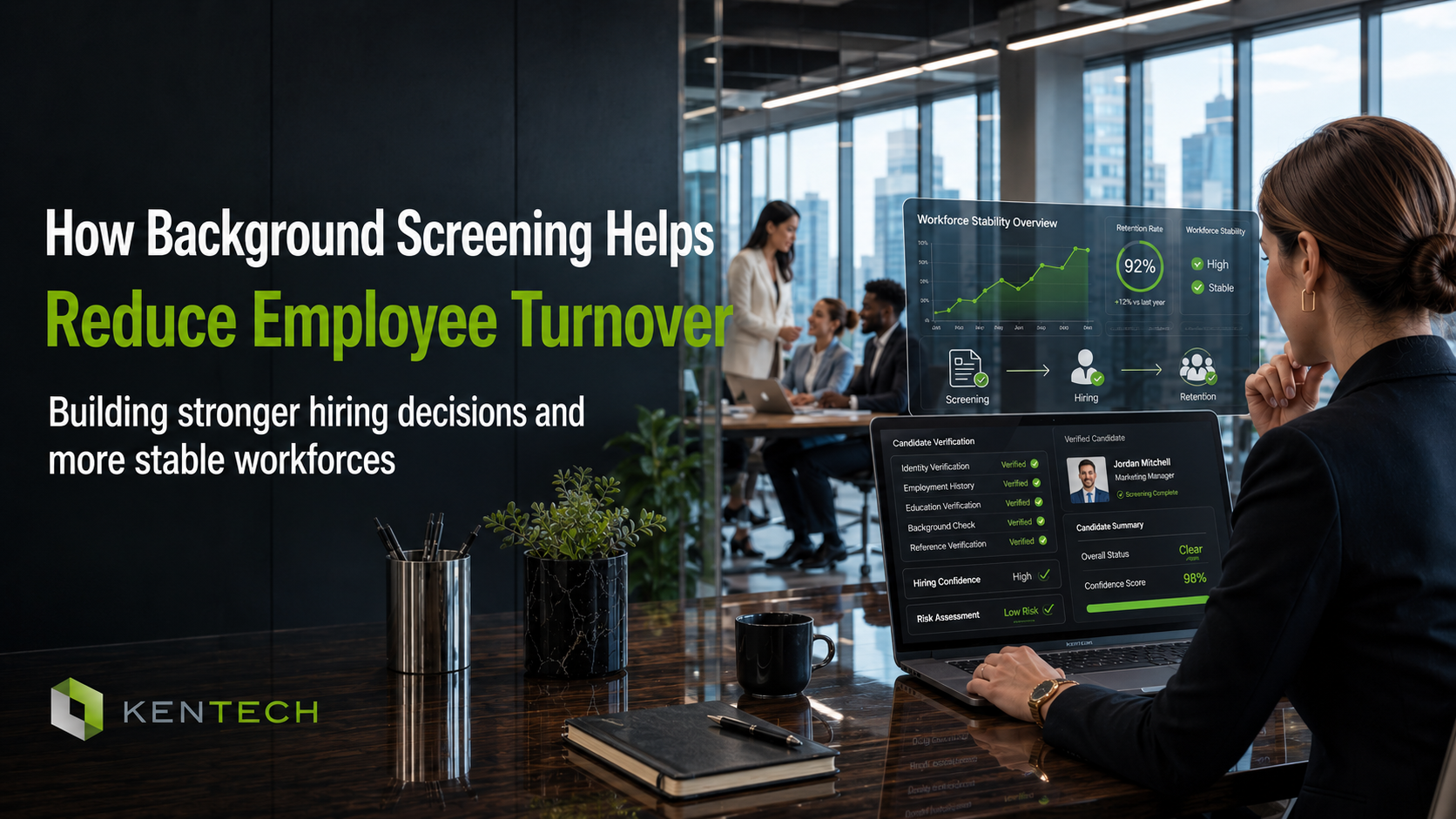
Employee turnover is one of the most expensive challenges organizations face.
When employees leave unexpectedly, businesses must spend time and money recruiting replacements, conducting interviews, onboarding new hires, and training employees before they become fully productive. High turnover can also affect team morale, customer relationships, productivity, and organizational performance.
While there are many reasons employees leave a company, one often-overlooked factor begins before the employee is even hired: the quality of the hiring decision.
A candidate may look impressive on a résumé and perform well during an interview, but employers still need reliable information to determine whether that person is genuinely qualified and suited for the position.
This is where background screening can play an important role.
A comprehensive employment screening process helps organizations verify information provided by candidates and identify potential discrepancies before making a hiring decision. When combined with thoughtful recruiting, structured interviews, realistic job expectations, and effective onboarding, background screening can contribute to stronger hiring outcomes and better employee retention.
The goal isn't simply to find reasons not to hire someone.
The goal is to make better-informed hiring decisions.
What Is Background Screening?
Background screening is the process of verifying relevant information about a job candidate before or during employment, depending on the employer's policies and applicable laws.
A screening program may include:
Identity verification
Criminal background checks
Employment verification
Education verification
Professional license verification
Reference checks
Motor vehicle record checks
Sanctions screening
Drug testing, where appropriate
International background checks
The exact services used should depend on the responsibilities of the position, industry requirements, and applicable federal, state, and local regulations.
When implemented consistently, background screening gives employers access to verified information that can complement résumés, interviews, and application materials.
Why Employee Turnover Is So Costly
Turnover involves much more than the cost of placing a job advertisement.
When an employee leaves, organizations may experience:
Recruiting expenses
Interviewing costs
Administrative workload
Onboarding expenses
Training costs
Lost productivity
Overtime for existing employees
Customer service disruptions
Knowledge loss
Lower team morale
The impact can become even greater when a highly experienced employee leaves a specialized position.
Replacing that employee may require weeks or months of recruiting and training before the new hire reaches a similar level of productivity.
Reducing avoidable turnover therefore begins with improving the quality of hiring decisions.
How Background Screening Can Support Employee Retention
Background screening does not guarantee that an employee will remain with an organization.
People leave jobs for many reasons, including compensation, management, career development, workplace culture, location, and personal circumstances.
However, comprehensive screening can help reduce certain types of avoidable turnover by helping employers make more informed hiring decisions.
Here are several ways it can contribute.
1. Verify That Candidates Have the Qualifications They Claim
One of the most basic reasons employees struggle in a position is that they do not actually possess the qualifications required to perform the job successfully.
A candidate may exaggerate their employment experience, education, certifications, or technical skills.
Employment and education verification can help employers confirm important qualifications before making an offer.
For example, an organization hiring a specialized professional may verify:
Previous employers
Employment dates
Job titles
Degrees
Certifications
Professional licenses
Relevant qualifications
When organizations hire candidates whose qualifications align with the position, they may reduce the likelihood of performance-related dissatisfaction and early departure.
2. Improve the Quality of Hiring Decisions
A résumé and interview provide valuable information, but they represent only part of a candidate's professional history.
Background screening adds another layer of verified information.
Instead of relying exclusively on what an applicant says about their background, employers can use appropriate screening services to confirm important details.
This helps hiring managers make decisions based on a combination of:
Candidate Information + Interview Performance + Verified Background Information
That broader perspective can improve hiring confidence and help organizations identify candidates who are more closely aligned with the requirements of the position.
3. Reduce the Risk of Hiring Candidates Who Are Not a Good Fit
Employee turnover sometimes occurs because expectations do not match reality.
A candidate may accept a position without fully understanding its responsibilities. Alternatively, an employer may discover after hiring that the candidate's experience does not match what was represented during recruitment.
Background screening can help verify professional history and qualifications before employment begins.
However, employers should remember that background screening is only one component of assessing job fit.
Hiring teams should also clearly communicate:
Job responsibilities
Required skills
Working conditions
Schedule expectations
Performance standards
Career opportunities
When candidates understand the role and employers verify relevant qualifications, both sides can make better-informed decisions.
4. Strengthen Trust Between Employers and Employees
A consistent hiring process can help establish a foundation of trust.
When organizations communicate clearly about screening requirements and apply those requirements consistently, candidates understand that employment decisions are based on established standards rather than arbitrary judgments.
Transparency is particularly important when screening involves sensitive information.
Employers should provide appropriate disclosures, obtain required authorization, and handle candidate information responsibly.
A professional screening experience can reinforce the message that the organization takes security, compliance, and workforce integrity seriously.
5. Reduce Hiring Mistakes That Lead to Early Turnover
Early turnover can be especially costly.
When a new employee leaves shortly after being hired, the organization may need to restart the entire recruiting process.
Background screening can help reduce certain preventable hiring mistakes by verifying information before the employee enters the workforce.
For example, an employer may discover that:
A required certification has expired
Claimed employment experience cannot be verified
An educational credential is inaccurate
A professional license is not active
Important identity information requires clarification
These findings give employers an opportunity to evaluate the situation before making a final hiring decision.
6. Support Better Workforce Planning
Background screening can also contribute to broader workforce intelligence.
Organizations can use screening information alongside recruiting, performance, and workforce data to identify patterns in their hiring processes.
For example, if a company repeatedly experiences turnover among employees hired for a particular role, leadership may need to examine whether the problem relates to:
Job requirements
Recruiting sources
Compensation
Management
Training
Workload
Candidate expectations
Background screening provides verified candidate information that can become one component of this broader analysis.
Background Screening Should Not Be Used as a Retention Strategy Alone
It is important to recognize the limitations of background screening.
Screening helps employers understand a candidate's background, but it cannot predict every future behavior or guarantee long-term performance.
An employee with a clean background may still leave because of poor management, limited advancement opportunities, compensation, burnout, or workplace culture.
Therefore, organizations should combine screening with other retention strategies.
Effective employee retention may include:
Competitive compensation
Career development
Strong management
Employee recognition
Professional training
Flexible work arrangements
Clear communication
Meaningful benefits
Positive workplace culture
Background screening helps organizations make better hiring decisions. Strong management and employee experience help organizations retain those employees.
Both matter.
Which Screening Services Can Help Employers Hire More Confidently?
A comprehensive screening program can combine several verification services depending on the position.
Employment Verification
Confirms relevant professional experience and employment history.
Education Verification
Helps confirm degrees, certifications, and educational credentials.
Identity Verification
Helps ensure that screening results are associated with the correct individual.
Criminal Background Checks
Where legally permitted and relevant to the position, criminal screening can help employers evaluate certain aspects of workforce risk.
Professional License Verification
Particularly valuable for positions requiring active professional credentials.
Reference Checks
Can provide additional insight into a candidate's previous professional experience and workplace performance.
Motor Vehicle Record Checks
Important for organizations hiring employees who drive as part of their job responsibilities.
International Background Checks
Useful when candidates have lived, worked, or studied outside the employer's country.
The appropriate combination depends on the organization's industry, position requirements, and legal obligations.
Best Practices for Using Background Screening to Improve Hiring
Organizations seeking to reduce turnover should approach screening strategically.
Screen for the Position
Only use screening services that are relevant to the responsibilities and legitimate requirements of the role.
Apply Policies Consistently
Candidates applying for comparable positions should generally be subject to consistent screening standards.
Verify Important Information
Focus on credentials, experience, identity, and other information that genuinely affects the hiring decision.
Communicate Clearly
Candidates should understand what screening is being conducted and why.
Follow Applicable Laws
Employment screening is subject to federal, state, and local requirements. Organizations should ensure their policies comply with applicable regulations.
Combine Screening With Better Hiring Practices
Background checks work best when combined with structured interviews, realistic job descriptions, skills assessments, and effective onboarding.
The Future of Background Screening and Employee Retention
Technology is changing the way organizations approach employment screening.
Modern screening platforms can help employers manage multiple verification services through centralized workflows while improving speed, organization, and reporting.
Artificial intelligence and workforce intelligence tools can also help organizations identify patterns, automate administrative tasks, and manage large-scale screening programs.
At the same time, organizations are becoming increasingly focused on continuous background monitoring.
Rather than viewing screening as something that happens only before employment begins, some employers are adopting ongoing screening strategies for appropriate positions and circumstances.
This can provide organizations with additional workforce intelligence after hiring while helping them respond to relevant changes more proactively.
As these technologies develop, responsible data management, privacy, transparency, and compliance will remain essential.
Conclusion
Employee turnover is influenced by many factors, but some turnover begins with a hiring decision that was not based on enough verified information.
Background screening helps employers close that information gap.
By verifying identity, employment history, education, professional credentials, and other relevant information, organizations can make more informed hiring decisions and reduce certain avoidable hiring mistakes.
However, background screening should not be viewed as a guarantee of employee retention. It is one component of a larger workforce strategy that includes effective recruiting, clear expectations, strong leadership, professional development, competitive compensation, and a positive employee experience.
The most effective organizations combine these elements to create a hiring process that looks beyond the résumé and focuses on finding qualified people who are genuinely suited to the role.
When implemented responsibly, comprehensive employment screening can help organizations build stronger workforces, improve hiring confidence, and create the foundation for better long-term employee retention.
KENTECH provides background screening and workforce intelligence solutions designed to help organizations make informed hiring decisions, verify candidate information, and manage workforce risk more effectively.