
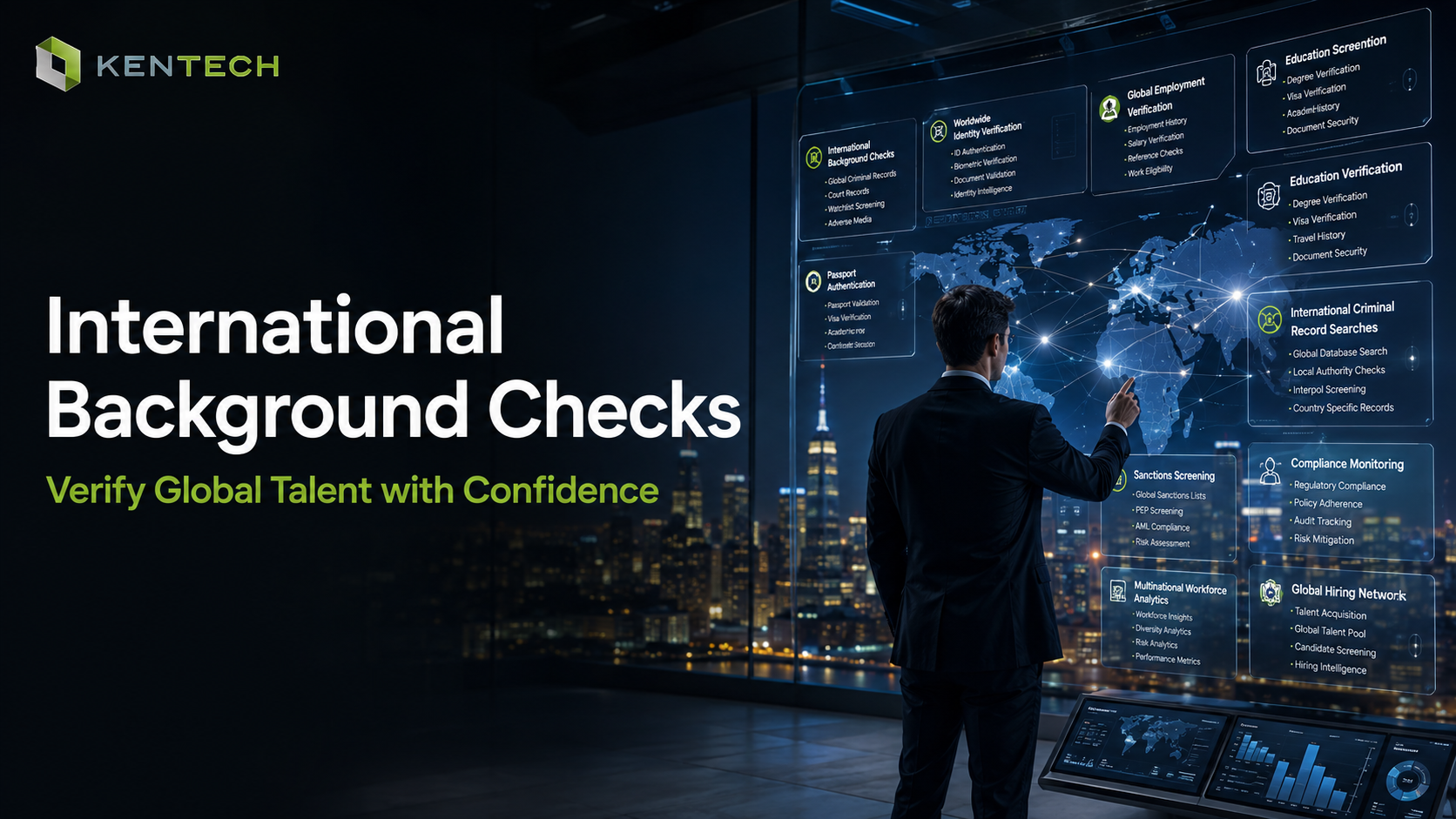
The modern workforce is no longer limited by geographic boundaries.
Organizations of every size are hiring employees across countries, expanding remote teams, opening international offices, and partnering with professionals around the world. This global talent pool creates exciting opportunities for innovation and business growth, but it also introduces new challenges when verifying candidate qualifications.
Information that is easily accessible in one country may be restricted or unavailable in another. Employment records, criminal history, educational credentials, and identity documents often follow different legal standards, privacy regulations, and reporting practices depending on the jurisdiction.
These differences make international background checks an essential part of responsible global hiring.
A comprehensive international background screening program helps organizations verify candidate information, reduce hiring risks, and maintain compliance with local and international regulations. By combining global expertise with advanced screening technology, employers can make informed hiring decisions while building trusted teams across borders.
What Are International Background Checks?
International background checks are employment screening investigations conducted on candidates who have lived, worked, or studied outside the employer's home country.
Unlike domestic background checks, international screening requires knowledge of multiple legal systems, data privacy regulations, and country-specific verification processes.
Depending on the candidate's background and the position being filled, international background checks may include:
Identity verification
International criminal record searches
Employment verification
Education verification
Professional license verification
Global sanctions screening
Watchlist screening
Civil litigation searches, where available
Credit checks, where legally permitted
Media and reputation research
The goal is to verify important information while respecting the laws and reporting limitations of each country involved.
Why International Background Checks Matter
As organizations expand globally, hiring decisions become increasingly complex.
Candidates may have worked in multiple countries, earned degrees from international universities, or held professional licenses issued by foreign regulatory agencies.
Without proper verification, employers may struggle to confirm the accuracy of information provided during the hiring process.
International background checks help organizations:
Verify candidate identity
Confirm international employment history
Validate educational credentials
Reduce resume fraud
Support regulatory compliance
Protect organizational reputation
Strengthen workforce integrity
Improve hiring confidence
These services help employers make informed decisions while reducing the risks associated with cross-border hiring.
The Challenges of Global Employment Screening
International employment screening differs significantly from domestic background checks because every country maintains its own legal and administrative systems.
Some countries maintain centralized criminal record databases, while others rely on regional or local court systems. Employment verification procedures also vary widely, with some employers permitted to disclose detailed information and others restricted by privacy laws.
Educational institutions may use different credential formats, graduation requirements, or record retention practices, making verification more complex.
Language barriers, cultural differences, and varying documentation standards can further complicate the screening process.
An experienced international background screening provider understands these regional differences and works with trusted verification sources to obtain accurate information while complying with applicable regulations.
Key Components of International Background Checks
Identity Verification
Identity verification forms the foundation of every international background investigation.
Verifying passports, government-issued identification, and other official documents helps ensure that all subsequent searches are associated with the correct individual.
Strong identity verification also reduces the risk of identity fraud and impersonation during international recruitment.
International Employment Verification
Many professionals build careers across multiple countries.
Employment verification confirms previous employers, job titles, dates of employment, and, where permitted, other employment-related information.
This process helps organizations validate professional experience before making hiring decisions.
Education Verification
Academic credentials obtained abroad often require direct verification with universities, colleges, or authorized educational institutions.
Education verification helps employers confirm degrees, graduation dates, and fields of study while identifying potential discrepancies or fraudulent credentials.
International Criminal Record Searches
Where legally available, criminal background checks help employers identify reportable criminal history that may be relevant to the position.
Because criminal record accessibility varies significantly between countries, screening procedures are tailored to local legal requirements and available data sources.
Professional License Verification
Many industries require licenses issued by government agencies or professional regulatory bodies.
Healthcare professionals, engineers, financial advisors, attorneys, and other licensed professionals often require international license verification when applying for positions abroad.
Verifying professional credentials helps organizations ensure candidates meet applicable licensing standards before employment begins.
Industries That Benefit Most from International Background Checks
International screening provides value across nearly every industry, but it is especially important for organizations operating globally or hiring professionals with international experience.
Technology
Technology companies routinely recruit software developers, cybersecurity specialists, engineers, and AI professionals from around the world.
International background checks help verify technical qualifications while supporting secure hiring practices.
Healthcare
Healthcare organizations often recruit internationally trained physicians, nurses, therapists, and specialists to address workforce shortages.
Comprehensive screening helps verify education, licensing, and employment history while supporting patient safety and regulatory compliance.
Financial Services
Banks, investment firms, insurance companies, and fintech organizations operate under strict regulatory frameworks.
International background screening helps confirm candidate credentials while supporting compliance and reducing financial crime risks.
Manufacturing and Global Enterprises
Multinational organizations frequently hire professionals across multiple countries to support supply chains, operations, and executive leadership.
Global background checks provide valuable workforce intelligence that strengthens hiring confidence across international operations.
International Background Checks as Part of a Comprehensive Screening Strategy
International background screening is most effective when integrated into a broader employment screening program.
Rather than relying on a single verification method, organizations should combine multiple screening services to gain a complete understanding of every candidate.
A comprehensive global screening strategy may include:
Identity verification
International background checks
Employment verification
Education verification
Professional license verification
Criminal background checks
Sanctions screening
Reference checks
Compliance screening
Together, these services provide employers with reliable information that supports informed hiring decisions while reducing organizational risk across international operations.
Navigating International Compliance and Data Privacy
International background checks require more than verifying information across multiple countries—they also demand compliance with a complex network of data privacy laws and employment regulations.
Each jurisdiction has its own rules governing how personal information can be collected, processed, stored, and shared. Employers conducting international background checks must understand these requirements to ensure their screening practices remain lawful and respectful of candidate privacy.
For example, organizations hiring within the European Union must comply with the General Data Protection Regulation (GDPR), which establishes strict standards for handling personal data. Other countries maintain their own privacy legislation that may regulate background screening, criminal record access, employment verification, and consent requirements.
Compliance begins with obtaining proper candidate authorization before initiating any screening activities. Employers should also work with experienced screening providers that understand local regulations and use legally compliant verification methods in every jurisdiction.
By integrating compliance into every stage of the screening process, organizations can reduce legal risks while maintaining transparency and trust throughout the hiring journey.
Common Challenges in International Background Screening
Global hiring presents unique verification challenges that organizations may not encounter when recruiting domestically.
One of the most common obstacles is the availability of information. Criminal records, employment history, and educational credentials may be maintained by different agencies or institutions depending on the country, and access to these records varies significantly.
Language differences can also complicate the verification process. Official documents may require translation, while employers and educational institutions may respond using local languages or region-specific administrative procedures.
Another challenge involves varying record retention practices. Some countries maintain employment and criminal records for extended periods, while others limit how long information can be stored or disclosed.
Differences in naming conventions, identification systems, and documentation standards can further increase the complexity of verifying international candidates.
Organizations that partner with experienced international screening providers benefit from established global verification networks, local expertise, and standardized processes that help overcome these challenges efficiently.
Best Practices for Global Employers
Successful international hiring begins with a well-defined background screening strategy.
Organizations should establish consistent screening policies that identify which verification services are required for different positions while allowing flexibility to accommodate country-specific legal requirements.
Employers should also verify only information that is relevant to the responsibilities of the position. This focused approach supports both compliance and fair hiring practices while minimizing unnecessary data collection.
Maintaining clear communication with candidates is equally important. Explaining the purpose of international background checks and providing transparency regarding the screening process helps build trust throughout recruitment.
Organizations should also maintain detailed documentation of screening procedures, candidate authorizations, and verification results to support internal governance and regulatory compliance.
Finally, partnering with a trusted global screening provider helps organizations navigate international regulations while ensuring verification activities remain accurate, consistent, and legally compliant across multiple jurisdictions.
How Technology Is Transforming International Background Checks
Technology continues to improve the speed, accuracy, and efficiency of global employment screening.
Modern background screening platforms allow employers to manage international investigations through centralized digital systems that track verification requests, organize documentation, and deliver secure reporting across multiple countries.
Artificial intelligence is also enhancing workforce intelligence by helping investigators organize publicly available information, identify inconsistencies, and streamline administrative workflows.
Digital identity verification tools allow organizations to verify passports, government-issued identification, and other official documents remotely, supporting secure hiring for distributed and international workforces.
However, international background checks still require experienced professionals who understand regional legal frameworks, cultural differences, and country-specific verification procedures.
Technology improves operational efficiency, but professional expertise remains essential for interpreting results, resolving discrepancies, and ensuring compliance with local laws.
The Future of International Background Screening
As organizations continue expanding globally, international background checks will become increasingly important in supporting workforce quality and business resilience.
Remote work, cross-border recruitment, and international talent acquisition have accelerated the need for consistent global screening programs that can adapt to changing legal and regulatory environments.
Artificial intelligence, biometric identity verification, digital credential verification, and advanced workforce intelligence platforms will continue improving the efficiency of international investigations.
At the same time, organizations will place greater emphasis on privacy protection, ethical data handling, and regulatory compliance as governments introduce new requirements for managing personal information.
Future international screening programs will combine innovative technology with experienced investigative professionals who understand the complexities of global hiring and can provide reliable intelligence that supports informed employment decisions.
Organizations that invest in comprehensive, compliant, and scalable international background screening programs will be better positioned to recruit qualified talent worldwide while reducing operational and reputational risks.
Conclusion
International background checks have become an essential component of modern hiring as organizations expand across borders and compete for global talent. Verifying identity, employment history, educational credentials, professional licenses, and other critical information helps employers make informed hiring decisions while reducing the risks associated with international recruitment.
Because every country maintains its own legal requirements, reporting practices, and privacy regulations, successful international screening requires both advanced technology and experienced global expertise. A structured, compliant screening process enables organizations to verify candidate information accurately while respecting local laws and protecting sensitive personal data.
When integrated into a comprehensive employment screening strategy, international background checks strengthen workforce integrity, support regulatory compliance, and help organizations build trusted teams across multiple regions. By combining global verification capabilities with workforce intelligence and investigative expertise, businesses can confidently hire international talent while supporting long-term growth and operational success.