
Every hiring decision carries some level of uncertainty.
A candidate may interview exceptionally well. Their resume may look impressive. Their references may be positive. But employers still need to determine whether the information provided during the hiring process can be verified.
Modern employment background screening helps organizations reduce that uncertainty by adding reliable verification to the hiring process.
Here are seven ways screening can help employers make more informed decisions.
1. Verify What Candidates Tell You
The first benefit is straightforward: verification.
Candidates provide information about their employment history, education, credentials, identity, and professional experience.
Background screening allows employers to verify relevant information rather than relying exclusively on self-reported details.
This can be especially important when qualifications are directly connected to job responsibilities.
2. Strengthen Identity Verification
Identity is the foundation of the screening process.
Before employers review records, credentials, or employment information, they need to establish that the information belongs to the correct candidate.
Modern identity verification can help organizations create a more reliable screening process and reduce the risk of confusion caused by incomplete or inaccurate identifying information.
3. Improve Workplace Safety
Certain positions involve greater safety responsibilities.
Employees may operate vehicles, work with customers, access facilities, handle equipment, or work in environments where safety is particularly important.
Appropriate screening can help employers evaluate information relevant to those responsibilities.
For example, motor vehicle record checks can be useful for driving positions, while appropriate drug screening may be relevant to workplace safety programs.
4. Protect Sensitive Information and Assets
Employees can have access to financial information, customer records, intellectual property, technology systems, and company assets.
For sensitive positions, employers may use appropriate screening services to gain additional information before granting that level of access.
Depending on the position, that may include identity verification, employment verification, credential checks, credit screening, or other relevant background checks.
The objective is to align screening with the level of responsibility involved.
5. Reduce Credential-Related Risk
A candidate's credentials may be central to their ability to perform a job.
Education and professional credential verification can help organizations confirm whether qualifications listed during the hiring process can be validated.
This can be especially valuable for specialized positions where specific degrees, licenses, or certifications are expected.
6. Create a More Consistent Hiring Process
A structured screening program can help organizations move away from informal or inconsistent background checks.
Instead of deciding what to verify after reviewing each individual candidate, employers can establish screening packages based on job responsibilities.
For example:
Driving position: identity + employment + MVR screening.
Financially sensitive position: identity + employment + appropriate credit screening.
Technology position: identity + employment + education + credential verification + relevant background screening.
This approach can create greater consistency throughout the hiring process.
7. Make Decisions With More Information
Ultimately, screening is about information.
Employers don't want to make important hiring decisions based solely on assumptions, impressions, or incomplete information.
A comprehensive screening process can bring together relevant data from multiple verification sources.
That information can then be considered alongside interviews, references, skills, experience, and organizational requirements.
Screening Is Not a Guarantee
No background check can predict exactly how an employee will perform in the future.
A screening report is not a guarantee of employee behavior.
Instead, screening provides information that employers can use as part of a broader decision-making process.
This distinction is important.
The strongest screening programs don't attempt to eliminate all risk. They help employers identify, understand, and manage relevant hiring risks.
Modern Screening Goes Beyond the Traditional Background Check
Today's employers often need more than a basic criminal search.
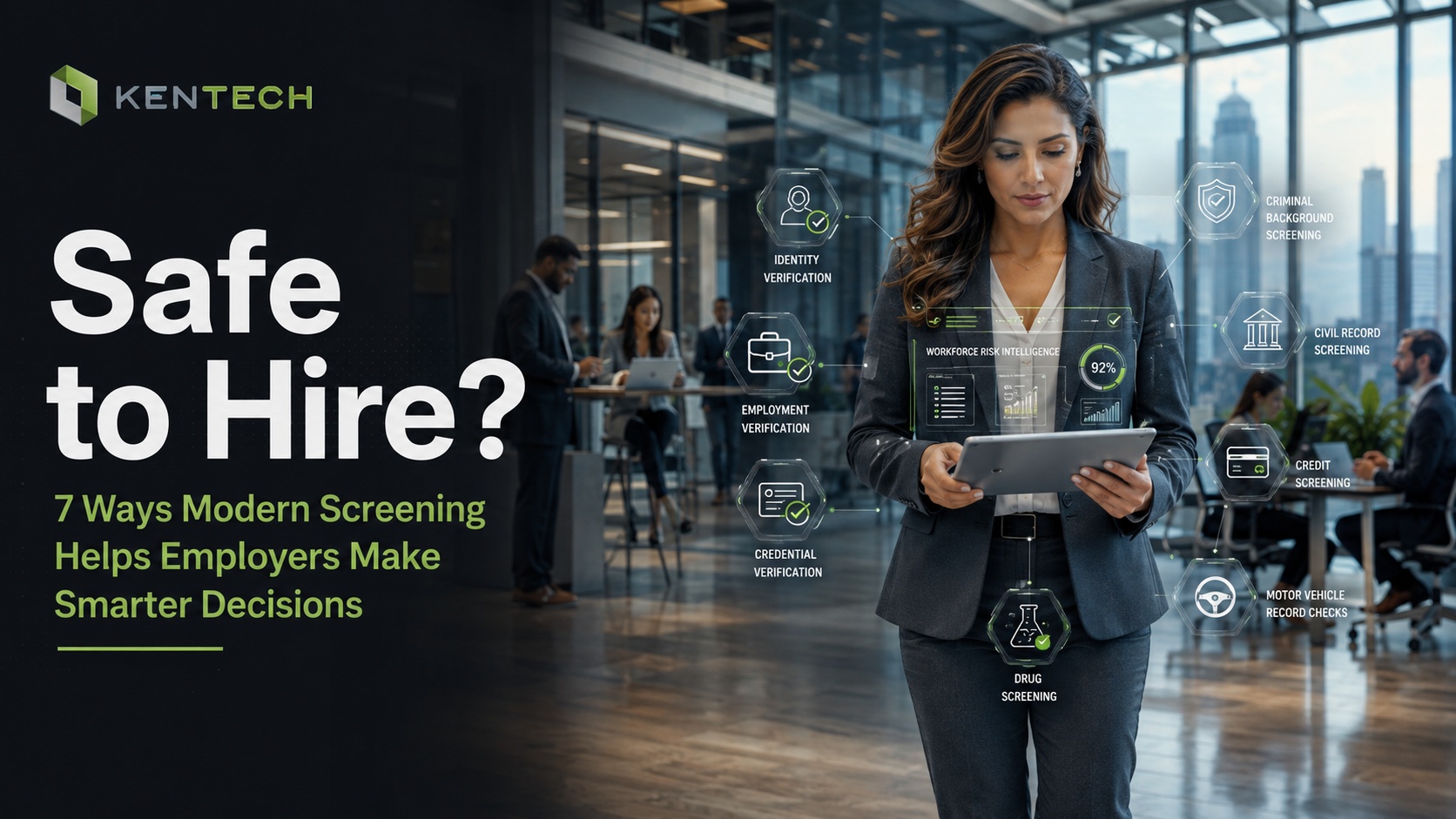
Depending on the organization and position, a modern screening strategy can include:
Identity verification
Criminal background checks
Civil record searches
Employment verification
Education verification
Credential verification
Credit screening
Drug screening
Motor vehicle record checks
Each service provides a different piece of the candidate's story.
Combined appropriately, they can create a more complete view of the person an organization is considering.
Smarter Screening Starts With the Role
The best screening strategy isn't necessarily the one with the most checks.
It's the one that makes sense for the position.
An employer hiring a delivery driver has different screening priorities from an organization hiring a financial executive.
A technology company giving employees privileged access to sensitive systems may have different verification needs from a retail organization hiring seasonal staff.
Screening should therefore be role-based, consistent, relevant, and compliant.
Better Information Leads to Better Decisions
The question isn't simply whether a candidate is "safe to hire."
The better question is whether the employer has gathered enough relevant and reliable information to make an informed decision.
Modern background screening helps organizations move closer to that goal.
By verifying candidate information, strengthening identity checks, confirming qualifications, reviewing relevant records, and aligning screening with job responsibilities, employers can create a stronger foundation for hiring.
In a competitive employment market, smarter hiring isn't about making decisions faster.
It's about making them with better information.