
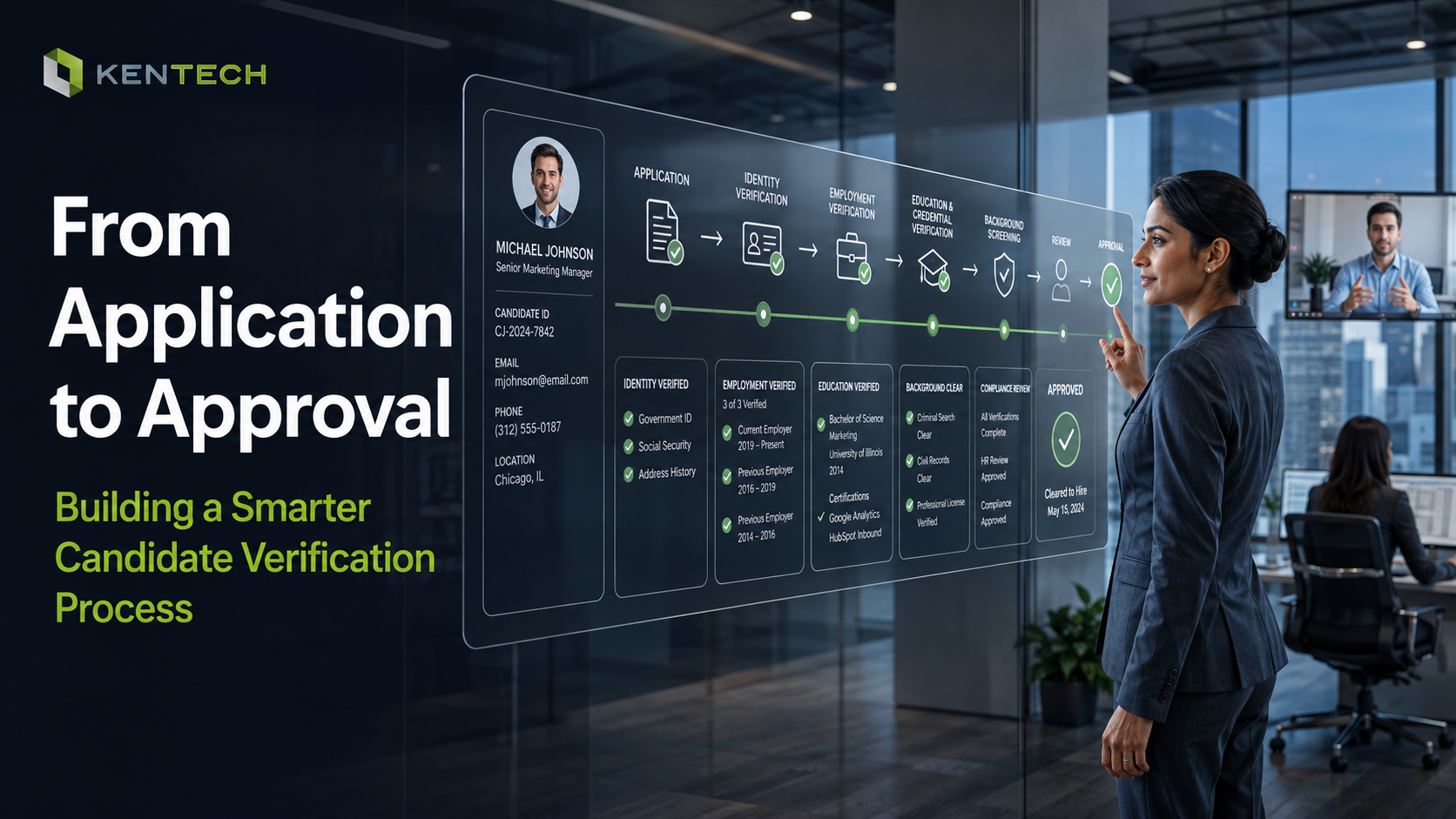
Hiring can move quickly.
A candidate submits an application. An interview follows. The hiring manager makes a recommendation. Then the organization prepares to make an offer.
But between application and approval is one of the most important stages of the hiring process: candidate verification.
A strong verification process helps employers confirm relevant information before an applicant becomes an employee.
Rather than treating background screening as a final administrative task, organizations can integrate verification into a structured hiring workflow.
Step 1: Start With the Position
Candidate verification should begin with the job itself.
Before deciding which background checks to conduct, employers should understand the responsibilities associated with the position.
Does the employee drive?
Will they handle financial information?
Will they access confidential customer data?
Does the position require a specific degree or professional certification?
Will they have access to sensitive technology systems?
These questions help determine which screening services may be relevant.
Step 2: Collect Accurate Candidate Information
The screening process depends on accurate candidate information.
Employers should establish a standardized process for collecting the information necessary for authorized screening.
Consistency is important because incomplete or inconsistent information can delay verification and create unnecessary complications.
Step 3: Verify Identity
Identity verification provides the foundation for the rest of the screening process.
Employers need confidence that the individual being screened is the same person who submitted the application.
This step is particularly valuable in modern hiring environments where applications and interviews may take place entirely online.
Step 4: Verify Employment History
Employment verification helps organizations confirm relevant career information.
Depending on the screening program, employers may verify previous employers, positions, employment dates, or other job-related information.
This can help hiring managers understand whether the candidate's stated professional history aligns with information that can be verified.
Step 5: Confirm Education and Credentials
For positions requiring specific qualifications, education and credential verification can be essential.
Employers may need to confirm degrees, certifications, licenses, or other professional qualifications.
This is especially important when a candidate's credentials are directly connected to the responsibilities of the position.
Step 6: Conduct Relevant Background Checks
Once identity and core qualifications are being verified, employers can conduct additional screening appropriate to the position.
This may include:
Criminal background screening for positions where such checks are relevant and legally permissible.
Civil record screening when appropriate to the organization's legitimate screening needs.
Credit screening for certain financially sensitive positions, where legally permissible.
Drug screening as part of an organization's appropriate workplace testing program.
Motor vehicle record checks for employees whose responsibilities involve driving.
The important principle is relevance.
Employers don't necessarily need every available background check for every candidate.
Step 7: Review Results Consistently
Receiving a screening result is not the end of the process.
Employers should have a consistent method for reviewing information and handling potential discrepancies.
A result that differs from the candidate's application may have a reasonable explanation.
For example, an employment date could differ slightly because of rounding. A credential could appear under an institution's formal name rather than the name commonly used by the candidate.
Reviewing information carefully helps prevent assumptions from becoming decisions.
Step 8: Maintain a Clear Decision Process
The final stage should connect screening information to the organization's established hiring requirements.
Hiring managers should understand what information is relevant to the role and how screening results fit into the overall decision-making process.
This creates a more structured approach than making decisions based on isolated pieces of information.
Automation Can Make Verification More Efficient
As organizations hire more employees, manually coordinating every verification step can become difficult.
Modern screening technology can help streamline workflows by bringing multiple screening services into a more organized process.
Instead of managing disconnected requests, emails, documents, and spreadsheets, employers can use technology to help coordinate candidate information and screening status.
The result can be a more efficient experience for HR teams and candidates.
Candidate Experience Still Matters
A thorough screening process doesn't have to create a poor candidate experience.
Communication, transparency, and efficient workflows can make a significant difference.
Candidates should understand that screening is part of the organization's standard hiring process rather than something being performed selectively or unexpectedly.
When the process is organized and professional, background screening can become a normal part of the candidate journey.
Build Screening Around Risk—not Volume
More screening isn't automatically better screening.
The goal should be to identify the checks that provide meaningful information for each position.
A well-designed candidate verification process considers:
Job responsibilities
Organizational risk
Information access
Required qualifications
Driving responsibilities
Financial responsibilities
Workplace safety considerations
Applicable legal and compliance requirements
This creates a more focused approach to background screening.
From Application to Approval
A modern hiring process should not end with an impressive resume or successful interview.
It should end with confidence that the relevant information has been appropriately verified.
From identity and employment history to education, credentials, criminal records, civil records, credit information, drug screening, and motor vehicle records, organizations can build a screening strategy around the actual needs of each role.
When verification is integrated into the hiring workflow, employers gain a clearer view of candidates before making important decisions.
The result is a smarter path from application to approval—one built on verification, consistency, and better information.