
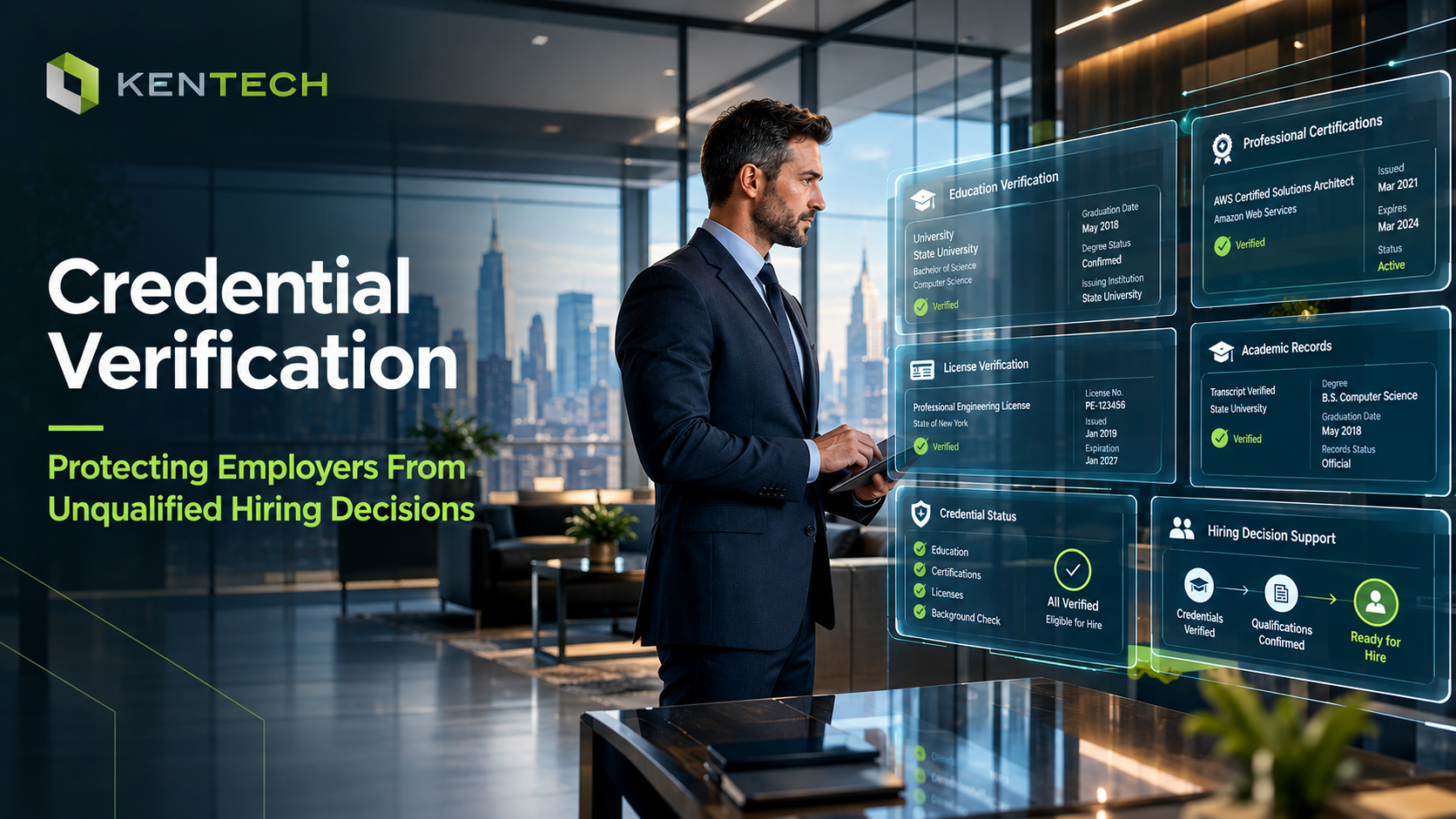
Qualifications matter.
When an employer hires someone for a specialized position, their degree, certification, license, or professional credential may be directly connected to their ability to perform the job.
Yet qualifications listed on a resume are not automatically verified.
That is why credential verification can be an important component of a comprehensive employment screening strategy.
By confirming relevant educational and professional credentials, employers can make hiring decisions with greater confidence.
Credentials Can Influence Hiring Decisions
A candidate's qualifications may be one of the reasons they are selected for a position.
A bachelor's degree may be required.
A professional certification may be preferred.
A license may be legally or operationally necessary.
An advanced qualification may justify a senior-level position.
When credentials influence hiring decisions, confirming them can be valuable.
Education Verification
Education verification can help employers confirm information about a candidate's academic background.
Depending on the screening requirements, employers may verify details such as:
Institution attended
Degree earned
Field of study
Graduation information
Other relevant educational details
This provides employers with information that can be compared with the candidate's application or resume.
Professional Certification Verification
Certifications can demonstrate specialized knowledge or professional training.
For certain positions, certifications may be important because they demonstrate that an individual has completed specific training or met an established standard.
Verification can help employers determine whether the certification information provided by a candidate can be confirmed.
Licenses Can Be Especially Important
Some jobs require professional licenses or registrations.
Employers hiring candidates for positions involving regulated responsibilities may need to know whether required credentials are valid and appropriate for the role.
A license that is expired, inactive, or otherwise not valid for the position could create operational or compliance concerns.
Credential verification can help employers identify these issues before the employee begins work.
Credentials and Job Responsibilities Should Match
A credential isn't valuable simply because it appears impressive.
Its relevance depends on the job.
For example, an employer hiring a specialized technology professional may care about particular technical certifications.
A financial organization may place greater importance on industry-specific credentials.
A company hiring a driver may prioritize appropriate licensing and driving history.
The screening strategy should therefore reflect the actual responsibilities of the position.
Credential Discrepancies Require Careful Review
Not every discrepancy means a candidate intentionally provided false information.
Universities may use formal names that differ from commonly used names.
Certification organizations may update their credential systems.
Candidates may describe credentials using abbreviated titles.
Dates may also differ because of administrative or reporting practices.
That is why credential screening should provide employers with information for review rather than automatically turning every difference into a negative conclusion.
Credential Verification Can Protect Reputation
Hiring someone who lacks a qualification they claimed to have can create more than an internal HR issue.
Depending on the position, it can affect customers, business partners, regulatory obligations, workplace safety, and organizational reputation.
For positions where credentials matter, verifying them before employment can be an important risk-management step.
Credential Screening Works Best as Part of a Larger Process
Professional qualifications are only one part of a candidate's background.
Employers may also consider:
Identity
Employment history
Criminal records
Civil records
Credit information where relevant and permitted
Drug screening
Motor vehicle records
References and interviews
Together, these checks can provide a more complete picture of a candidate.
Build Confidence Before the First Day
Employers invest considerable time and resources into recruiting.
Credential verification can help ensure that important qualifications are confirmed before that investment turns into an employment relationship.
For specialized positions, the ability to verify education, licenses, and professional certifications can provide valuable confidence.
A candidate's credentials should support the hiring decision—not simply appear on a resume.