
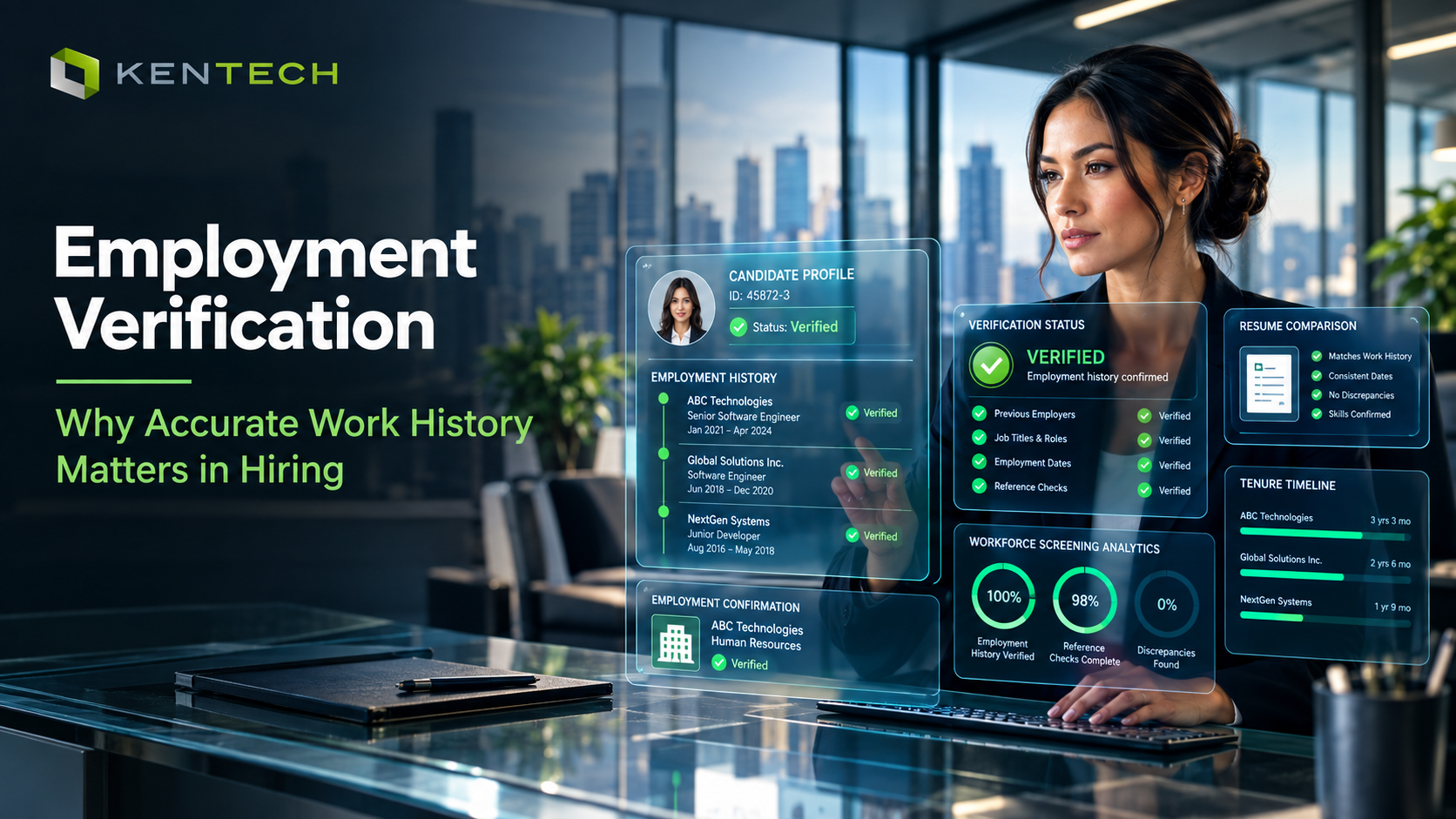
A candidate's work history can tell an employer a great deal about their professional experience. Previous positions, responsibilities, employers, and length of employment can all influence whether someone appears qualified for a new opportunity.
But a resume is only a starting point.
Employment verification provides employers with an opportunity to confirm relevant information before making a final hiring decision. By checking important details about a candidate's professional history, organizations can develop a clearer understanding of the experience behind the application.
For companies hiring for positions where experience directly affects performance, accurate employment information can be particularly valuable.
A Resume Doesn't Always Tell the Complete Story
Resumes are designed to summarize a candidate's career.
They may list employers, job titles, dates, responsibilities, and achievements. However, resumes are created by candidates and can vary significantly in detail and accuracy.
A candidate may accidentally list an incorrect employment date. Another person may simplify a job title. Someone else may describe responsibilities more broadly than an employer would.
These differences don't necessarily indicate dishonesty.
However, significant discrepancies may deserve additional review.
Employment verification gives organizations another source of information to compare against what a candidate has provided.
Why Work History Matters
Previous employment can provide important context about a candidate's qualifications.
Consider an employer hiring a senior operations manager. The position may require several years of management experience and a history of working with complex teams.
If the candidate's previous experience is a major factor in the hiring decision, confirming that experience can help the employer make a more informed assessment.
The same applies to technology, finance, healthcare, customer service, sales, logistics, and other industries where previous experience may be closely connected to job responsibilities.
Verification Can Identify Inconsistencies
One of the practical benefits of employment verification is identifying information that doesn't match.
For example, an employer may discover differences involving:
Employment dates
Job titles
Company names
Length of employment
Other relevant employment details
A discrepancy should not automatically be treated as evidence of wrongdoing.
Instead, it can prompt an employer to review the information and determine whether there is a reasonable explanation.
This creates a more thoughtful hiring process.
Employment Gaps Can Have Context
Career paths are rarely perfectly linear.
Candidates may have taken time away from work for education, family responsibilities, relocation, entrepreneurship, health reasons, layoffs, or other personal circumstances.
Employment verification isn't about penalizing candidates for gaps.
Instead, it helps employers understand the professional history being presented.
When combined with interviews and candidate conversations, verified employment information can provide useful context.
Verification Is Particularly Important for Senior Positions
The more responsibility a position carries, the more important relevant experience may become.
Executives, managers, financial professionals, technology specialists, and other senior employees can have significant influence over an organization's operations.
Employers may therefore want stronger confirmation of the experience supporting a candidate's qualifications.
A structured employment verification process can help organizations confirm important career information before making a high-impact hiring decision.
Combine Employment Verification With Other Screening
Employment verification is most valuable when it forms part of a broader screening strategy.
Depending on the role, employers may combine work history verification with:
Identity verification
Education verification
Professional credential verification
Criminal background screening
Civil record searches
Credit screening
Drug screening
Motor vehicle record checks
The appropriate combination depends on the position and the organization's legitimate screening requirements.
Verification Can Help Reduce Hiring Uncertainty
No screening process can predict future employee performance.
However, verification can reduce uncertainty surrounding information provided during recruitment.
Employers can move from simply asking, "What does the candidate say about their experience?" to also asking, "What relevant information can we verify?"
That distinction can make a meaningful difference in hiring.
A More Reliable Hiring Foundation
Hiring managers already consider interviews, references, skills, and experience.
Employment verification adds another layer of information.
By confirming relevant work history before an employee joins the organization, employers can strengthen their hiring process and make decisions with greater confidence.
The goal isn't to make hiring complicated.
It's to make sure important decisions are based on information that can be appropriately verified.